
Northwest Europe (820 – 963 CE): Viking …
Years: 820 - 963
Northwest Europe (820 – 963 CE): Viking Age, Danelaw, and Insular Kingdoms
Geographic and Environmental Context
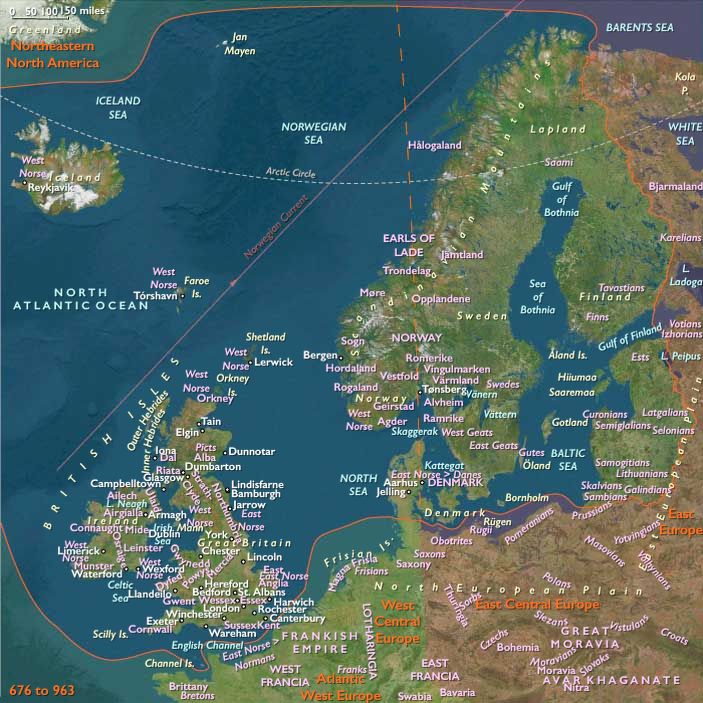
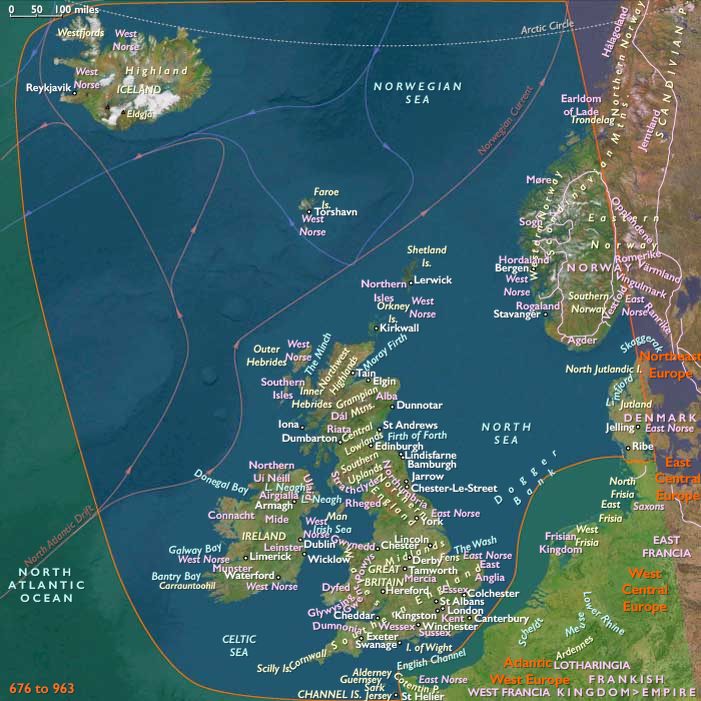
Northwest Europe includes Iceland, Ireland, the United Kingdom, the Faroe, Shetland, and Orkney Islands, the Channel Islands, and the western coastal zones of Norway and Denmark (west of 10°E).
-
Anchors: the North Sea ports (York, London, Dublin, Bristol, Bergen, Trondheim), the Irish Sea corridors (Dublin–Waterford–Chester), the Channel Islands (Jersey, Guernsey, Sark, Alderney) as a maritime hinge between Normandy and England, the English Channel approaches (Dover, Portsmouth, Southampton), the North Atlantic islands (Faroe, Orkney, Shetland, Iceland), and the Norwegian fjord ports (Bergen, Trondheim)
Climate and Environmental Shifts
-
Benefiting from the Medieval Warm Period, cereal farming extended further north; pastures flourished in Norway and Iceland after settlement (~870s).
-
North Atlantic seas teemed with cod, herring, and whales, supporting expanding fisheries.
Societies and Political Developments
-
Viking expansion dominated:
-
England: Great Heathen Army (865), Danelaw entrenched in York and East Anglia.
-
Ireland: Norse–Gaelic towns (Dublin, Waterford, Limerick) arose as trading hubs.
-
Scotland: Orkney, Shetland, Hebrides under Norse jarls.
-
Iceland settled (c. 870–930), forming the Althing assembly (930).
-
-
Anglo-Saxon kingdoms consolidated: Alfred the Great (871–899) defended Wessex, laying foundation for England’s unification.
-
Ireland remained fragmented among provincial kings, though Norse towns tied it into Atlantic commerce.
-
Norway: Harald Fairhair (872) began consolidation; Denmark projected power into North Sea.
Economy and Trade
-
Silver dirhams from the Islamic world reached Scandinavia via Volga–Baltic routes.
-
Viking Dublin exported slaves and hides; York and Hedeby tied into Baltic–North Sea trade.
-
Cod/dried fish and wool from North Atlantic settlements became staples.
Belief and Symbolism
-
Norse paganism thrived; runestones, ship burials, and cults of Odin/Thor.
-
Christianity survived in Ireland, Anglo-Saxon England, and parts of Scotland; missionary work reached Scandinavia.
Long-Term Significance
By 963, Northwest Europe was a Viking–Anglo-Saxon–Celtic frontier, with Icelandic settlement, Norse–Gaelic towns, and early English statehood foreshadowing medieval consolidation.
Northwest Europe (with civilization) ©2024-25 Electric Prism, Inc. All rights reserved.
People
- Alfred the Great
- Erik the Red
- Gorm the Old
- Harald Bluetooth
- Harald Fairhair
- Horik II
- Máel Sechnaill I
Groups
- Polytheism (“paganism”)
- Celts
- Ireland, ancient
- Britons (historical)
- Picts
- Irish people
- Brycheiniog, Welsh Kingdom of
- Dyfed, Welsh Kingdom of
- Anglo-Saxons
- Dumnonia, Brythonic kingdom of
- Gwent, Welsh Kingdom of
- Gwynedd, Welsh Kingdom of
- Christianity, Chalcedonian
- Welsh people
- Glywysing, Welsh Kingdom of
- East Angles, Kingdom of the
- Dál Riata, or Dalriada, Scots Kingdom of
- Fortriu, (Pictish) Kingdom of
- Wessex, English Kingdom of
- Mercia, Kingdom of
- East Angles, Kingdom of the
- Seisyllwg, Welsh Kingdom of
- Powys, Welsh Kingdom of
- Cornwall, Brythonic kingdom of
- Denmark, Kingdom of
- Norse
- Frankish, or Carolingian (Roman) Empire
- East Anglia, (Danish) Kingdom of
- Iceland, pre-Commomwealth
- Orkney, Earldom of
- York, Scandinavian (Danish)
- Alba (Scotland), Scots Kingdom of
- Deheubarth, Welsh Kingdom of
- York, Scandinavian (Norse)
- England, (Anglo-Saxon) Kingdom of
- Icelandic Commonwealth, or Icelandic Free State
- Morgannwg, or Glamorgan, Welsh Principality of
Topics
- Trent, Battle of the
- Dun Nechtain, Battle of
- Viking Raids in England, Early
- Viking Raids in Ireland
- Viking Raids
- Viking Raids in the North Sea
- Viking Raids against Alfred
- Viking Raids in England, Later
- Tempsford, Battle of
Commodoties
- Fish and game
- Weapons
- Hides and feathers
- Gem materials
- Glass
- Domestic animals
- Grains and produce
- Ceramics
- Strategic metals
- Slaves
- Beer, wine, and spirits
- Lumber
- Manufactured goods
- Money
- Aroma compounds
Subjects
- Commerce
- Writing
- Architecture
- Watercraft
- Environment
- Decorative arts
- Exploration
- Faith
- Government
- Custom and Law
- Technology
- Metallurgy
Regions
Subregions
Years: 820 - 963
Northwest Europe (with civilization) ©2024-25 Electric Prism, Inc. All rights reserved.
People
- Alfred the Great
- Erik the Red
- Gorm the Old
- Harald Bluetooth
- Harald Fairhair
- Horik II
- Máel Sechnaill I
Groups
- Polytheism (“paganism”)
- Celts
- Ireland, ancient
- Britons (historical)
- Picts
- Irish people
- Brycheiniog, Welsh Kingdom of
- Dyfed, Welsh Kingdom of
- Anglo-Saxons
- Dumnonia, Brythonic kingdom of
- Gwent, Welsh Kingdom of
- Gwynedd, Welsh Kingdom of
- Christianity, Chalcedonian
- Welsh people
- Glywysing, Welsh Kingdom of
- East Angles, Kingdom of the
- Dál Riata, or Dalriada, Scots Kingdom of
- Fortriu, (Pictish) Kingdom of
- Wessex, English Kingdom of
- Mercia, Kingdom of
- East Angles, Kingdom of the
- Seisyllwg, Welsh Kingdom of
- Powys, Welsh Kingdom of
- Cornwall, Brythonic kingdom of
- Denmark, Kingdom of
- Norse
- Frankish, or Carolingian (Roman) Empire
- East Anglia, (Danish) Kingdom of
- Iceland, pre-Commomwealth
- Orkney, Earldom of
- York, Scandinavian (Danish)
- Alba (Scotland), Scots Kingdom of
- Deheubarth, Welsh Kingdom of
- York, Scandinavian (Norse)
- England, (Anglo-Saxon) Kingdom of
- Icelandic Commonwealth, or Icelandic Free State
- Morgannwg, or Glamorgan, Welsh Principality of
Topics
- Trent, Battle of the
- Dun Nechtain, Battle of
- Viking Raids in England, Early
- Viking Raids in Ireland
- Viking Raids
- Viking Raids in the North Sea
- Viking Raids against Alfred
- Viking Raids in England, Later
- Tempsford, Battle of
Commodoties
- Fish and game
- Weapons
- Hides and feathers
- Gem materials
- Glass
- Domestic animals
- Grains and produce
- Ceramics
- Strategic metals
- Slaves
- Beer, wine, and spirits
- Lumber
- Manufactured goods
- Money
- Aroma compounds
Subjects
- Commerce
- Writing
- Architecture
- Watercraft
- Environment
- Decorative arts
- Exploration
- Faith
- Government
- Custom and Law
- Technology
- Metallurgy
Regions
Subregions