
Northwest Europe (909 BCE – CE 819): …
Years: 909BCE - 819
Northwest Europe (909 BCE – CE 819): Maritime Kingdoms, Monastic Centers, and Atlantic Trade
Geographic and Environmental Context
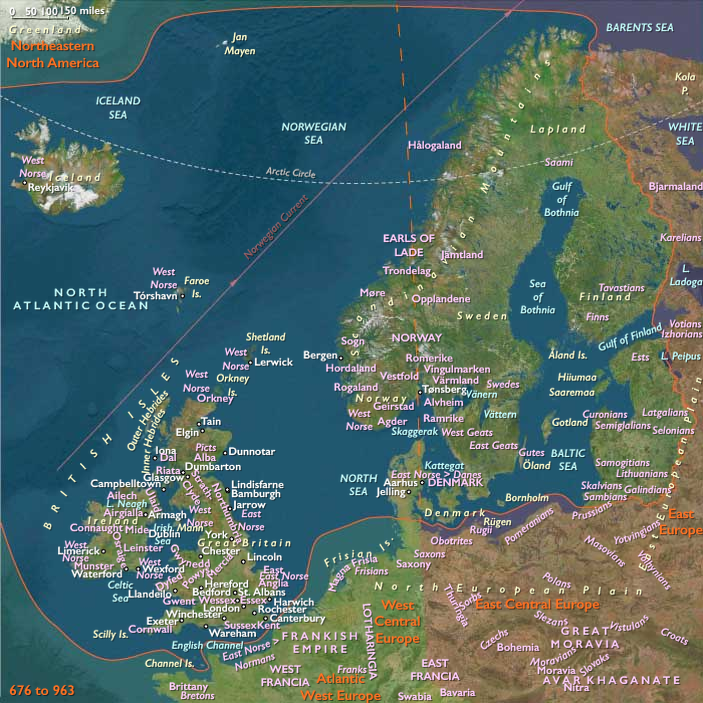
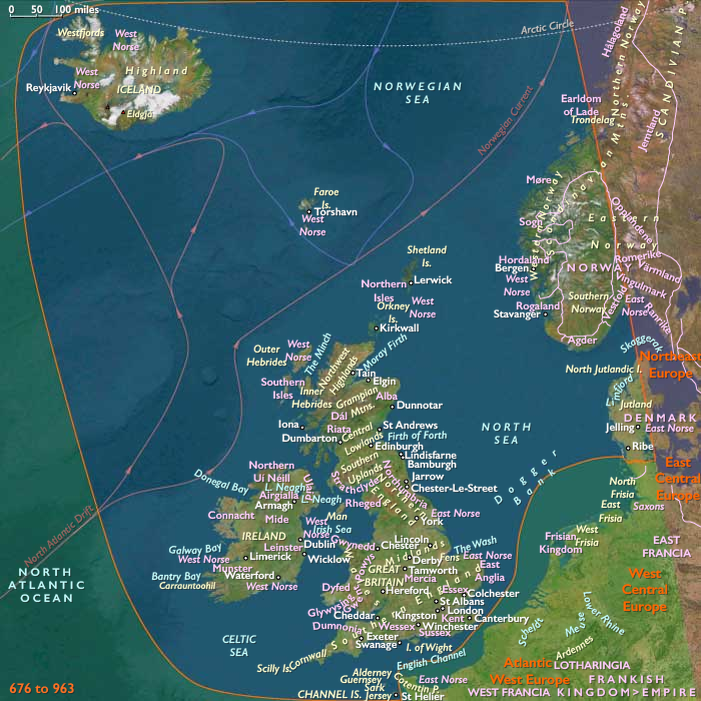
Northwest Europe includes Iceland, Ireland, the United Kingdom, western Norway, and western Denmark.
-
The subregion faces the North Atlantic Ocean and North Sea, with rugged coasts, fjords, and numerous islands.
-
Its maritime position fosters connections to the Baltic Sea, North Sea basin, and Atlantic trade routes.
Climate and Environmental Shifts
-
A temperate maritime climate moderated by the North Atlantic Drift brought mild winters and cool summers, though storms were frequent.
-
Shorter growing seasons in northern zones encouraged reliance on pastoralism and fishing.
-
Occasional climatic shifts, including colder intervals in the early medieval centuries, impacted crop yields and seafaring conditions.
Societies and Political Developments
-
In the British Isles, Celtic kingdoms such as Dal Riata, Dyfed, and Gwynedd coexisted with Anglo-Saxon kingdoms including Wessex, Mercia, and Northumbria.
-
Pictish polities in northern Scotland maintained distinct cultural and artistic traditions.
-
Norwegian and Danish coastal societies were evolving toward the seafaring culture that would define the Viking Age.
-
Irish monasteries became influential centers of learning, missionary activity, and manuscript production, extending their reach across the North Atlantic.
Economy and Trade
-
Agriculture combined cereal farming with cattle, sheep, and pig husbandry, adapted to local soils and climates.
-
Fishing for cod, herring, and shellfish was vital for coastal and island communities.
-
Trade moved wool, salted fish, iron tools, and quernstones, with imports including wine, glassware, and luxury goods from Francia, the Mediterranean, and Scandinavia.
-
Ireland and parts of Britain exported slaves as part of the wider North Sea economy.
Subsistence and Technology
-
Plough agriculture spread in fertile lowlands, while upland and island communities relied more heavily on livestock.
-
Shipbuilding in clinker-built styles advanced in both Norse and Anglo-Saxon contexts, enabling open-sea voyages.
-
Metalworking produced high-quality weapons, tools, and ornate jewelry, often in Insular art styles.
Movement and Interaction Corridors
-
Sea lanes connected the British Isles to Scandinavia, Francia, and the Iberian Peninsula.
-
Coastal settlements and river estuaries served as trade and communication hubs.
-
Long-distance voyaging linked western Norway and the British Isles to Iceland and other North Atlantic islands.
Belief and Symbolism
-
Celtic and Germanic pagan traditions persisted alongside the spread of Christianity, which by this period had established firm roots in most of the subregion.
-
Monastic scriptoria produced illuminated manuscripts, blending religious devotion with elaborate artistic expression.
-
Standing stones, crosses, and earthworks served as cultural markers of identity and faith.
Adaptation and Resilience
-
Maritime orientation allowed communities to shift economic focus between fishing, trade, and raiding depending on conditions.
-
Diverse subsistence strategies buffered against localized crop failures.
-
Political alliances and dynastic marriages helped consolidate power in fragmented landscapes.
Long-Term Significance
By CE 819, Northwest Europe had become a maritime crossroads linking the British Isles, Scandinavia, and the wider North Atlantic world, with monastic culture, seafaring skills, and regional trade networks setting the stage for the Viking Age.
Groups
- Nordic Bronze Age
- Ireland, ancient
- Celts
- Britain, Iron Age
- Britons (historical)
- Saxons
- Angles
- Jutes
- Picts
- Irish people
- Roman Empire (Rome): Julio-Claudian dynasty
- Roman Empire (Rome): Flavian dynasty
- Roman Empire (Rome): Nerva-Antonine dynasty
- Roman Empire (Rome): Severan dynasty
- Roman Empire (Rome): Non-dynastic
- Roman Empire: Tetrarchy
- Roman Empire: Constantinian dynasty (Nicomedia)
- Christianity, Nicene
- Roman Empire: Constantinian dynasty (Constantinople)
- Roman Empire: Valentinian dynasty (Rome)
- Roman Empire: Theodosian dynasty (Constantinople)
- Roman Empire, Western (Milan)
- Dyfed, Welsh Kingdom of
- Anglo-Saxons
- Roman Empire, Western (Ravenna)
- Gwynedd, Welsh Kingdom of
- Picts, Kingdom of the
- Strathclyde, British Kingdom of
- Christianity, Chalcedonian
- Kent, Kingdom of
- Sussex, Kingdom of
- East Angles, Kingdom of the
- Dál Riata, or Dalriada, Scots Kingdom of
- Fortriu, (Pictish) Kingdom of
- Wessex, English Kingdom of
- Essex, Kingdom of
- Mercia, Kingdom of
- Northumbria, Kingdom of
- Vikings
- Norse
- Danes (Scandinavians)
Topics
- Nordic Bronze Age
- Younger Subboreal Period
- Subatlantic Period
- Roman Conquest of Britain
- Boudica's uprising
- Anglo-Saxon settlement of Britain
- Viking Raids in England, Early
- Viking Raids in Ireland
- Viking Raids
- Viking Raids in the North Sea
Commodoties
- Fish and game
- Weapons
- Gem materials
- Glass
- Domestic animals
- Grains and produce
- Ceramics
- Strategic metals
- Slaves
- Salt
- Beer, wine, and spirits
- Aroma compounds
Subjects
- Commerce
- Writing
- Architecture
- Watercraft
- Environment
- Decorative arts
- Government
- Custom and Law
- Technology
- Metallurgy
Regions
Subregions
Related Events
Showing 1 events out of 1 total
Years: 909BCE - 819
Groups
- Nordic Bronze Age
- Ireland, ancient
- Celts
- Britain, Iron Age
- Britons (historical)
- Saxons
- Angles
- Jutes
- Picts
- Irish people
- Roman Empire (Rome): Julio-Claudian dynasty
- Roman Empire (Rome): Flavian dynasty
- Roman Empire (Rome): Nerva-Antonine dynasty
- Roman Empire (Rome): Severan dynasty
- Roman Empire (Rome): Non-dynastic
- Roman Empire: Tetrarchy
- Roman Empire: Constantinian dynasty (Nicomedia)
- Christianity, Nicene
- Roman Empire: Constantinian dynasty (Constantinople)
- Roman Empire: Valentinian dynasty (Rome)
- Roman Empire: Theodosian dynasty (Constantinople)
- Roman Empire, Western (Milan)
- Dyfed, Welsh Kingdom of
- Anglo-Saxons
- Roman Empire, Western (Ravenna)
- Gwynedd, Welsh Kingdom of
- Picts, Kingdom of the
- Strathclyde, British Kingdom of
- Christianity, Chalcedonian
- Kent, Kingdom of
- Sussex, Kingdom of
- East Angles, Kingdom of the
- Dál Riata, or Dalriada, Scots Kingdom of
- Fortriu, (Pictish) Kingdom of
- Wessex, English Kingdom of
- Essex, Kingdom of
- Mercia, Kingdom of
- Northumbria, Kingdom of
- Vikings
- Norse
- Danes (Scandinavians)
Topics
- Nordic Bronze Age
- Younger Subboreal Period
- Subatlantic Period
- Roman Conquest of Britain
- Boudica's uprising
- Anglo-Saxon settlement of Britain
- Viking Raids in England, Early
- Viking Raids in Ireland
- Viking Raids
- Viking Raids in the North Sea
Commodoties
- Fish and game
- Weapons
- Gem materials
- Glass
- Domestic animals
- Grains and produce
- Ceramics
- Strategic metals
- Slaves
- Salt
- Beer, wine, and spirits
- Aroma compounds
Subjects
- Commerce
- Writing
- Architecture
- Watercraft
- Environment
- Decorative arts
- Government
- Custom and Law
- Technology
- Metallurgy
Regions
Subregions