
Northwest Europe (676–819 CE): Viking Raids, Christian …
Years: 676 - 819
Northwest Europe (676–819 CE): Viking Raids, Christian Consolidation, and Cultural Renaissance
Rise and Impact of Viking Raids
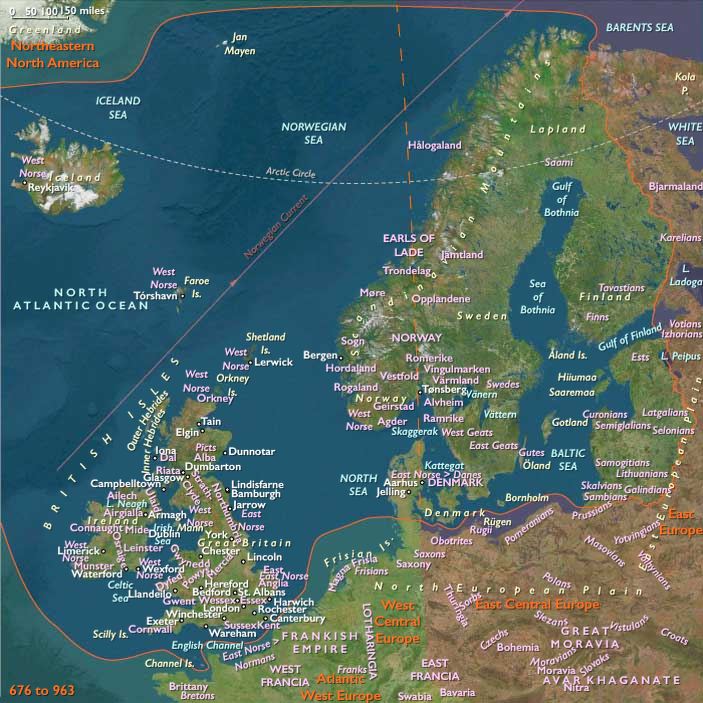
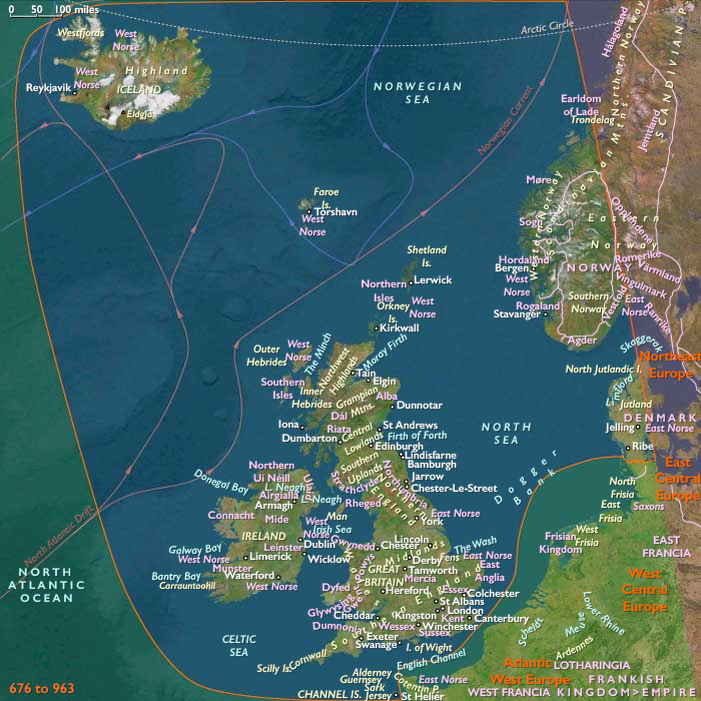
Between 676 and 819 CE, Northwest Europe faced new threats from Viking incursions, originating primarily from modern-day Norway and Denmark. The first recorded Viking raid occurred in 793 CE at Lindisfarne monastery, marking intensified Scandinavian activity that significantly altered regional stability. By this time, Vikings were already well-established in Orkney and Shetland, with raids likely occurring earlier than documented.
Anglo-Saxon Kingdoms and Political Consolidation
Anglo-Saxon kingdoms continued evolving, characterized by competition and shifting alliances. Initially, power fluctuated among kingdoms like Kent, Northumbria, Mercia, East Anglia, Essex, Sussex, and Wessex, as well as smaller polities like Hwicce, Magonsaete, Lindsey, and Middle Anglia. Northumbria briefly dominated, reaching into Scotland and Wales, but waned after defeats at the Trent (679) and Nechtanesmere (685). Mercia rose to prominence, especially under Offa (757–796), whose authority was acknowledged by Charlemagne. Offa constructed Offa’s Dyke to defend against Welsh incursions, though Mercian supremacy declined by the early ninth century, giving way to a rising Wessex.
Celtic Kingdoms and the Emergence of High Kingship in Ireland
Celtic kingdoms in Wales, Scotland, Cornwall, and Ireland remained culturally vibrant and politically independent. In Ireland, the concept of a High King emerged, nominally overseeing other Irish kings and ruling from Meath with ceremonial importance at the Hill of Tara. Although largely symbolic initially, this concept grew significant in later Viking periods. Ireland also developed a culturally unifying legal tradition known as the Brehon Laws, administered by professional jurists (brehons).
Strengthening and Institutionalization of Christianity
Christianity became deeply embedded in the fabric of Northwest Europe, bolstered by Celtic and Roman Catholic influences. Augustine’s mission in 597 and the baptism of King Æthelbert of Kent in 601 accelerated England’s Christianization. Pagan resistance ended with Penda of Mercia’s death (655) and Arwald of the Isle of Wight (686). Ecclesiastical institutions expanded, and figures like Bede (672–735) significantly contributed to historiography and theology.
Carolingian Renaissance and Irish Influence
Irish monastic scholarship, deeply rooted in Latin and Greek learning, significantly influenced the Carolingian Renaissance. Missions founded by monks like Saint Columba on Iona (563) spread Celtic Christianity and classical scholarship to Scotland, England, and the Frankish Empire. This scholarly tradition produced influential figures such as Sedulius Scottus and Johannes Eriugena.
Economic and Agricultural Adaptation
Economic resilience characterized this period, with communities adapting agricultural practices to maintain productivity despite Viking disruptions. Localized trade networks adjusted to new security realities, sustaining regional stability and prosperity.
Cultural Flourishing and Artistic Achievements
This era witnessed remarkable artistic and literary flourishing. Manuscript illumination, metalworking, and sculpture produced treasures like the Book of Kells, intricate jewelry, and carved stone crosses. Anglo-Saxon culture thrived with literary masterpieces like "Beowulf," reflecting both pagan and Christian influences.
Stability and Viking Integration in Orkney and Shetland
Orkney and Shetland experienced increased Viking settlement, transitioning from initial trade interactions to permanent Norse integration, significantly reshaping regional culture and politics.
Scandinavian Developments and Danevirke
In Scandinavia, significant political and military developments occurred, including the earliest fortifications of Danevirke near Hedeby around 755. In 815, Emperor Louis the Pious attacked Jutland, encountering resistance from the sons of Gudfred, indicating powerful local rulership. Concurrently, St. Ansgar initiated the Catholic Christianization of Scandinavia at Hedeby.
Early Settlements in Iceland
Although Iceland remained largely uninhabited, Celtic monks known as Papar possibly established temporary settlements before Scandinavian colonization. Archaeological discoveries, including cabins in Hafnir and longhouses in Stöðvarfjörður, date from around 770 to 880, suggesting brief occupation by Hiberno-Scottish missionaries.
Legacy of the Age
By 819 CE, Northwest Europe had undergone profound transformations marked by Viking incursions, Anglo-Saxon political consolidation, the strengthening of Christianity, and a flourishing cultural renaissance. These developments set the stage for the medieval kingdoms and cultural interactions that would profoundly shape subsequent European history.
People
Groups
- Celts
- Ireland, ancient
- Britons (historical)
- Franks
- Picts
- Irish people
- Scoti
- Saxons
- Angles
- Jutes
- Gododdin, British Kingdom of
- Anglo-Saxons
- Dumnonia, Brythonic kingdom of
- Bernicia, Kingdom of
- Gwynedd, Welsh Kingdom of
- Strathclyde, British Kingdom of
- Christianity, Chalcedonian
- Kent, Kingdom of
- Deira, Kingdom of
- Sussex, Kingdom of
- East Angles, Kingdom of the
- Dál Riata, or Dalriada, Scots Kingdom of
- Orléans (eventually Burgundy), Frankish Kingdom of
- Wessex, English Kingdom of
- Lindsey, Kingdom of
- Elmet
- Essex, Kingdom of
- Rheged, Welsh Kingdom of
- Hwicce
- Magonsæte, minor sub-Kingdom of the Anglo-Saxon kingdom of Mercia
- Francia (mayors of the palaces of Austrasia and Neustria)
- Francia (Carolingians)
- Frankish, or Carolingian (Roman) Empire
Topics
- Trent, Battle of the
- Dun Nechtain, Battle of
- Viking Raids in England, Early
- Viking Raids in Ireland
- Viking Raids
- Viking Raids in the North Sea
Commodoties
Subjects
- Commerce
- Writing
- Architecture
- Environment
- Decorative arts
- Exploration
- Faith
- Government
- Custom and Law
- Technology
- Metallurgy
Regions
Subregions
Years: 676 - 819
People
Groups
- Celts
- Ireland, ancient
- Britons (historical)
- Franks
- Picts
- Irish people
- Scoti
- Saxons
- Angles
- Jutes
- Gododdin, British Kingdom of
- Anglo-Saxons
- Dumnonia, Brythonic kingdom of
- Bernicia, Kingdom of
- Gwynedd, Welsh Kingdom of
- Strathclyde, British Kingdom of
- Christianity, Chalcedonian
- Kent, Kingdom of
- Deira, Kingdom of
- Sussex, Kingdom of
- East Angles, Kingdom of the
- Dál Riata, or Dalriada, Scots Kingdom of
- Orléans (eventually Burgundy), Frankish Kingdom of
- Wessex, English Kingdom of
- Lindsey, Kingdom of
- Elmet
- Essex, Kingdom of
- Rheged, Welsh Kingdom of
- Hwicce
- Magonsæte, minor sub-Kingdom of the Anglo-Saxon kingdom of Mercia
- Francia (mayors of the palaces of Austrasia and Neustria)
- Francia (Carolingians)
- Frankish, or Carolingian (Roman) Empire
Topics
- Trent, Battle of the
- Dun Nechtain, Battle of
- Viking Raids in England, Early
- Viking Raids in Ireland
- Viking Raids
- Viking Raids in the North Sea
Commodoties
Subjects
- Commerce
- Writing
- Architecture
- Environment
- Decorative arts
- Exploration
- Faith
- Government
- Custom and Law
- Technology
- Metallurgy
Regions
Subregions