
Northwest Europe (388–531 CE): Post-Roman Fragmentation and …
Years: 388 - 531
Northwest Europe (388–531 CE): Post-Roman Fragmentation and Emergence of New Kingdoms
Withdrawal of Roman Authority
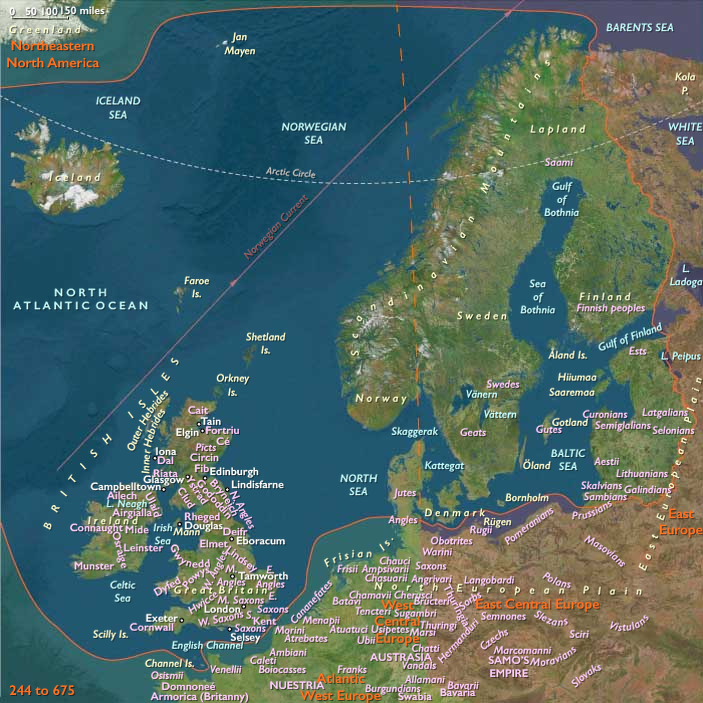
From 388 to 531 CE, Northwest Europe witnessed the final withdrawal of Roman authority, notably marked by Rome's official abandonment of Britain around 410 CE. This period saw rapid political fragmentation, with various local powers vying to fill the vacuum left by departing Roman administration. Centralized Roman institutions dissolved, giving rise to localized governance structures and tribal kingdoms.
Rise of Early Medieval Kingdoms
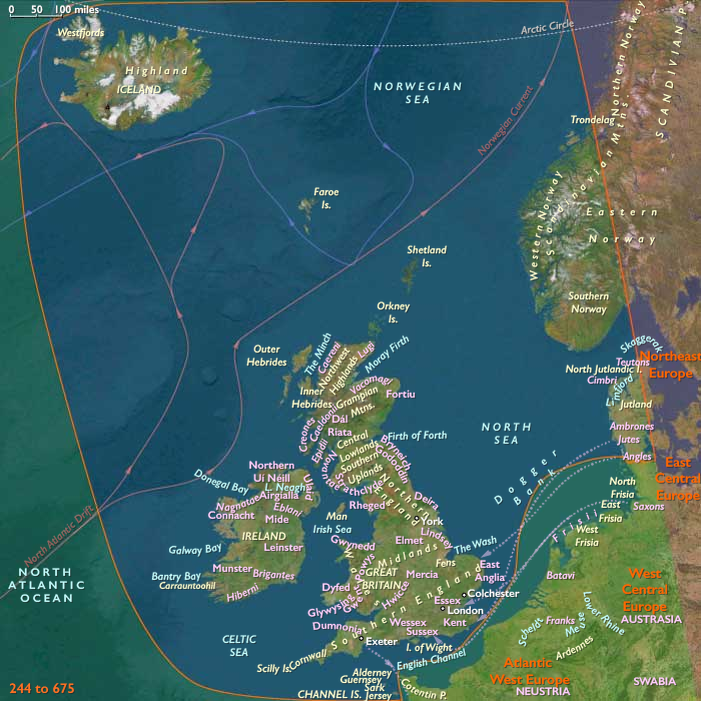
The power vacuum facilitated the emergence of new political entities, including Anglo-Saxon kingdoms in Britain, collectively known as the Heptarchy (Greek: seven realms), comprising kingdoms such as Northumbria, Mercia, East Anglia, Essex, Kent, Sussex, and Wessex. These kingdoms would eventually unify into the Kingdom of England. Simultaneously, Celtic regions, especially in Wales, Scotland, and Cornwall, reasserted independence and developed distinctive cultural and political identities, with kingdoms such as Gwynedd, Dál Riata, and Strathclyde gaining prominence.
Increased Germanic Settlement and Influence
The Anglo-Saxon settlement of Britain in the fifth century involved significant Germanic migration from western Europe, reshaping cultural and demographic landscapes, particularly along Britain’s eastern and southern coasts. Saxons, Angles, and Jutes established powerful settlements, drastically altering the region’s linguistic and cultural composition and leading to profound social transformations.
Celtic Continuity and Resistance
In the western and northern parts of Britain, Celtic communities remained resilient, maintaining their distinct cultural practices and political autonomy. The Irish Sea region saw intensified interactions, with Irish settlers founding influential kingdoms such as Dál Riata in western Scotland and maintaining extensive maritime trade and cultural exchange.
Religious Transformations and Christianization
Christianity continued to spread and deepen its influence during this period, becoming a central cultural and social force across Northwest Europe. The Chronicle of Ireland records that in 431 CE, Bishop Palladius arrived on a mission from Pope Celestine I to minister to Irish Christians already present. The following year, Saint Patrick, Ireland’s most renowned patron saint, arrived, marking a significant turning point in Irish religious history. Both missions led to the decline of traditional druidic beliefs and the rise of Christianity. Monastic traditions strongly emerged in Ireland, fostering influential centers like Iona and Lindisfarne, preserving Latin and Greek learning, and Christian theology during a period when much of Europe was experiencing cultural decline.
Economic Localization and Agricultural Adaptation
Economic life became increasingly localized, with trade networks reduced in scale compared to the Roman period. Communities adapted agricultural practices to regional conditions, maintaining productivity through innovative local techniques and fostering economic self-sufficiency.
Persistent Cultural Vitality in Ireland
Ireland maintained significant cultural continuity and vitality, with traditional ceremonial and spiritual sites, such as Newgrange, Knowth, and Dowth, remaining culturally important. Ireland experienced growth as a center of monastic learning and religious scholarship, influencing religious and cultural developments throughout Britain and continental Europe.
Continued Stability in Orkney and Shetland
The Orkney and Shetland Islands continued to maintain cultural and economic independence, leveraging maritime trade networks and local industries. These islands remained largely autonomous and unaffected by mainland political upheavals, sustaining economic prosperity and cultural continuity.
Persistent Isolation of Iceland and the Faroe Islands
Throughout this period, Iceland and the Faroe Islands remained uninhabited due to their challenging climates and remote geography. Iceland’s ongoing volcanic activity continued to provide significant chronological markers for archaeological research across Northwest Europe.
Legacy of the Age
By 531 CE, Northwest Europe had transitioned into a new era marked by regional kingdoms, profound cultural shifts, and the spread of Christianity. The post-Roman fragmentation and Germanic migrations significantly reshaped societal structures, setting the stage for the medieval kingdoms and cultural landscapes that would define the region’s subsequent history.
People
Groups
- Ireland, ancient
- Celts
- Britons (historical)
- Saxons
- Angles
- Jutes
- Picts
- Scoti
- Irish people
- Britain, Roman
- Roman Empire (Rome): Non-dynastic
- Roman Empire: Tetrarchy
- Roman Empire: Constantinian dynasty (Nicomedia)
- Christianity, Nicene
- Roman Empire: Constantinian dynasty (Constantinople)
- Roman Empire: Valentinian dynasty (Rome)
- Roman Empire: Theodosian dynasty (Constantinople)
- Anglo-Saxons
- Bernicia, Kingdom of
- Gwynedd, Welsh Kingdom of
- Strathclyde, British Kingdom of
- Christianity, Chalcedonian
- Kent, Kingdom of
- Deira, Kingdom of
- Sussex, Kingdom of
- Dál Riata, or Dalriada, Scots Kingdom of
- East Angles, Kingdom of the
- Wessex, English Kingdom of
- Essex, Kingdom of
Topics
- Fall of the Western Roman Empire
- Irish Raids in Britain
- Saxon Raids of 407-550
- Anglo-Saxon settlement of Britain
Commodoties
Subjects
- Commerce
- Architecture
- Environment
- Decorative arts
- Exploration
- Faith
- Government
- Custom and Law
- Technology
- Metallurgy
Regions
Subregions
Related Events
Showing 10 events out of 59517 total
Years: 388 - 531
People
Groups
- Ireland, ancient
- Celts
- Britons (historical)
- Saxons
- Angles
- Jutes
- Picts
- Scoti
- Irish people
- Britain, Roman
- Roman Empire (Rome): Non-dynastic
- Roman Empire: Tetrarchy
- Roman Empire: Constantinian dynasty (Nicomedia)
- Christianity, Nicene
- Roman Empire: Constantinian dynasty (Constantinople)
- Roman Empire: Valentinian dynasty (Rome)
- Roman Empire: Theodosian dynasty (Constantinople)
- Anglo-Saxons
- Bernicia, Kingdom of
- Gwynedd, Welsh Kingdom of
- Strathclyde, British Kingdom of
- Christianity, Chalcedonian
- Kent, Kingdom of
- Deira, Kingdom of
- Sussex, Kingdom of
- Dál Riata, or Dalriada, Scots Kingdom of
- East Angles, Kingdom of the
- Wessex, English Kingdom of
- Essex, Kingdom of
Topics
- Fall of the Western Roman Empire
- Irish Raids in Britain
- Saxon Raids of 407-550
- Anglo-Saxon settlement of Britain
Commodoties
Subjects
- Commerce
- Architecture
- Environment
- Decorative arts
- Exploration
- Faith
- Government
- Custom and Law
- Technology
- Metallurgy
Regions
Subregions