
Northwest Europe (1816–1827): Post-War Struggles, Industrial Triumphs, …
Years: 1816 - 1827
Northwest Europe (1816–1827): Post-War Struggles, Industrial Triumphs, and Cultural Shifts
Post-War Economic Turmoil and Political Repression
The aftermath of the Napoleonic Wars initially plunged Britain into deep economic depression, exacerbated by poor harvests, rising inflation, and mass unemployment, especially among returning soldiers. The Year Without a Summer (1816), a global climatic event, caused severe agricultural failures, widespread famine, and further economic strain, particularly acute in Ireland, where a major typhus epidemic between 1816 and 1819 killed approximately 100,000 people.
Fearing revolutionary unrest, Britain's dominant Tory government—anchored in the declining rural sector—responded with harsh, repressive measures. The suspension of Habeas Corpus (1817) permitted arrest and detention without cause, while Sidmouth's Gagging Acts (1817) severely restricted opposition newspapers. Reformers adapted, disseminating radical ideas through pamphlets that sold tens of thousands weekly.
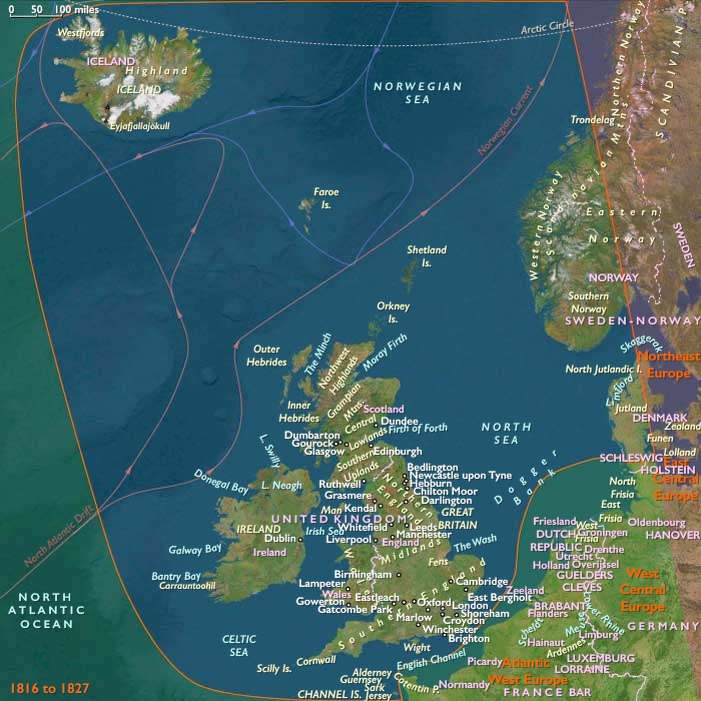
Social tensions peaked at the Peterloo Massacre (1819), when authorities violently suppressed a peaceful demonstration for parliamentary reform in Manchester. In response, Prime Minister Lord Liverpool’s government enacted the Six Acts (1819), severely limiting public assemblies, imposing heavy fines on seditious publications, and restricting press freedom. Although rarely enforced rigorously, these measures intimidated dissenters and reassured conservative interests. By the end of the 1820s, improved economic conditions would allow repeal of many oppressive laws and the 1828 legislation guaranteeing civil rights for religious dissenters.
Cultural Elegance: Beau Brummell and Regency Fashion
Cultural refinement reached new heights during Britain’s Regency era (1811–1820), led by fashion icon Beau Brummell, a celebrated Mayfair dandy renowned across Europe for impeccable dress and refined manners. Brummell meticulously curated his wardrobe—commissioning coats, waistcoats, and breeches from separate expert tailors—and his elaborate neckcloth required hours of careful arrangement. Brummell’s close friendship with George, Prince of Wales (Regent since 1811 and King George IV from 1820) significantly influenced royal fashion standards. Yet Brummell’s extravagance, heavy gambling debts, and sharp wit alienated him from society. His bitter quarrel with the Regent in 1812 diminished his status, and by 1816, mounting debts forced Brummell into exile in Calais, France, where he lived impoverished and forgotten, reflecting the precarious nature of celebrity.
Technological Triumph: Railways and Heavy Locomotive Rails
Britain's Industrial Revolution advanced dramatically with significant developments in railway technology. While earlier cast-iron rails had limitations, breakthroughs occurred when John Birkinshaw of Bedlington Ironworks introduced rolled wrought-iron rails in 1820. Birkinshaw’s rails, manufactured in fifteen-foot lengths, significantly increased load-bearing capacity, crucially enabling locomotives and rail cars. This innovation marked the practical beginning of modern railway transportation, exemplified by the pioneering Stockton and Darlington Railway (1825) engineered by George Stephenson. Although earlier innovations by figures such as Thomas Dadford, William Jessop, and Thomas Barnes laid foundations with various rail profiles, Birkinshaw's innovation—with George Stephenson’s improved lapped joints replacing weaker square butt joints—ensured rail alignment, safety, and reliability, solidifying railway expansion.
Steam Power and Industrial Expansion
Building on earlier innovations by James Watt, steam technology expanded rapidly, fueling Britain's industrial and urban growth. Steam engines powered factories, mills, and the increasingly dense railway networks transforming Britain's economic landscape. Industrial centers like Manchester, Birmingham, and Leeds grew rapidly, driven by manufacturing expansion, factory employment, and improved transportation.
Navigation: Universal Adoption of Marine Chronometers
Marine chronometers, once prohibitively expensive, became standard navigational equipment by this period. Prices fell to £25–£100, equivalent to half a year’s to two years’ wages for skilled workers, becoming affordable and widespread. Reliability and durability of chronometers ensured continued availability, dramatically improving maritime safety and efficiency, thus bolstering Britain’s global maritime dominance and trade networks.
The East India Company and Economic Liberalization
The powerful East India Company continued to dominate British overseas commerce, especially in Indian cotton, silk, spices, and indigo. However, by the 1820s, growing criticism of the company's monopolistic practices emerged, reflecting increased calls for free trade and liberal economic reforms aligned with principles articulated earlier by Adam Smith. These debates presaged future shifts toward trade liberalization.
Romantic Literature, Opium, and Cultural Shifts
The Romantic literary movement flourished through poets such as Percy Bysshe Shelley, John Keats, and Lord Byron, who reflected and critiqued societal and industrial tensions of the age. Notably, English literary circles—figures including John Keats—engaged in recreational experimentation with opium, initially believed non-addictive when taken at infrequent intervals. Lord Byron famously embodied Romantic ideals, setting cultural standards for artistic and social behavior across Europe.
Social Realities: Gender, Labor, and Disguise
Gender disparities persisted starkly during industrialization, compelling some women to adopt men's attire to earn equitable wages. For example, Helen Oliver in 1818, inspired by a Scottish woman who successfully disguised herself as a male plowman, borrowed her brother’s clothing to work as a plasterer. Such instances underscored rigid economic and gender inequalities of the era, highlighting social tensions beneath Britain's industrial progress.
British Political Evolution under George IV
Under the weak governance of George IV (Regent 1811–1820, King 1820–1830), political power shifted decisively toward elected government ministers, solidifying parliamentary authority. Prime Ministers Lord Liverpool (1812–1827) and briefly George Canning (1827) guided Britain through postwar turmoil, maintaining political stability and diplomatic engagements. Britain notably embraced liberal constitutional ideals abroad, intervening to defend Portugal’s constitutional government (1826), recognizing Latin American independence (1824), and aiding the Greek independence movement against the Ottoman Empire (1827).
Scandinavian Realignment: Denmark-Norway’s Aftermath
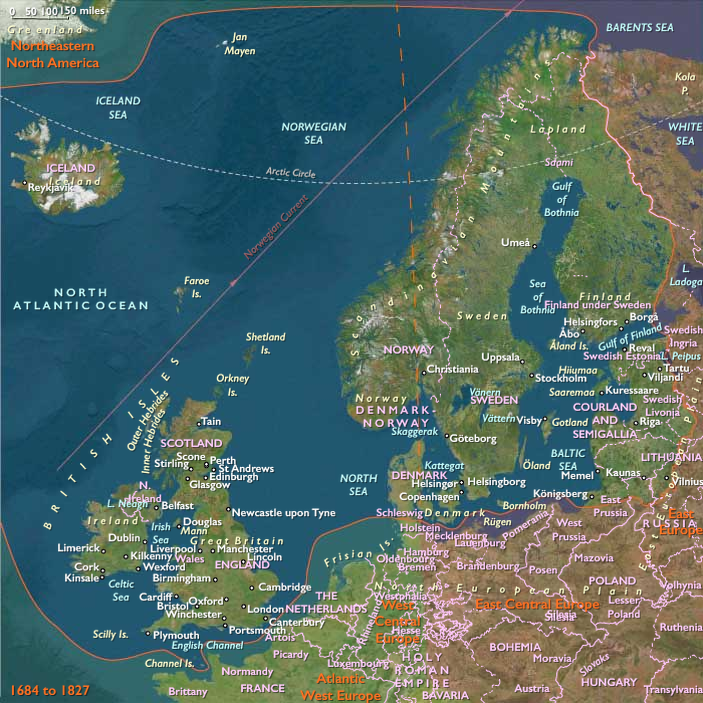
Following the forced union of Norway with Sweden in 1814, Scandinavia experienced geopolitical shifts. Denmark adjusted economically and politically to reduced territory, while Norway began fostering national identity under Swedish rule, redefining Northern European relationships.
Financial Stability and Insurance Innovations
Financial and insurance sectors matured, driven by sound actuarial practices pioneered by institutions like the Society for Equitable Assurances. Life insurance became integral to middle-class financial planning, bolstering public investment confidence and overall economic stability.
Between 1816 and 1827, Northwest Europe navigated a complex era of post-war economic struggle, significant industrial and technological advancement—including pioneering railway innovations—and cultural refinement led by iconic figures such as Beau Brummell. Social tensions, particularly around gender, labor, and political repression, coexisted with substantial progress in transportation, maritime navigation, and financial stability, setting the stage for continued social, political, and economic transformation into the Victorian era.
People
- Adam Smith
- Beau Brummell
- George Canning
- George Gordon, Lord Byron
- George IV of the United Kingdom
- George Stephenson
- James Watt
- John Birkinshaw
- John Keats
- Percy Bysshe Shelley
- Richard Trevithick
- Robert Jenkinson, 2nd Earl of Liverpool
Groups
- Irish people
- Christians, Roman Catholic
- Iceland (Danish dependency)
- Denmark-Norway, Kingdom of
- Anglicans (Episcopal Church of England)
- Presbyterians
- British Empire
- East India Company, British (United Company of Merchants of England Trading to the East Indies)
- Britain (United Kingdom of Great Britain and Ireland)
- Denmark, Kingdom of
- Norway, dependent Swedish kingdom of
Topics
- Middle Subatlantic Period
- Portraits, Rococco
- Colonization of the Americas, British
- Colonization of Asia, British
- Industrial Revolution, First
- Year Without A Summer
- Peterloo Massacre (Manchester Massacre)
Commodoties
Subjects
- Commerce
- Writing
- Environment
- Public health
- Fashion
- Decorative arts
- Mayhem
- Government
- Custom and Law
- Catastrophe
- Finance
- Horology
Regions
Subregions
Years: 1816 - 1827
People
- Adam Smith
- Beau Brummell
- George Canning
- George Gordon, Lord Byron
- George IV of the United Kingdom
- George Stephenson
- James Watt
- John Birkinshaw
- John Keats
- Percy Bysshe Shelley
- Richard Trevithick
- Robert Jenkinson, 2nd Earl of Liverpool
Groups
- Irish people
- Christians, Roman Catholic
- Iceland (Danish dependency)
- Denmark-Norway, Kingdom of
- Anglicans (Episcopal Church of England)
- Presbyterians
- British Empire
- East India Company, British (United Company of Merchants of England Trading to the East Indies)
- Britain (United Kingdom of Great Britain and Ireland)
- Denmark, Kingdom of
- Norway, dependent Swedish kingdom of
Topics
- Middle Subatlantic Period
- Portraits, Rococco
- Colonization of the Americas, British
- Colonization of Asia, British
- Industrial Revolution, First
- Year Without A Summer
- Peterloo Massacre (Manchester Massacre)
Commodoties
Subjects
- Commerce
- Writing
- Environment
- Public health
- Fashion
- Decorative arts
- Mayhem
- Government
- Custom and Law
- Catastrophe
- Finance
- Horology
Regions
Subregions