
Northwest Europe (1660–1671 CE): Restoration, Consolidation, and …
Years: 1660 - 1671
Northwest Europe (1660–1671 CE): Restoration, Consolidation, and Colonial Ambitions
England: Restoration of the Monarchy
Following a period of republican rule, the monarchy was restored in 1660 with the coronation of Charles II, son of the executed Charles I. This event, known as the Restoration, marked a profound shift back to traditional monarchical governance. Charles II sought reconciliation, issuing the Declaration of Breda promising leniency and liberty of conscience. However, tensions persisted between royal authority and parliamentary power, foreshadowing future conflicts. Overall, the Restoration led to an overall reduction in the power of the crown.
Ireland: Continued English Dominance
In Ireland, the Restoration reinforced English dominance established during the Cromwellian Conquest. Land confiscations from Catholic proprietors were largely upheld, maintaining Protestant ascendancy. The Act of Settlement (1662) confirmed land redistribution, significantly impacting the Irish Catholic population. Resentments continued, fueling sectarian tensions.
Scotland: Restoration and Religious Conflict
The monarchy's restoration in Scotland under Charles II saw renewed religious tensions, as the king sought to enforce episcopal governance over a largely Presbyterian populace. The period saw significant religious persecution, notably through the imposition of the Clarendon Code and Covenanter suppression, heightening internal discord and resistance.
Maritime and Colonial Expansion
The English East India Company strengthened its trade and territorial control in Asia, notably gaining Bombay from Portugal as part of the dowry of Catherine of Braganza upon her marriage to Charles II in 1662. This acquisition significantly enhanced England’s strategic maritime position. The Second Anglo-Dutch War (1665–1667) further challenged Dutch commercial supremacy. Despite mixed military success, England secured crucial territorial gains, notably New Amsterdam(renamed New York), fundamentally reshaping colonial dynamics in North America. The East India Company's strength was bolstered by King Charles II's grant of autonomy around 1670, including rights to territorial acquisitions, minting money, commanding fortresses and troops, and exercising civil and criminal jurisdiction.
Scandinavia: Territorial and Political Adjustments
Denmark-Norway under Frederick III continued to consolidate authority following losses to Sweden. The period was characterized by absolutist reforms, notably through the introduction of hereditary and absolute monarchy in 1660, stabilizing internal governance and strengthening royal control. Territorial tensions with Sweden persisted, though temporarily subdued.
Scientific and Intellectual Flourishing
The Royal Society in England, formally chartered in 1662, accelerated scientific and intellectual developments. Notable figures such as Isaac Newton and Robert Hooke emerged, contributing groundbreaking insights into mathematics, physics, and biology. This vibrant scientific community laid essential groundwork for the Age of Enlightenment.
Cultural and Literary Renaissance
This period marked a literary and cultural renaissance. Playwrights like John Dryden flourished under royal patronage, crafting satirical and politically charged dramas reflective of the Restoration’s social dynamics. Additionally, literary activity burgeoned, notably with John Milton completing his epic masterpiece Paradise Lost in 1667, profoundly influencing English literature.
Religious and Social Dynamics
Religious tolerance fluctuated during this era. The return of the monarchy initially seemed to promise greater tolerance, yet punitive measures like the Clarendon Code limited religious freedoms significantly for non-Anglicans. Social dynamics remained complex, particularly regarding religious minorities such as Catholics and Jews, who continued to engage actively in international trade and commerce.
Crisis and Catastrophe
London suffered a visitation of the plague in 1665, followed by the Great Fire of 1666, which raged for five days, destroying approximately fifteen thousand buildings.
Legacy of the Era
By 1671, Northwest Europe had stabilized significantly compared to the turmoil of previous decades, yet underlying tensions remained unresolved. The Restoration's political settlement set precedents for later constitutional developments, while continued colonial expansion firmly positioned England for future imperial dominance. Scientific and cultural advances laid crucial intellectual foundations, and the era’s complexities foreshadowed ongoing struggles around governance, religion, and social order.
People
- Catherine of Braganza
- Charles I
- Charles II
- Frederick III of Denmark
- Isaac Newton
- John Dryden
- John Milton
- Robert Hooke
Groups
- Gaels
- Irish people
- Scottish people
- Christians, Roman Catholic
- English people
- Scotland, Kingdom of
- France, (Valois) Kingdom of
- Iceland (Danish dependency)
- Portuguese Empire
- Lutheranism
- Protestantism
- Denmark-Norway, Kingdom of
- Anglicans (Episcopal Church of England)
- Puritans
- Ireland, (English) Kingdom of
- Presbyterians
- Netherlands, United Provinces of the (Dutch Republic)
- Mughal Empire (Agra)
- London Company, The (also called the Virginia Company of London)
- Virginia (English Colony)
- Massachusetts Bay Colony (sometimes called the Massachusetts Bay Company, for its founding institution)
- England, (Stewart, Restored) Kingdom of
Topics
- Middle Subatlantic Period
- Colonization of Asia, English
- Protestant Reformation
- Colonization of the Americas, English
- Ulster, Plantation of
- Interregnum, English (First)
- English Restoration
- Great Plague of London
- Anglo-Dutch War, Second
- Great Fire of London
Subjects
- Commerce
- Writing
- Performing Arts
- Public health
- Conflict
- Mayhem
- Faith
- Government
- Custom and Law
- Catastrophe
- Biology
- Mathematics
- Physics and Mechanics
Regions
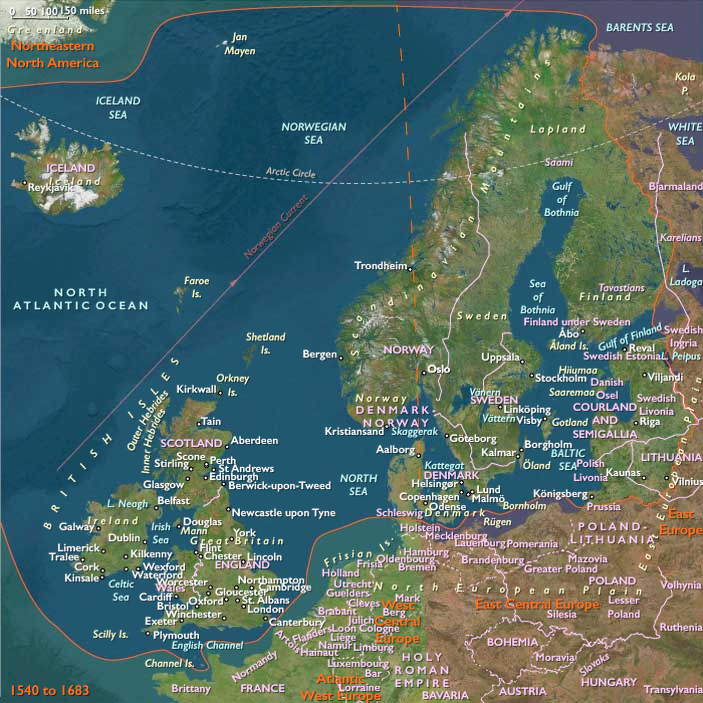
Subregions
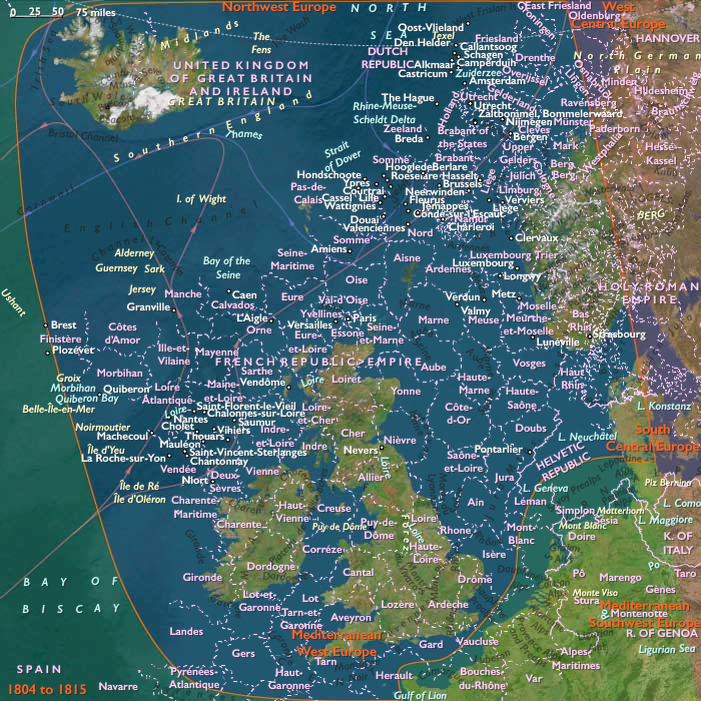
Years: 1660 - 1671
People
- Catherine of Braganza
- Charles I
- Charles II
- Frederick III of Denmark
- Isaac Newton
- John Dryden
- John Milton
- Robert Hooke
Groups
- Gaels
- Irish people
- Scottish people
- Christians, Roman Catholic
- English people
- Scotland, Kingdom of
- France, (Valois) Kingdom of
- Iceland (Danish dependency)
- Portuguese Empire
- Lutheranism
- Protestantism
- Denmark-Norway, Kingdom of
- Anglicans (Episcopal Church of England)
- Puritans
- Ireland, (English) Kingdom of
- Presbyterians
- Netherlands, United Provinces of the (Dutch Republic)
- Mughal Empire (Agra)
- London Company, The (also called the Virginia Company of London)
- Virginia (English Colony)
- Massachusetts Bay Colony (sometimes called the Massachusetts Bay Company, for its founding institution)
- England, (Stewart, Restored) Kingdom of
Topics
- Middle Subatlantic Period
- Colonization of Asia, English
- Protestant Reformation
- Colonization of the Americas, English
- Ulster, Plantation of
- Interregnum, English (First)
- English Restoration
- Great Plague of London
- Anglo-Dutch War, Second
- Great Fire of London
Subjects
- Commerce
- Writing
- Performing Arts
- Public health
- Conflict
- Mayhem
- Faith
- Government
- Custom and Law
- Catastrophe
- Biology
- Mathematics
- Physics and Mechanics
Regions
Subregions