
Northwest Europe (1636–1647 CE): Civil Strife, Colonial …
Years: 1636 - 1647
Northwest Europe (1636–1647 CE): Civil Strife, Colonial Expansion, and Intellectual Achievement
England: Civil War and Turmoil
The tensions between Charles I and Parliament culminated in open conflict with the outbreak of the English Civil War in 1642. The king's authoritarian policies, religious controversies, and resistance to parliamentary authority led to a brutal struggle between Royalists (supporters of the monarchy) and Parliamentarians (advocates of parliamentary governance). Prominent leaders such as Oliver Cromwell emerged, significantly influencing the Parliamentarian cause. Battles such as Edgehill (1642), Marston Moor (1644), and Naseby (1645) were pivotal, ultimately resulting in Charles's defeat and subsequent imprisonment.
Ireland: Rebellion and Conflict
In 1641, Ireland erupted into rebellion as the Catholic Gaelic and Old English populations sought to reverse decades of plantation policies and Protestant domination. This uprising swiftly escalated into the Irish Confederate Wars, intertwining with the broader conflicts across Britain and Ireland, further complicating the turbulent political landscape.
Scotland: Covenanters and Wars of the Three Kingdoms
Scotland, deeply affected by Charles I's religious policies, witnessed the outbreak of the Bishops' Wars in 1639 and 1640, driven by Presbyterian Covenanters resisting Anglican influence. By 1643, Scotland allied formally with the English Parliamentarians through the Solemn League and Covenant, playing a critical role in shaping the outcome of the civil wars across the British Isles.
Scandinavia: Denmark-Norway’s Continuing Struggles
Christian IV struggled to restore Danish influence following earlier military defeats. Although he pursued internal reforms and fortifications, Denmark-Norway remained politically weakened, grappling with ongoing economic and military setbacks that constrained its ambitions in European affairs.
Maritime and Colonial Developments
The English East India Company expanded its commercial presence in India significantly during this period. The hospitality initially extended by the Mughal emperor Jahangir was further consolidated under his successor Shah Jahan, resulting in increased English influence and the expansion of trade networks, particularly in commodities like cotton, silk, indigo, and tea. Concurrently, English colonial ventures in North America continued to flourish, with Massachusetts Bay Colony and other New England settlements experiencing substantial growth, laying foundational structures for future American colonial expansion.
Scientific and Intellectual Advances
The period remained intellectually vibrant, marked by ongoing developments in natural philosophy and science. The legacy of Francis Bacon’s inductive methods continued to inspire researchers, while significant strides were made in mathematics and astronomy. In 1637, René Descartes published Discourse on Method, greatly influencing European thought, including intellectual circles in Northwest Europe.
Cultural Flourishing Amidst Conflict
Despite political upheaval, cultural life in Northwest Europe persisted robustly. Literature thrived, with the emergence of works such as John Milton’s early poetry, reflecting the intense religious and political debates of the era. Music and theater continued to evolve, capturing the complexities and turbulence of contemporary society.
Legacy of the Era
By 1647 CE, Northwest Europe was profoundly transformed. England stood on the precipice of a republic as Charles I awaited trial and the balance of power shifted decisively toward Parliament. Ireland and Scotland remained entangled in complex conflicts tied to broader struggles across the British Isles. Meanwhile, the region's cultural and intellectual advancements set the stage for future developments, marking the era as one of profound transition.
People
Groups
- Gaels
- Irish people
- Scottish people
- Christians, Roman Catholic
- English people
- Scotland, Kingdom of
- France, (Valois) Kingdom of
- Iceland (Danish dependency)
- Portuguese Empire
- Lutheranism
- Protestantism
- Anglicans (Episcopal Church of England)
- Denmark-Norway, Kingdom of
- Puritans
- Jesuits, or Order of the Society of Jesus
- Ireland, (English) Kingdom of
- Presbyterians
- Mughal Empire (Agra)
- England, (Stuart) Kingdom of
- London Company, The (also called the Virginia Company of London)
- Virginia (English Colony)
- Massachusetts Bay Colony (sometimes called the Massachusetts Bay Company, for its founding institution)
Topics
- Middle Subatlantic Period
- Colonization of Asia, English
- Protestant Reformation
- Colonization of the Americas, English
- Ulster, Plantation of
- Thirty Years' War
- Bishops' Wars
- Three Kingdoms, Wars of the
- Irish Rebellion, Great
- Irish Confederate Wars
- English Civil War, First, or Great
- Edgehill, Battle of
- Scotland in the Wars of the Three Kingdoms
- Marston Moor, Battle of
- Naseby, Battle of
Commodoties
Subjects
Regions
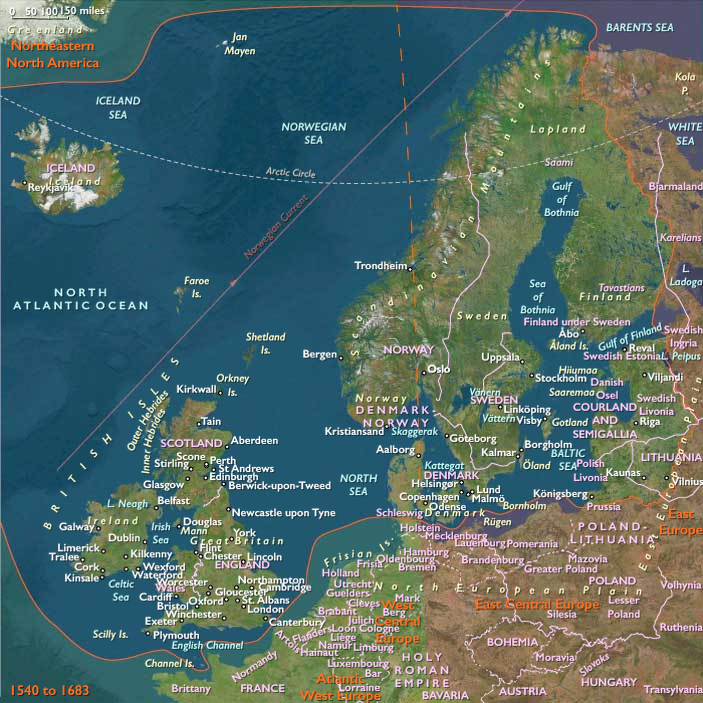
Subregions
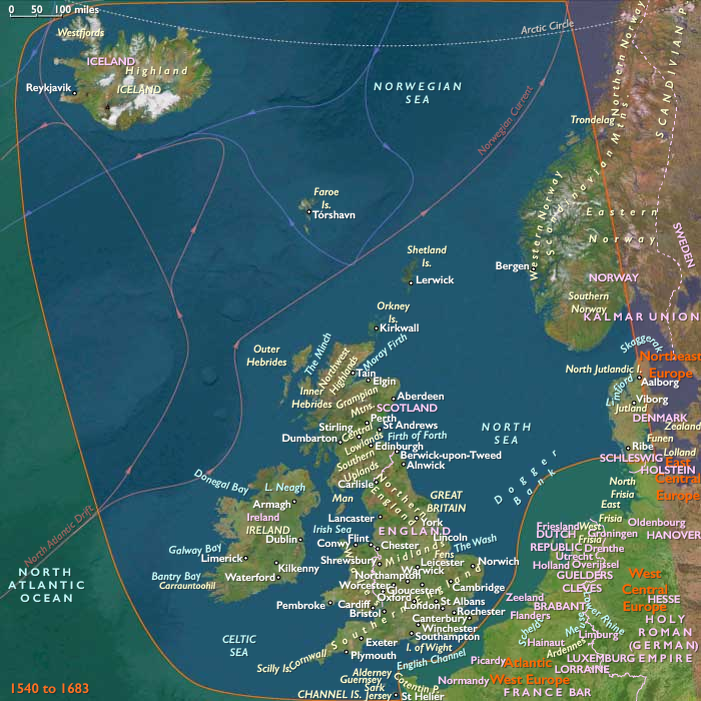
Years: 1636 - 1647
People
Groups
- Gaels
- Irish people
- Scottish people
- Christians, Roman Catholic
- English people
- Scotland, Kingdom of
- France, (Valois) Kingdom of
- Iceland (Danish dependency)
- Portuguese Empire
- Lutheranism
- Protestantism
- Anglicans (Episcopal Church of England)
- Denmark-Norway, Kingdom of
- Puritans
- Jesuits, or Order of the Society of Jesus
- Ireland, (English) Kingdom of
- Presbyterians
- Mughal Empire (Agra)
- England, (Stuart) Kingdom of
- London Company, The (also called the Virginia Company of London)
- Virginia (English Colony)
- Massachusetts Bay Colony (sometimes called the Massachusetts Bay Company, for its founding institution)
Topics
- Middle Subatlantic Period
- Colonization of Asia, English
- Protestant Reformation
- Colonization of the Americas, English
- Ulster, Plantation of
- Thirty Years' War
- Bishops' Wars
- Three Kingdoms, Wars of the
- Irish Rebellion, Great
- Irish Confederate Wars
- English Civil War, First, or Great
- Edgehill, Battle of
- Scotland in the Wars of the Three Kingdoms
- Marston Moor, Battle of
- Naseby, Battle of
Commodoties
Subjects
Regions
Subregions