
Northwest Europe (1600–1611 CE): Transitions, Unifications, and …
Years: 1600 - 1611
Northwest Europe (1600–1611 CE): Transitions, Unifications, and Continued Struggles
England: End of the Elizabethan Era
The opening years of the seventeenth century saw the culmination and conclusion of the Elizabethan age. Queen Elizabeth I died in 1603, bringing to an end her long and largely successful reign. She was succeeded by James VI of Scotland, who ascended the English throne as James I, marking the beginning of the Stuart dynasty. This union of the crowns under James initiated a new political landscape, uniting Scotland and England under a single monarch, though both countries retained separate parliaments and administrations.
James I faced immediate challenges, notably the Gunpowder Plot of 1605, a failed Catholic conspiracy led by Robert Catesby and famously involving Guy Fawkes, who sought to assassinate the king and destroy Parliament. The plot's failure heightened anti-Catholic sentiments and intensified religious tensions within the realm. James, concerned about Catholic threats and assassination attempts justified by European Catholic writings, responded by expelling Jesuits and other Catholic priests from England and reimposing fines for recusancy, further aggravating religious tensions.
Ireland: End of Tyrone’s Rebellion
The prolonged Nine Years' War in Ireland reached its conclusion during this period. Hugh O'Neill, Earl of Tyrone, initially successful in employing guerrilla tactics, ultimately suffered defeat at the Battle of Kinsale in 1601. This decisive English victory under Lord Mountjoy marked the collapse of Gaelic resistance and the reaffirmation of English authority. The Treaty of Mellifont (1603) formalized O'Neill's submission, bringing temporary peace but setting the stage for subsequent displacements and the Plantation of Ulster, which began in earnest during these years, profoundly reshaping Ireland’s demographic and cultural landscape.
Scotland: Consolidation under James VI
With his ascension to the English throne, James VI sought to unify his realms more closely, though political and religious differences persisted. James advocated strongly for his concept of the divine right of kings, detailed in his writings such as the Basilikon Doron. His efforts to harmonize Scottish and English policies, however, met resistance from both nations’ elites, complicating his vision for a unified Britain.
Scandinavia: Continued Prosperity under Christian IV
Christian IV of Denmark-Norway continued to strengthen his realms economically and culturally. His reign saw the expansion of trade and infrastructure, notably with significant improvements in Copenhagen. Christian actively promoted exploration, initiating expeditions to North America, and further reinforced Lutheran orthodoxy, asserting greater control over religious and social life.
Cultural Achievements: Flourishing Literature and Theater
English culture continued to thrive under James I, who actively patronized literary and theatrical arts. William Shakespeare produced some of his greatest tragedies during this era, including Hamlet (1601), Othello (1603–1604), and King Lear (1605–1606). The theatrical scene also featured the works of other notable playwrights such as Ben Jonson, whose satirical comedies like Volpone (1605–1606) achieved considerable acclaim. The issuance of the King James Bible in 1611 became a cornerstone for English literature and Protestant thought.
Maritime and Colonial Ambitions
Maritime exploration and imperial ambitions persisted. The English established their first permanent settlement in North America at Jamestown, Virginia in 1607, signaling the beginning of sustained English colonial presence. The Virginia Company of London financed this venture, hoping to profit from gold and other resources, though the colony initially struggled with harsh conditions and high mortality rates. The East India Company, established in 1600, began asserting England's global commercial presence, contending with Iberian rivals for domination of world trade.
Legacy of the Era
By 1611 CE, Northwest Europe had undergone significant transformations, marked by dynastic changes, the conclusion of major rebellions, and continued cultural flourishing. The peaceful transition from Elizabethan to Stuart rule in England, despite challenges such as the Gunpowder Plot, laid the foundation for ongoing debates over monarchy and governance. Ireland’s defeat at Kinsale fundamentally altered its societal structure, setting patterns of colonization and conflict. Scotland’s integration with England under James VI and I began reshaping both kingdoms politically. Meanwhile, cultural achievements, particularly in drama and literature, maintained their vibrancy, continuing to enrich European civilization profoundly.
People
- Ben Jonson
- Charles Blount, Lord Mountjoy
- Charles Howard
- Christian IV
- Elizabeth I
- Guy Fawkes
- Hugh Ó Neill
- James I
- Robert Catesby
- William Shakespeare
Groups
- Gaels
- Irish people
- Ireland, medieval
- Christians, Roman Catholic
- Scotland, Kingdom of
- France, (Valois) Kingdom of
- Iceland (Danish dependency)
- Portuguese Empire
- England, (Tudor) Kingdom of
- Spanish Empire
- Lutheranism
- Protestantism
- Anglicans (Episcopal Church of England)
- Denmark-Norway, Kingdom of
- Calvinists
- Ireland, (English) Kingdom of
- Presbyterians
- Spain, Habsburg Kingdom of
- East India Company, British (The Company of Merchants of London Trading into the East Indies)
- London Company, The (also called the Virginia Company of London)
- Virginia (English Colony)
Topics
- Middle Subatlantic Period
- Protestant Reformation
- Elizabethan Period
- Colonization of the Americas, English
- Anglo-Spanish War of 1585-1604
- Nine Years' War in Ireland, or Tyrone's Rebellion
- Kinsale, Siege of
- Gunpowder Plot
- Ulster, Plantation of
Subjects
Regions
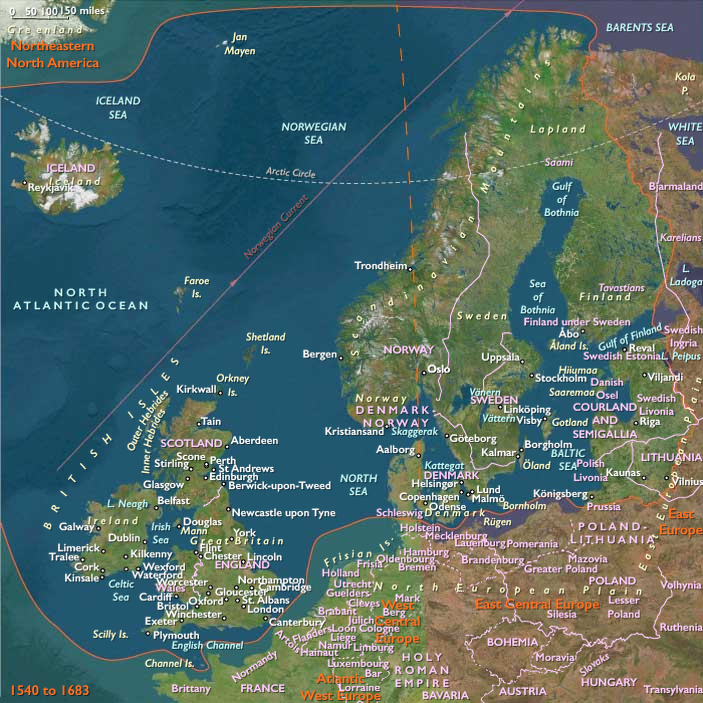
Subregions
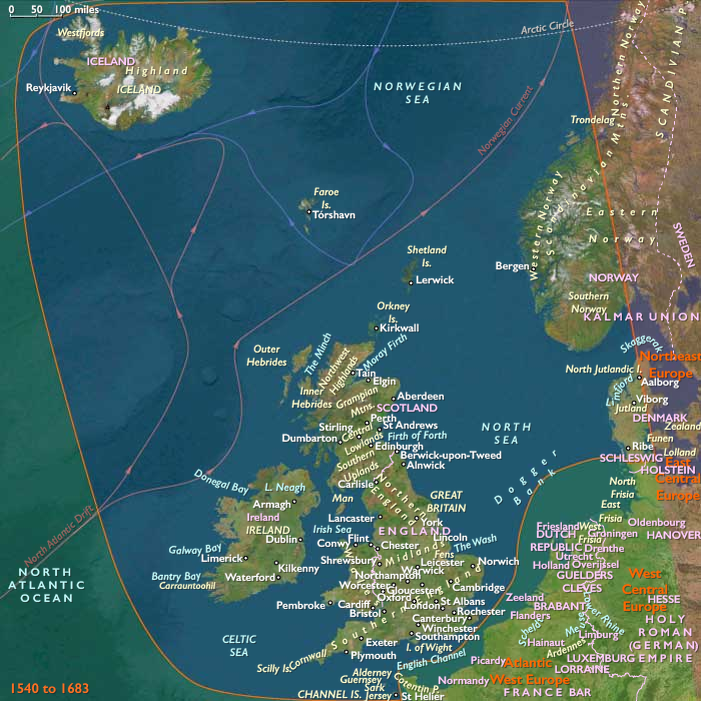
Years: 1600 - 1611
People
- Ben Jonson
- Charles Blount, Lord Mountjoy
- Charles Howard
- Christian IV
- Elizabeth I
- Guy Fawkes
- Hugh Ó Neill
- James I
- Robert Catesby
- William Shakespeare
Groups
- Gaels
- Irish people
- Ireland, medieval
- Christians, Roman Catholic
- Scotland, Kingdom of
- France, (Valois) Kingdom of
- Iceland (Danish dependency)
- Portuguese Empire
- England, (Tudor) Kingdom of
- Spanish Empire
- Lutheranism
- Protestantism
- Anglicans (Episcopal Church of England)
- Denmark-Norway, Kingdom of
- Calvinists
- Ireland, (English) Kingdom of
- Presbyterians
- Spain, Habsburg Kingdom of
- East India Company, British (The Company of Merchants of London Trading into the East Indies)
- London Company, The (also called the Virginia Company of London)
- Virginia (English Colony)
Topics
- Middle Subatlantic Period
- Protestant Reformation
- Elizabethan Period
- Colonization of the Americas, English
- Anglo-Spanish War of 1585-1604
- Nine Years' War in Ireland, or Tyrone's Rebellion
- Kinsale, Siege of
- Gunpowder Plot
- Ulster, Plantation of
Subjects
Regions
Subregions