
Northwest Europe (1480–1491 CE): Consolidation, Conflict, and …
Years: 1480 - 1491
Northwest Europe (1480–1491 CE): Consolidation, Conflict, and Cultural Expansion
England: Consolidation of Yorkist Power
Following years of dynastic turmoil, Edward IV effectively stabilized his reign and strengthened the Yorkist hold on power, ruling with considerable authority until his sudden death in 1483. His young heir, Edward V, briefly ascended the throne, but Edward IV’s brother, Richard, Duke of Gloucester, seized the crown, becoming Richard III. Richard III's reign was overshadowed by controversy, especially surrounding the disappearance of Edward V and his brother, the "Princes in the Tower," presumed murdered. In 1485, the Lancastrian claimant Henry Tudor challenged Richard at the Battle of Bosworth Field, where Richard III was killed, effectively ending the Wars of the Roses. Henry Tudor became Henry VII, establishing the Tudor dynasty and marking a significant turning point in English history. Sporadic Yorkist revolts continued, resulting in the last pitched battles of the Wars of the Roses, though stability gradually returned under Henry VII's cautious but firm governance.
Scotland: Persistent Nobility Conflict
In Scotland, King James III faced continued tensions and rebellions due to his unpopular favoritism toward commoners and estrangement from powerful noble factions. Conflict culminated dramatically in 1488 at the Battle of Sauchieburn, where James III was killed and succeeded by his son, James IV, whose reign ushered in greater political stability and cultural growth, enhancing Scotland’s Renaissance. An agreement between James III and the Macdonald “Lord of the Isles” in 1480 turned Macdonald’s illegitimate son, Aonghas Óg, against both his father and the central government, leading to continued violent divisions in the Highlands until Aonghas’s assassination in 1490. Anglo-Scottish truces negotiated in 1484, 1487, and again in 1491 contributed to relative peace.
Ireland: Gaelic Dominance and Limited English Influence
Ireland saw sustained Gaelic power, with dominant families such as the Fitzgeralds and O'Neills continuing to effectively limit English authority largely to the region around The Pale. Despite intermittent English efforts at asserting greater control, Gaelic society flourished culturally and politically, strengthening the autonomous Irish identity through continued production of native poetry and adherence to traditional Brehon laws.
Scandinavia: Fragile Stability of the Kalmar Union
The Kalmar Union under King Hans (John) continued to experience tensions, especially from Sweden, which persistently sought greater independence. King Hans pursued a balanced policy combining diplomatic efforts and strategic marital alliances to maintain Danish dominance. The Union remained intact, albeit fragile, highlighting the ongoing struggle between centralized royal power and regional independence movements.
Iceland: Preservation of Literary Heritage
In Iceland, isolation and limited economic resources compelled continued cultural self-reliance. Manuscript production persisted robustly, preserving essential Icelandic sagas and poetic traditions. Despite external pressures, Icelanders remained culturally vibrant, carefully transmitting their historical narratives and literary achievements from generation to generation.
Cultural and Intellectual Advances
The period experienced remarkable cultural expansion. In England, William Caxton’s Westminster press continued publishing essential literary works, including Sir Thomas Malory’s influential Morte Darthur in print form in 1485, greatly impacting literary traditions. Caxton’s press also produced a translation in 1481 of the Flemish version of Reynard the Fox, and his translation of Vincent of Beauvais’s Myrour of the Worlde. Additionally, Caxton published his Vocabulary in French and English and numerous works by Chaucer and Gower, solidifying the English literary language. Caxton’s associate, Theoderic Rood, introduced printing to Oxford, enhancing scholarly output, including influential texts like John Ankywyll's Compendium totius grammaticae.
Architectural innovations proceeded with widespread adoption of the Perpendicular Gothic style, particularly in church construction, exemplified by the ongoing enhancements to York Minster, whose Magdalen Tower became an iconic Oxford landmark. Music and visual arts flourished, shaped by influences from continental Europe and regional creativity.
Legacy of the Era
By 1491 CE, Northwest Europe entered a period marked by renewed dynastic stability, cultural enrichment, and persistent regional autonomy. England transitioned smoothly into Tudor rule, Scotland saw relative internal peace under James IV, Ireland maintained robust Gaelic autonomy, and the Kalmar Union navigated continuing internal strains. The enduring literary and cultural heritage, supported by innovations in printing and artistic expression, laid strong foundations for Northwest Europe’s subsequent development.
People
- Aonghas Óg
- Christian I
- Edward IV of England
- Edward V of England
- Henry VII of England
- James III of Scotland
- James IV of Scotland
- John Dunstaple
- John, King of Denmark
- Richard III of England
- Theoderic Rood
- Thomas Malory
- William Caxton
Groups
- Gaels
- Irish people
- Ireland, medieval
- Icelandic Commonwealth, or Icelandic Free State
- Christians, Roman Catholic
- Scotland, Kingdom of
- Kalmar Union (of Denmark, Norway and Sweden)
- England, (Plantagenet, Lancastrian) Kingdom of
- England, (Plantagenet, Yorkist) Kingdom of
Topics
- Middle Subatlantic Period
- Anglo-Scottish Wars
- Roses, Wars of the
- Anglo-Scottish War of 1482
- Bosworth Field, Battle of
- Sauchieburn, Battle of
Subjects
Regions
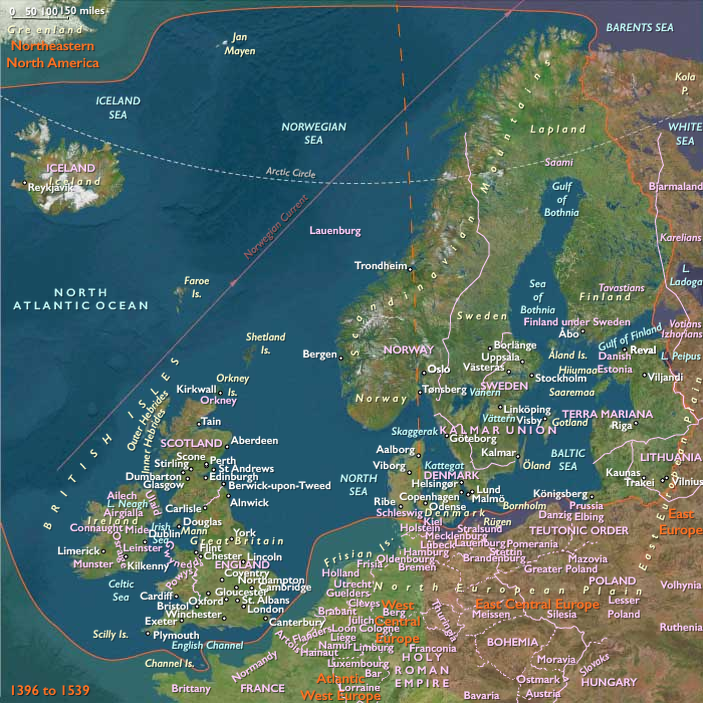
Subregions
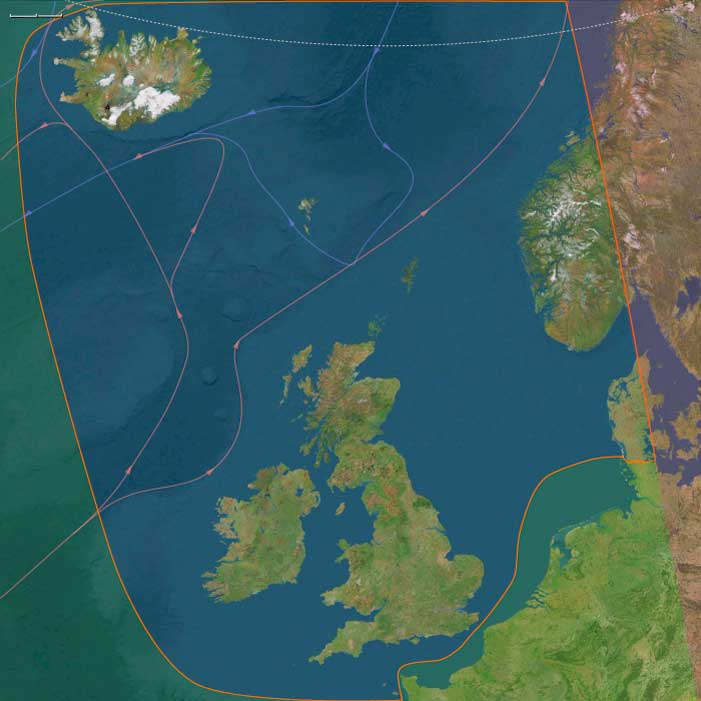
Related Events
Showing 10 events out of 40684 total
Years: 1480 - 1491
People
- Aonghas Óg
- Christian I
- Edward IV of England
- Edward V of England
- Henry VII of England
- James III of Scotland
- James IV of Scotland
- John Dunstaple
- John, King of Denmark
- Richard III of England
- Theoderic Rood
- Thomas Malory
- William Caxton
Groups
- Gaels
- Irish people
- Ireland, medieval
- Icelandic Commonwealth, or Icelandic Free State
- Christians, Roman Catholic
- Scotland, Kingdom of
- Kalmar Union (of Denmark, Norway and Sweden)
- England, (Plantagenet, Lancastrian) Kingdom of
- England, (Plantagenet, Yorkist) Kingdom of
Topics
- Middle Subatlantic Period
- Anglo-Scottish Wars
- Roses, Wars of the
- Anglo-Scottish War of 1482
- Bosworth Field, Battle of
- Sauchieburn, Battle of
Subjects
Regions
Subregions