
Northwest Europe (1468–1479 CE): Dynastic Turmoil and …
Years: 1468 - 1479
Northwest Europe (1468–1479 CE): Dynastic Turmoil and Cultural Renaissance
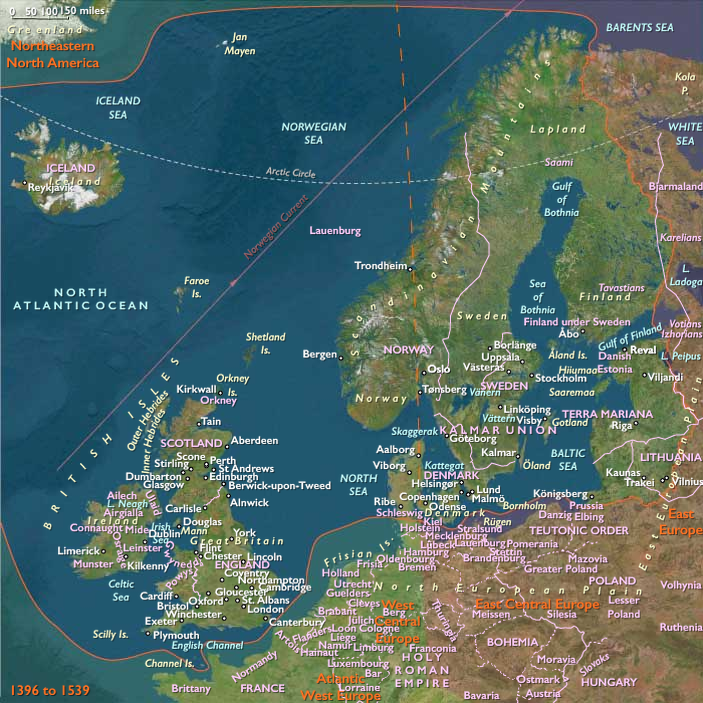
England: Wars of the Roses and Royal Turmoil
The Wars of the Roses escalated dramatically, driven by shifting allegiances and intermittent conflict. Initially secure, King Edward IV faced substantial setbacks, notably losing his throne briefly in 1470 due to the Lancastrian resurgence orchestrated by Richard Neville, Earl of Warwick, famously known as the "Kingmaker." Warwick temporarily restored the Lancastrian monarch Henry VI, but Edward IV decisively reclaimed power at the pivotal Battles of Barnet and Tewkesbury in 1471, resulting in the deaths of Warwick and Edward of Westminster, Henry VI’s heir. Shortly thereafter, Henry VI himself perished under suspicious circumstances in the Tower of London, consolidating Edward IV’s reign. Yet Edward’s earlier secret marriage to Elizabeth Woodville continued to alienate powerful supporters, leaving underlying tensions unresolved.
This period also saw profound cultural advancements with William Caxton, an English merchant and printer, establishing England’s first printing press in 1476 at Westminster. Caxton's press issued its first dated English printed work, Dictes or Sayenges of the Phylosophers (1477), marking a pivotal transformation in the spread and standardization of English literature. Concurrently, Sir Thomas Malory completed his seminal prose romance, Morte Darthur, around 1470, a text that vividly reimagined Arthurian legend and deeply influenced England’s literary culture.
Scotland: Cultural Flourishing Amid Internal Dissent
In Scotland, King James III grappled with ongoing internal dissent exacerbated by his favoritism towards low-born courtiers, causing substantial friction with traditional nobility. Despite political instability, the Scottish Renaissance flourished, driven by significant royal patronage of architecture and the arts. The period saw continued progress in literature and learning, enhancing Scotland’s distinctive cultural identity even amidst political turbulence.
Ireland: Consolidation of Gaelic Power
Gaelic influence significantly strengthened throughout Ireland. Powerful Irish dynasties, notably the Fitzgeralds and O'Neills, maintained substantial autonomy, vigorously opposing English authority beyond The Pale. The era marked a period of considerable cultural output, particularly in poetry and native Irish legal traditions, reinforcing Gaelic identity and pride despite repeated English attempts to assert greater control.
Scandinavia: Continued Kalmar Union Frictions
In Scandinavia, the Kalmar Union under Christian I faced persistent internal challenges, particularly from Sweden, which frequently contested Danish hegemony. Christian’s authority remained precarious, maintained primarily through diplomacy, marriage alliances, and occasional military actions to quell rebellions. The ongoing tensions within the union underscored its inherent fragility and presaged future conflicts.
Iceland: Cultural Preservation in Isolation
Iceland remained committed to preserving its unique literary heritage despite political marginalization and geographic isolation. Icelanders continued their diligent preservation of sagas and poetry, maintaining a vibrant cultural legacy central to their national identity. Manuscript production flourished, significantly contributing to the historical and literary richness of the region.
Cultural and Artistic Achievements
Northwest Europe experienced considerable artistic and intellectual advancement during this era. English composers, notably influenced by John Dunstaple, further refined polyphonic music through sophisticated harmonies, while ecclesiastical architecture, exemplified by developments at York Minster, increasingly reflected the distinctive Perpendicular Gothic style. This period also saw the proliferation of literary and poetic works, bolstered by the transformative impact of Caxton’s printing press, fundamentally changing literary dissemination and accessibility.
Legacy of the Era
By 1479 CE, Northwest Europe was deeply shaped by ongoing dynastic conflicts, significant cultural advancements, and enduring regional tensions. Edward IV temporarily stabilized England, Scotland advanced culturally amid internal discord, Ireland saw enhanced Gaelic authority, and the Kalmar Union navigated persistent internal challenges. These diverse dynamics collectively defined the social, political, and cultural landscapes of Northwest Europe, laying foundations that would profoundly influence subsequent historical developments.
People
- Christian I
- Edward IV of England
- Edward of Westminster
- Elizabeth Woodville
- Henry VI
- James III of Scotland
- John Dunstaple
- Richard Neville, 16th Earl of Warwick
- Thomas Malory
- William Caxton
Groups
- Gaels
- Irish people
- Ireland, medieval
- Icelandic Commonwealth, or Icelandic Free State
- Christians, Roman Catholic
- Scotland, Kingdom of
- Kalmar Union (of Denmark, Norway and Sweden)
- England, (Plantagenet, Lancastrian) Kingdom of
- England, (Plantagenet, Yorkist) Kingdom of
Topics
Subjects
Regions
Subregions
Related Events
Showing 2 events out of 2 total
Years: 1468 - 1479
People
- Christian I
- Edward IV of England
- Edward of Westminster
- Elizabeth Woodville
- Henry VI
- James III of Scotland
- John Dunstaple
- Richard Neville, 16th Earl of Warwick
- Thomas Malory
- William Caxton
Groups
- Gaels
- Irish people
- Ireland, medieval
- Icelandic Commonwealth, or Icelandic Free State
- Christians, Roman Catholic
- Scotland, Kingdom of
- Kalmar Union (of Denmark, Norway and Sweden)
- England, (Plantagenet, Lancastrian) Kingdom of
- England, (Plantagenet, Yorkist) Kingdom of
Topics
Subjects
Regions
Subregions