
Northwest Europe (1432–1443 CE): Shifts in Power …
Years: 1432 - 1443
Northwest Europe (1432–1443 CE): Shifts in Power and Cultural Flourishing
England: Regency and Dynastic Strife
Following the premature death of Henry V, England found itself under the troubled regency during the minority of Henry VI, whose reign was marked by instability. Powerful nobles vied for influence, further complicated by ongoing conflicts in France. English military positions weakened, and internal factional struggles intensified, laying foundations for future strife.
Scotland: Return and Reforms of James I
In 1424, James I returned to Scotland after eighteen years of English captivity, taking active control of his kingdom. His rule focused on centralizing royal authority, reducing the power of the nobility, and reforming Scottish governance along English lines. James established a more robust legal framework and fostered economic development through support for trade and urban growth. He was generally credited with authoring The Kingis Quair ("The King's Book"), a poetic reflection on his captivity and romance with Joan Beaufort, showcasing a profound blend of personal experience and literary talent.
Ireland: Gaelic Authority Strengthens
Gaelic authority in Ireland continued to strengthen, as local chieftains like the O’Neills and the O’Briens solidified their autonomous positions. English influence remained confined primarily to The Pale, with efforts to reclaim broader authority largely ineffective. Irish cultural life thrived, fostering a distinct Gaelic identity increasingly independent of English control.
Scandinavia: Struggle within the Kalmar Union
Under King Eric of Pomerania, the Kalmar Union struggled to manage internal discord, especially from Sweden. Opposition to Eric’s centralizing policies grew, notably among the Swedish nobility, resulting in escalating tensions and occasional outbreaks of conflict. Despite this, the union endured, maintaining relative peace through fragile political compromises.
Iceland: Continued Cultural Resilience
Icelandic cultural resilience flourished within the Kalmar Union. Literary activity, especially saga-writing and historical chronicles, persisted robustly, preserving Iceland's rich heritage and distinct identity. This era witnessed significant commitment to maintaining the literary and historical legacy unique to Iceland.
Cultural Developments and Artistic Achievements
Cultural achievements across Northwest Europe remained prominent. Architectural projects such as the ongoing enhancements at York Minster, exemplifying the Perpendicular Gothic style, advanced artistic innovation. English composer John Dunstaple and contemporaries like Leonel Power shaped musical developments through their innovative mass-ordinary cycles, often based on cantus firmus techniques, and Dunstaple’s harmonic use of thirds and sixths, profoundly influencing European music.
Legacy of the Era
By 1443 CE, Northwest Europe had witnessed significant shifts in political power and vibrant cultural accomplishments. England struggled with internal factionalism and diminishing French territories; Scotland benefited from King James I’s centralizing reforms; Ireland saw continued Gaelic dominance; and the Kalmar Union grappled with persistent tensions threatening its stability. Amid these political complexities, cultural and artistic endeavors flourished, underscoring the region’s resilience and intellectual vitality during this transformative period.
People
- Catherine of Valois
- Charles VI of France
- Charles VII of France
- Eric of Pomerania
- Henry V of England
- Henry VI
- James I, King of Scots
- John Dunstaple
- Leonel Power
- Murdoch Stewart
- Robert Stewart
Groups
- Gaels
- Irish people
- Ireland, medieval
- England, (Anglo-Saxon) Kingdom of
- Icelandic Commonwealth, or Icelandic Free State
- Christians, Roman Catholic
- Scotland, Kingdom of
- France, (Valois) Kingdom of
- Kalmar Union (of Denmark, Norway and Sweden)
Topics
- Middle Subatlantic Period
- Subatlantic Period
- Hundred Years' War
- Hundred Years' War: Second Peace
- Hundred Years' War: Resumption of the war under Henry V
Subjects
Regions
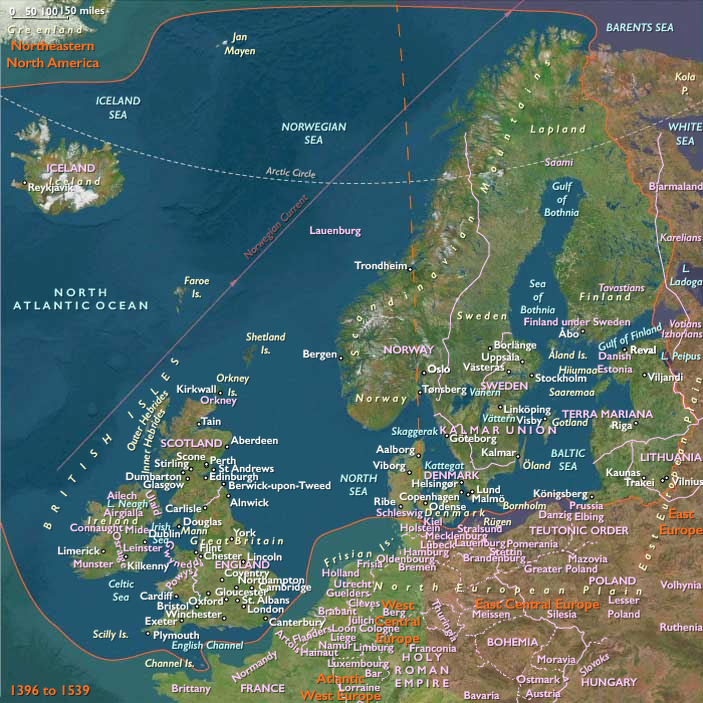
Subregions
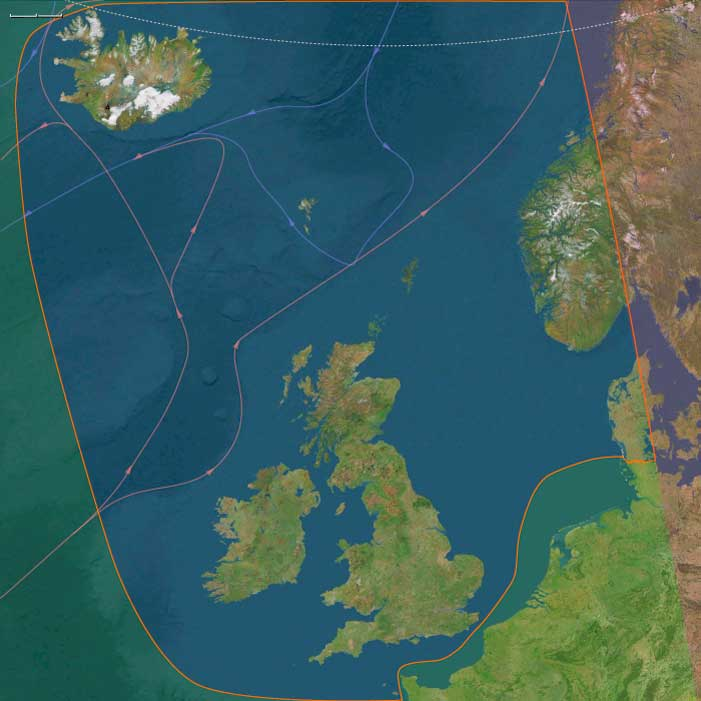
Related Events
Showing 10 events out of 42013 total
Years: 1432 - 1443
People
- Catherine of Valois
- Charles VI of France
- Charles VII of France
- Eric of Pomerania
- Henry V of England
- Henry VI
- James I, King of Scots
- John Dunstaple
- Leonel Power
- Murdoch Stewart
- Robert Stewart
Groups
- Gaels
- Irish people
- Ireland, medieval
- England, (Anglo-Saxon) Kingdom of
- Icelandic Commonwealth, or Icelandic Free State
- Christians, Roman Catholic
- Scotland, Kingdom of
- France, (Valois) Kingdom of
- Kalmar Union (of Denmark, Norway and Sweden)
Topics
- Middle Subatlantic Period
- Subatlantic Period
- Hundred Years' War
- Hundred Years' War: Second Peace
- Hundred Years' War: Resumption of the war under Henry V
Subjects
Regions
Subregions