
Northwest Europe (1384–1395 CE): Turmoil, Transition, and …
Years: 1384 - 1395
Northwest Europe (1384–1395 CE): Turmoil, Transition, and Cultural Flourishing
England: Political Turbulence, Chaucer’s Literary Peak, and the Rise of Lollardy
The political instability under Richard II continued as the youthful king's favoritism toward certain nobles increased tensions among the English aristocracy. The period was characterized by ongoing disputes between royal authority and powerful magnates, exacerbated by the death of influential reformer John Wycliffe on December 31, 1384. Wycliffe's theological challenges to ecclesiastical authority left an enduring legacy through the Lollards, who criticized the church's power and wealth. Led by Wycliffe's "poor priests," the Lollards taught from his English translation of the Bible, preaching a nonsacramental Christianity focused on poverty, ethical purity, and personal devotion. Their rapid spread attracted support from Oxford scholars, powerful nobles, merchants, and the common people, further intensifying religious and social debates.
During these turbulent times, Geoffrey Chaucer, England’s preeminent literary figure, significantly advanced his literary contributions. By 1385, Chaucer had embarked on composing "Troilus and Criseyde," considered among his greatest poetic achievements, further enhancing the prestige of English vernacular literature. He also produced "The Legend of Good Women" around 1386, demonstrating his continued creativity and influence.
Scotland: Military Resilience and Stewart Consolidation
Under Robert II, Scotland faced renewed threats from England. The earlier failed invasion known as Burnt Candlemas in early 1356, commanded by King Edward III, had been the last major campaign of the Second War of Scottish Independence. In 1385, Richard II launched another devastating but ultimately unsuccessful invasion, which reinforced Scottish resilience rather than weakening it. This event strengthened national unity and further solidified the legitimacy of the Stewart monarchy, contributing to a period of relative internal stability despite external pressures.
Ireland: Gaelic Autonomy and Norman Decline
In Ireland, Gaelic lordships continued consolidating power and autonomy, significantly diminishing Norman influence outside the Pale. The powerful Gaelic dynasties, notably the O'Neill and O'Brien clans, fortified their territories, reinforcing traditional Gaelic law and culture and further distancing Ireland from Anglo-Norman dominance.
Denmark and Norway: Toward Dynastic Union
Following the reign of Valdemar IV, Denmark experienced ongoing political uncertainty and dynastic struggles. This instability paved the way for future dynastic shifts and greater alignment with Norway. Meanwhile, Norway’s weakened monarchy increasingly aligned itself with Danish interests, anticipating the dynastic union that would soon follow, significantly reshaping Scandinavia’s political landscape.
Iceland: Literary Flourishing Amidst Political Dependency
Despite political subordination to Norway, Iceland maintained a vibrant cultural tradition. The composition of sagas continued to thrive, epitomized by the completion of the influential Njal's Saga around this time, which provided both glorification and critique of Iceland’s Saga Age and the Sturlung Age. These literary works underscored Iceland’s enduring intellectual and cultural vitality, maintaining a distinct national identity.
Social and Economic Shifts
Across Northwest Europe, the demographic and economic aftershocks of the Black Death persisted. The widespread scarcity of labor empowered peasants to seek improved conditions and rights, challenging traditional feudal relationships. The nobility, meanwhile, struggled to adapt to these shifting economic realities, leading to increased tensions and eventual social restructuring.
Architectural Ambition: York Minster
Despite broader societal uncertainties, significant architectural developments continued. The expansion and refinement of York Minster in the ornate Perpendicular Gothic style proceeded, representing cultural resilience and artistic ambition. The ongoing construction symbolized both spiritual devotion and a commitment to cultural expression during a period of political and social upheaval.
Legacy of the Era
By 1395 CE, Northwest Europe had navigated significant political, cultural, and economic transitions. The resilience of its societies during this tumultuous era set the stage for significant future developments in governance, literature, and cultural identity. Notably, the literary and architectural achievements of this period, alongside emerging religious movements such as the Lollards, would profoundly influence subsequent European intellectual and artistic traditions.
People
- Charles V of France
- David II of Scotland
- Geoffrey Chaucer
- John Wycliffe
- Marie of Blois
- Richard II of England
- Robert II, King of Scots
- Valdemar IV of Denmark
Groups
- Gaels
- Irish people
- Denmark, Kingdom of
- Ireland, medieval
- England, (Anglo-Saxon) Kingdom of
- Icelandic Commonwealth, or Icelandic Free State
- Sweden, Kingdom of
- Norway, independent Kingdom of
- Christians, Roman Catholic
- Franciscans, or Order of St. Francis
- Dominicans, or Order of St. Dominic
- Castile, Crown of
- Scotland, Kingdom of
- France, (Valois) Kingdom of
- Lollardy
Topics
- Middle Subatlantic Period
- Subatlantic Period
- Hundred Years' War
- Hundred Years' War: Caroline phase
- Anglo-Scottish Wars
- Hundred Years' War: Second Peace
Subjects
Regions
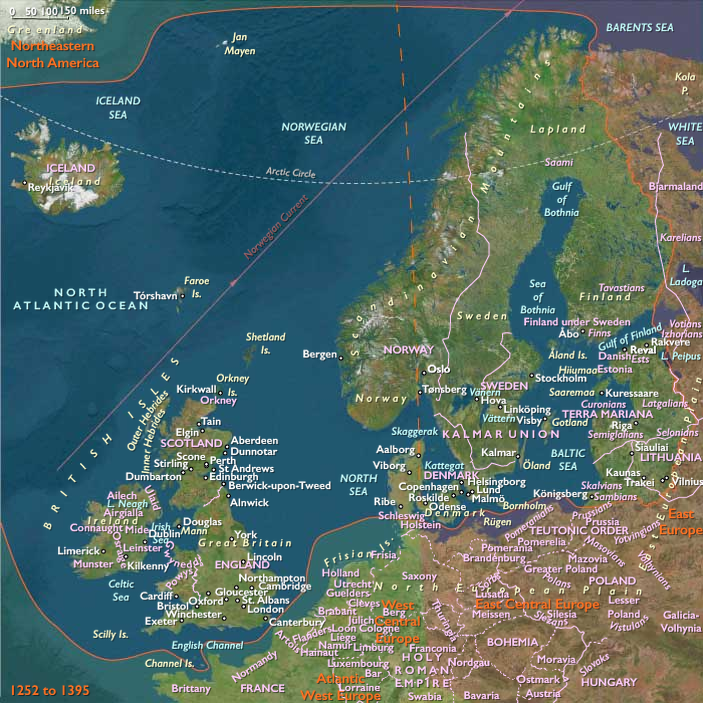
Subregions
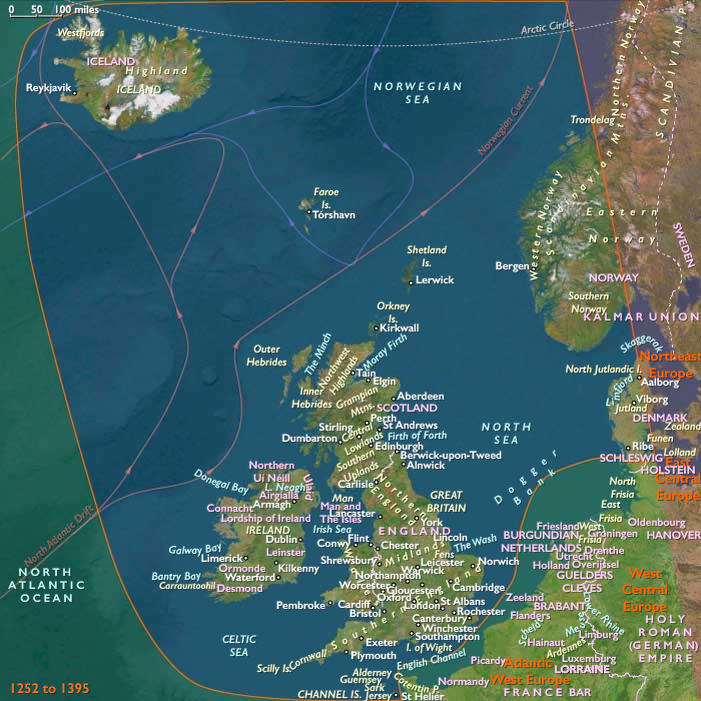
Years: 1384 - 1395
People
- Charles V of France
- David II of Scotland
- Geoffrey Chaucer
- John Wycliffe
- Marie of Blois
- Richard II of England
- Robert II, King of Scots
- Valdemar IV of Denmark
Groups
- Gaels
- Irish people
- Denmark, Kingdom of
- Ireland, medieval
- England, (Anglo-Saxon) Kingdom of
- Icelandic Commonwealth, or Icelandic Free State
- Sweden, Kingdom of
- Norway, independent Kingdom of
- Christians, Roman Catholic
- Franciscans, or Order of St. Francis
- Dominicans, or Order of St. Dominic
- Castile, Crown of
- Scotland, Kingdom of
- France, (Valois) Kingdom of
- Lollardy
Topics
- Middle Subatlantic Period
- Subatlantic Period
- Hundred Years' War
- Hundred Years' War: Caroline phase
- Anglo-Scottish Wars
- Hundred Years' War: Second Peace
Subjects
Regions
Subregions