
Northwest Europe (1348–1359 CE): Plague, Turmoil, and …
Years: 1348 - 1359
Northwest Europe (1348–1359 CE): Plague, Turmoil, and Enduring Resilience
The Black Death: A Catastrophic Pandemic
In 1348, the catastrophic Black Death reached Northwest Europe, transforming the region profoundly. Initially arriving through trade routes from southern Europe, the plague quickly spread through major ports and inland towns, resulting in unprecedented mortality rates. By 1351, it is estimated that approximately one-third to one-half of the population in England, Scotland, and Ireland had perished, significantly altering demographic structures and social dynamics. The pandemic severely disrupted agriculture, trade, and economic stability, triggering prolonged labor shortages and widespread social upheaval.
England and Scotland: Political Instability and Continued Conflict
Despite the devastation of the Black Death, the Second War of Scottish Independence persisted, though on a diminished scale. Scotland, under King David II, sought to reclaim territories occupied by England, but in 1346, David was captured at the Battle of Neville's Cross. The subsequent decade was marked by ongoing negotiations for David's release and continued sporadic border conflicts, further exacerbating regional instability.
In England, the social disruption caused by the plague intensified economic pressures on feudal lords. With reduced labor availability, serfs and peasants began demanding improved conditions and wages, prompting the early stirrings of social unrest and laying the groundwork for future revolts.
Ireland: Gaelic Consolidation and English Retrenchment
In Ireland, the Black Death similarly caused severe population decline, weakening the already limited Norman presence further. Gaelic chieftains, notably the powerful O'Neill dynasty in Ulster, continued to consolidate their control, benefiting from the destabilization of English authority within the Pale and other coastal enclaves. The diminished Norman power and influence allowed Gaelic culture and governance to solidify their resurgence.
Denmark: Internal Conflict and Power Struggles
Denmark remained fragmented and politically unstable throughout this period. With the monarchy weakened by internal disputes and economic decline exacerbated by the plague, the kingdom experienced intensified rivalry among noble factions. These internal struggles continued to hinder central authority, preventing meaningful consolidation of royal power and prolonging political uncertainty.
Norway and Sweden: Stability Tested
Under the rule of Magnus IV, the kingdoms of Norway and Sweden faced challenges posed by the Black Death, which severely disrupted trade, particularly fisheries and timber exports. Economic hardship and depopulation strained the previously stable administration of Magnus IV. While the unified kingdom maintained general political coherence, the pandemic posed significant administrative and economic challenges that tested the resilience of the monarchy and its governance structures.
Iceland: Cultural Continuity amid Crisis
In Iceland, the Black Death had a devastating demographic impact, significantly reducing the already small population and intensifying economic hardships. Despite these difficulties, Icelandic literary culture and intellectual traditions endured, as manuscripts continued to be produced and preserved. The resilience of cultural practices, such as saga writing and manuscript illumination, provided continuity and identity amid widespread societal distress.
Religious Responses and Intellectual Shifts
The widespread devastation led religious institutions to face new challenges and opportunities. The Dominican and Franciscan orders expanded their roles, providing pastoral care and spiritual consolation amid crisis. Theological reflection intensified as religious leaders sought to interpret the plague's meaning, influencing intellectual discourse profoundly and reinforcing their roles within devastated communities.
Artistic and Architectural Adaptations
Despite widespread societal turmoil, cultural expression in art and architecture persisted. The continued development of the Perpendicular Gothic style became even more prevalent, particularly in England, exemplified by ongoing projects such as York Minster. The period also witnessed innovative artistic responses to the plague, including macabre themes that appeared in illuminated manuscripts and church decorations, reflecting the era's intense preoccupation with mortality.
Legacy of the Era
By 1359 CE, Northwest Europe had begun to navigate the profound aftermath of the Black Death. Although the pandemic had irrevocably altered demographic, economic, and social landscapes, the region demonstrated notable resilience. Political instability and social unrest coexisted with enduring cultural, literary, and intellectual developments, laying foundations for significant transformations in European society in the following decades.
People
Groups
- Gaels
- Irish people
- Denmark, Kingdom of
- Ireland, medieval
- England, (Anglo-Saxon) Kingdom of
- Icelandic Commonwealth, or Icelandic Free State
- Sweden, Kingdom of
- Norway, independent Kingdom of
- Christians, Roman Catholic
- Franciscans, or Order of St. Francis
- Dominicans, or Order of St. Dominic
- Scotland, Kingdom of
Topics
- Middle Subatlantic Period
- Subatlantic Period
- Scottish Independence, Second War of
- Black Death, or Great Plague
Subjects
- Commerce
- Writing
- Architecture
- Painting and Drawing
- Public health
- Conflict
- Faith
- Government
- Scholarship
- Custom and Law
- Catastrophe
- Theology
Regions
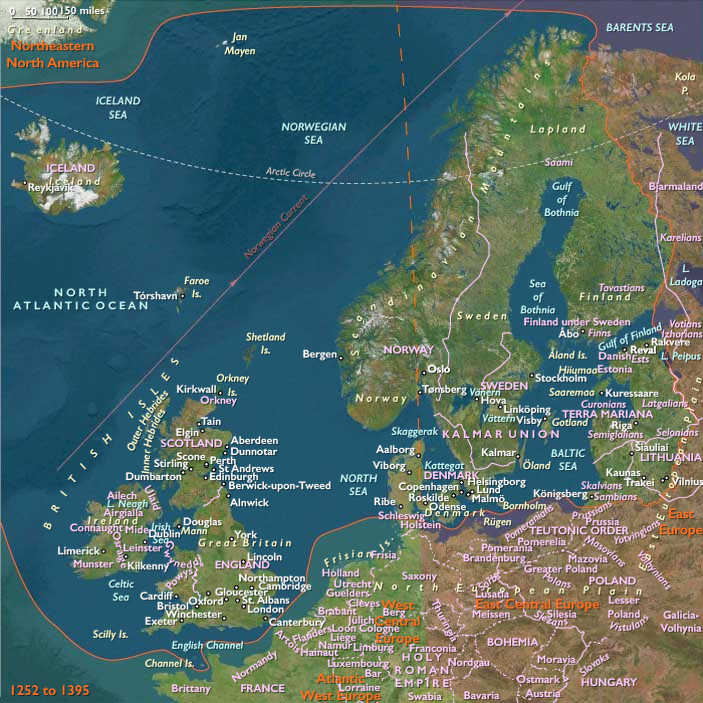
Subregions
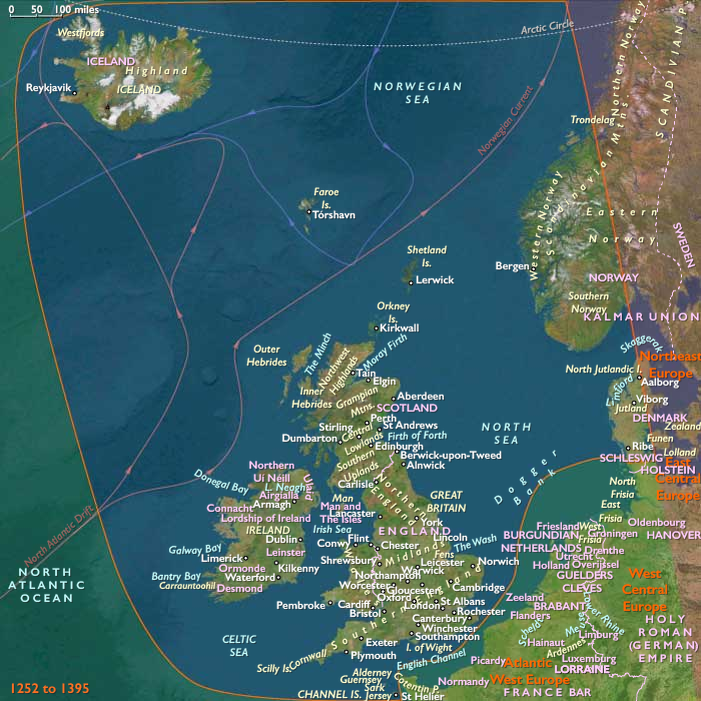
Years: 1348 - 1359
People
Groups
- Gaels
- Irish people
- Denmark, Kingdom of
- Ireland, medieval
- England, (Anglo-Saxon) Kingdom of
- Icelandic Commonwealth, or Icelandic Free State
- Sweden, Kingdom of
- Norway, independent Kingdom of
- Christians, Roman Catholic
- Franciscans, or Order of St. Francis
- Dominicans, or Order of St. Dominic
- Scotland, Kingdom of
Topics
- Middle Subatlantic Period
- Subatlantic Period
- Scottish Independence, Second War of
- Black Death, or Great Plague
Subjects
- Commerce
- Writing
- Architecture
- Painting and Drawing
- Public health
- Conflict
- Faith
- Government
- Scholarship
- Custom and Law
- Catastrophe
- Theology
Regions
Subregions