
Northwest Europe (1336–1347 CE): Warfare, Plague, and …
Years: 1336 - 1347
Northwest Europe (1336–1347 CE): Warfare, Plague, and Cultural Innovation
England and Scotland: Renewed Conflict and Strategic Battles
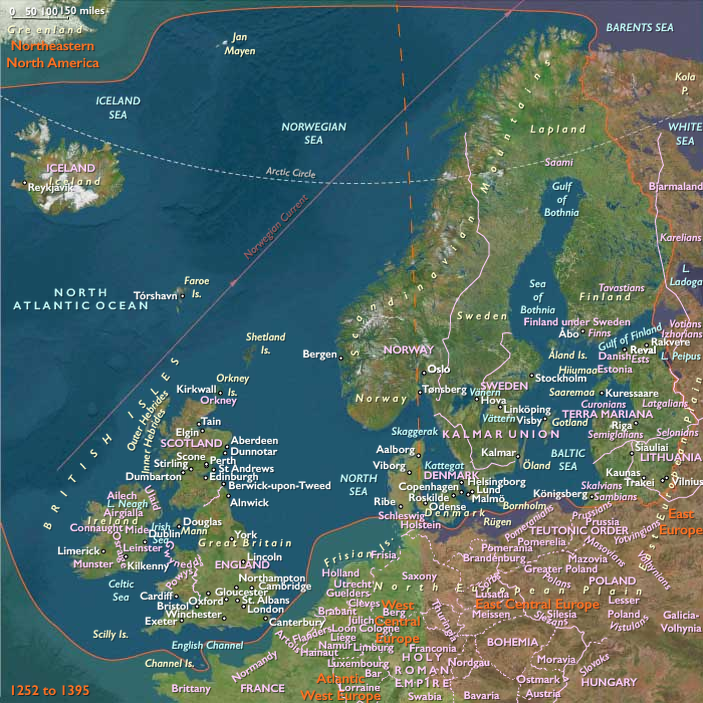
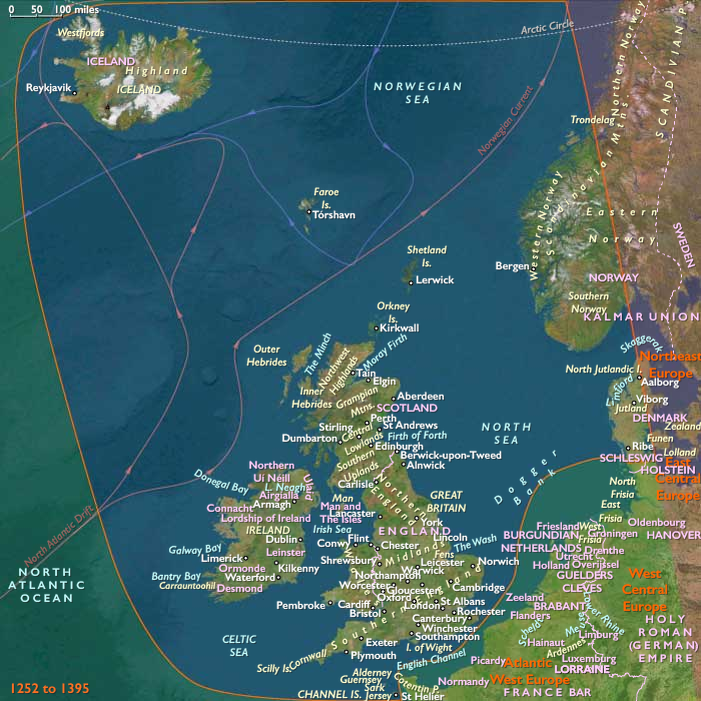
The era was marked by renewed conflict in the ongoing Second War of Scottish Independence. King Edward III of England intensified his campaign to dominate Scotland, achieving a notable victory at the Battle of Halidon Hill in 1333, leading to English occupation of strategic locations like Berwick-upon-Tweed. However, the Scottish resistance, led notably by figures like Sir Andrew Murray, continued to undermine English advances, sustaining Scottish determination to maintain sovereignty.
Ireland: Continued Gaelic Resurgence
Ireland saw a continued decline of Norman influence as indigenous Gaelic lords further reclaimed their traditional territories. The Gaelic revival became particularly evident in regions like Ulster, where Irish chieftains, including the powerful O'Neill dynasty, asserted greater control and autonomy. Norman territories became increasingly limited and isolated to coastal regions, notably the Pale around Dublin, marking a significant shift toward indigenous political power structures.
Denmark: Persistent Political Fragmentation
Denmark remained politically unstable following the temporary deposition of Christopher II. The kingdom experienced a prolonged interregnum characterized by powerful noble factions vying for control. These internal disputes weakened central authority, further fragmenting the kingdom and leading to ongoing economic hardship and political instability.
Norway and Sweden: Continued Stability under Magnus IV
Under the unified rule of Magnus IV, the joint kingdoms of Norway and Sweden enjoyed ongoing stability and economic prosperity. Magnus's reign enabled continued trade expansion, notably in fisheries and timber exports, reinforcing economic links with broader European markets. His administration also supported the development of centralized governance, enhancing stability across both kingdoms.
Iceland: Literary and Cultural Flourishing
Iceland continued to produce significant literary works during this period. Texts such as the revered Njal's Saga and the legendary Völsunga saga remained influential, reflecting Icelandic cultural identity and historical tradition. Manuscript production flourished, preserving and disseminating these important literary traditions even amid growing Norwegian political influence.
The Onset of Economic and Social Crisis
The period witnessed the early stages of significant economic and social crises. While the early 1330s had seen continued prosperity, the late 1330s and early 1340s began experiencing disruptions due to warfare and trade interruptions. The looming threat of disease and increased warfare expenditures strained economies, heralding more profound disruptions soon to come.
The Emergence of the Black Death
In 1347, the catastrophic Black Death arrived in Europe, initially landing in Mediterranean ports. Although its devastating impact in Northwest Europe would become fully evident only after 1348, its arrival signaled an impending profound demographic, economic, and social transformation that would redefine European society and culture.
Religious Orders and Intellectual Life
Dominican and Franciscan orders continued their significant contributions to theological and intellectual discourse, maintaining influential roles in education and scholarship throughout Northwest Europe. These religious orders fostered intellectual traditions and scholarly debate, enriching the cultural and intellectual landscape despite emerging societal disruptions.
Artistic and Architectural Innovations
The Perpendicular Gothic architectural style continued to gain prominence, influencing church architecture profoundly. Structures characterized by large traceried windows and unified interior designs became increasingly prevalent. Cathedrals such as York Minster saw ongoing construction, notably in its grand nave and Chapter House, symbolizing the era's ambitious architectural and artistic vision. Literary works like Havelok the Dane remained culturally significant, reflecting social values and ideals of governance.
Legacy of the Era
By 1347 CE, Northwest Europe stood on the threshold of transformative change. The region grappled with renewed military conflicts, emerging economic pressures, and the first signs of the catastrophic plague. Nevertheless, significant cultural, literary, and intellectual advancements continued, providing resilience and continuity during a period of impending crisis.
People
Groups
- Gaels
- Irish people
- Denmark, Kingdom of
- Ireland, medieval
- Flanders, County of
- England, (Anglo-Saxon) Kingdom of
- Icelandic Commonwealth, or Icelandic Free State
- Sweden, Kingdom of
- Norway, independent Kingdom of
- Christians, Roman Catholic
- Franciscans, or Order of St. Francis
- Dominicans, or Order of St. Dominic
- Scotland, Kingdom of
Topics
- Middle Subatlantic Period
- Subatlantic Period
- Scottish Independence, Second War of
- Black Death, or Great Plague
Subjects
- Commerce
- Writing
- Architecture
- Public health
- Conflict
- Mayhem
- Faith
- Government
- Scholarship
- Custom and Law
- Catastrophe
- Theology
Regions
Subregions
Years: 1336 - 1347
People
Groups
- Gaels
- Irish people
- Denmark, Kingdom of
- Ireland, medieval
- Flanders, County of
- England, (Anglo-Saxon) Kingdom of
- Icelandic Commonwealth, or Icelandic Free State
- Sweden, Kingdom of
- Norway, independent Kingdom of
- Christians, Roman Catholic
- Franciscans, or Order of St. Francis
- Dominicans, or Order of St. Dominic
- Scotland, Kingdom of
Topics
- Middle Subatlantic Period
- Subatlantic Period
- Scottish Independence, Second War of
- Black Death, or Great Plague
Subjects
- Commerce
- Writing
- Architecture
- Public health
- Conflict
- Mayhem
- Faith
- Government
- Scholarship
- Custom and Law
- Catastrophe
- Theology
Regions
Subregions