
Northwest Europe (1324–1335 CE): Power Dynamics, Cultural …
Years: 1324 - 1335
Northwest Europe (1324–1335 CE): Power Dynamics, Cultural Flourishing, and Economic Vitality
Scotland and England: Formalizing Peace and Scottish Sovereignty
The era marked a formal recognition of Scottish sovereignty through the Treaty of Edinburgh–Northampton in 1328, which ended decades of conflict and officially acknowledged Scotland's independence under Robert the Bruce. Bruce's reign continued to consolidate Scottish national identity, further reinforced by diplomatic recognition and internal stability. Meanwhile, England under Edward III began focusing increasingly on issues of governance and continental ambitions, temporarily alleviating direct pressures on Scotland. However, the peace would be short-lived, as in 1333 Edward III overturned the treaty, initiating the Second War of Scottish Independence, a conflict set to last intermittently until 1357.
Ireland: Gaelic Resurgence and Norman Retraction
Ireland experienced ongoing Gaelic resurgence, as indigenous Irish lords further reclaimed territories from declining Norman control. Norman colonies continued to shrink and become isolated around coastal regions and the Pale, highlighting the resilience of Gaelic political structures in regions such as Ulster and Connacht. Increasing fragmentation within Norman territories underscored their weakening grip on Ireland.
Denmark: Royal Instability and Noble Ascendancy
Denmark remained embroiled in internal turmoil as Christopher II struggled to assert royal authority against powerful nobles. Economic hardships and continuous conflicts forced Christopher into significant concessions, weakening the monarchy's central power. By 1332, Christopher II’s inability to stabilize his kingdom led to his temporary deposition and an interregnum period, during which noble factions increasingly dominated governance.
Norway: Union with Sweden and Continued Stability
Norway maintained political stability under the rule of Magnus IV, who simultaneously governed as king of Sweden and Norway after 1319. This union brought regional stability and increased political cohesion between the two kingdoms, allowing for continued economic growth and stronger centralized administration. Magnus's reign provided a stable backdrop for cultural and economic developments.
Iceland: Peak of Literary Achievement
Iceland continued its remarkable literary and cultural production, exemplified by the ongoing composition of significant texts such as Njal's Saga, completed around this period, and the legendary Völsunga saga, composed in the late thirteenth century and still widely circulated. The Hauksbók manuscript continued to be expanded, preserving and celebrating Icelandic heritage and cultural identity amidst growing Norwegian influence.
Economic Expansion and Urban Prosperity
Economic growth across Northwest Europe continued unabated, notably fueled by the wool trade, fishery exports, and timber trade. Urban centers including London, Bruges, Bergen, and Dublin flourished, benefiting merchants and facilitating architectural and infrastructural development. This period solidified these cities as crucial hubs in broader European economic networks.
Religious Influence and Intellectual Advances
Religious orders, particularly the Dominicans and Franciscans, significantly contributed to scholarly and theological discourse. Intellectual traditions established by scholars like Roger Bacon and Robert Grosseteste continued to flourish, shaping educational curricula and advancing scholastic thought throughout Northwest Europe. These religious and scholarly activities profoundly impacted medieval intellectual and cultural landscapes.
Artistic and Architectural Innovations
The era witnessed notable artistic and architectural achievements, particularly marked by the emergence of the Perpendicular Gothic architectural style in England around 1330. This style allowed immense window spaces and unified interior designs, which would become prevalent in hundreds of parish churches throughout the region. Construction projects continued at cathedrals such as York Minster, where the expansive nave and impressive Chapter House symbolized the architectural and artistic ambitions of the time. Literature, notably romances such as Havelok the Dane, reflected societal ideals, governance, and daily life, enriching the cultural tapestry of the region.
Legacy of the Era
By 1335 CE, Northwest Europe had solidified key aspects of its political, cultural, and economic identities. Scotland faced renewed challenges despite initially securing independence, Ireland retained its Gaelic heritage amid Norman decline, Denmark navigated turbulent shifts in royal power, Norway and Sweden maintained their stabilizing union, and Iceland continued its remarkable cultural flourishing. Collectively, these developments laid significant foundations for future stability and growth across the region.
People
Groups
- Gaels
- Irish people
- Denmark, Kingdom of
- Ireland, medieval
- Flanders, County of
- Alba (Scotland), Scots Kingdom of
- England, (Anglo-Saxon) Kingdom of
- Icelandic Commonwealth, or Icelandic Free State
- Sweden, Kingdom of
- Norway, independent Kingdom of
- Christians, Roman Catholic
- Franciscans, or Order of St. Francis
- Dominicans, or Order of St. Dominic
- Wales, Principality of
Topics
- Middle Subatlantic Period
- Subatlantic Period
- Scottish Independence, First War of
- Scottish Independence, Second War of
Commodoties
Subjects
Regions
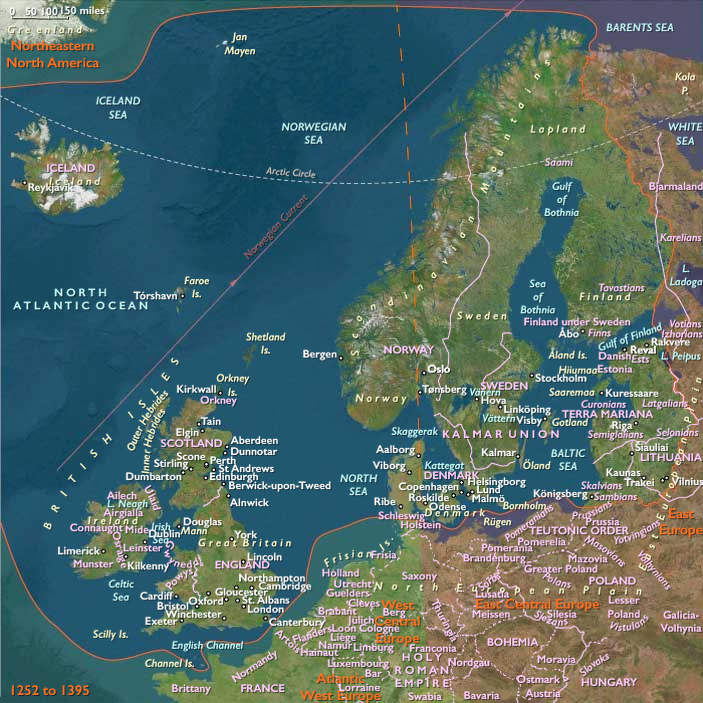
Subregions
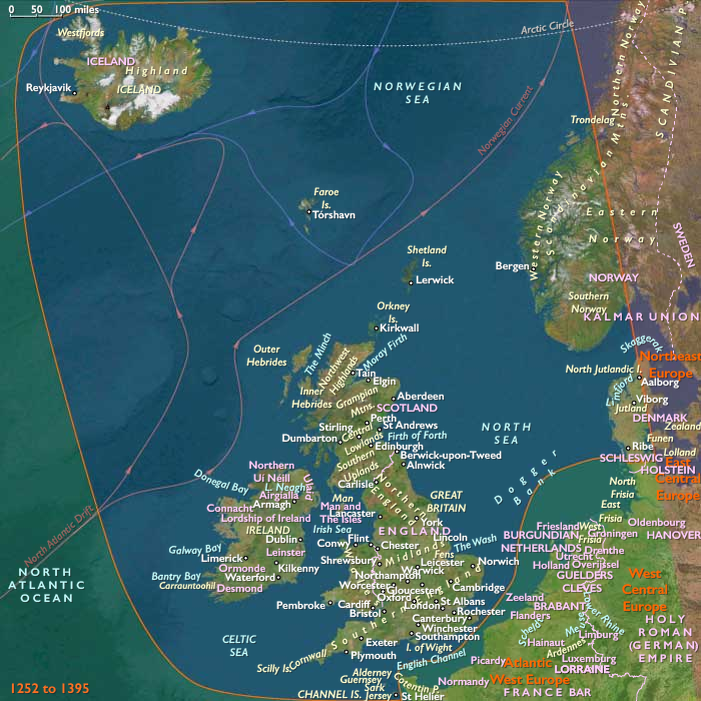
Years: 1324 - 1335
People
Groups
- Gaels
- Irish people
- Denmark, Kingdom of
- Ireland, medieval
- Flanders, County of
- Alba (Scotland), Scots Kingdom of
- England, (Anglo-Saxon) Kingdom of
- Icelandic Commonwealth, or Icelandic Free State
- Sweden, Kingdom of
- Norway, independent Kingdom of
- Christians, Roman Catholic
- Franciscans, or Order of St. Francis
- Dominicans, or Order of St. Dominic
- Wales, Principality of
Topics
- Middle Subatlantic Period
- Subatlantic Period
- Scottish Independence, First War of
- Scottish Independence, Second War of
Commodoties
Subjects
Regions
Subregions