
Northwest Europe (1240–1251 CE): Authority, Conflict, and …
Years: 1240 - 1251
Northwest Europe (1240–1251 CE): Authority, Conflict, and Cultural Dynamism
England: Growing Tensions and Governance
The reign of Henry III (r. 1216–1272) continued to face internal challenges, as baronial frustrations over royal extravagance, foreign favoritism, and heavy taxation increased. Tensions peaked around 1242 with the unsuccessful campaign in France at Taillebourg and Saintes, weakening Henry’s financial and political standing. Despite these setbacks, Henry actively promoted architectural and cultural endeavors, including major expansions of Westminster Abbey.
Scotland: Further Consolidation and Diplomacy
Alexander II (r. 1214–1249) maintained his focus on consolidating Scottish territorial integrity. His diplomatic relations, especially with England, remained cautiously cooperative, facilitating periods of relative stability. Alexander's policies ensured internal coherence, although the Isles and northern territories still posed intermittent challenges.
Ireland: Integration, Resistance, and Conflict
The Anglo-Norman lords further entrenched their position through fortified towns and feudal holdings, but Gaelic resistance notably increased in response to aggressive Norman expansion, especially in Connacht and Ulster. Native Irish rulers asserted their authority more vigorously, underscoring the enduring Gaelic defiance.
Denmark: End of an Era and New Challenges
The death of Valdemar II in 1241 marked the end of an era of stability. His son, Eric IV (r. 1241–1250), struggled with internal dissent and familial rivalry, weakening central royal authority. Eric's reign was characterized by internal strife, which severely impacted the cohesion and effectiveness of the Danish monarchy.
Norway: Consolidation and International Prestige
Håkon IV Håkonsson (r. 1217–1263) reached new heights of influence and international recognition, enhancing Norway’s diplomatic relations with England, Scotland, and continental Europe. Håkon actively supported intellectual exchanges and patronized literary activities, solidifying Norway's cultural prominence within Northwest Europe.
Iceland: Governance and Literary Achievement
Iceland continued to thrive under the traditional governance of the Althing, maintaining autonomy and stability. The literary and historical traditions flourished significantly, driven by the works of figures such as Sturla Þórðarson, nephew of Snorri Sturluson, who made significant contributions to saga literature and Icelandic historiography.
Economic Networks and Urban Growth
Trade in wool, timber, fish, and spices continued to expand and deepen, reinforcing urban centers such as London, Bruges, Bergen, and Dublin as critical trade hubs. Increased prosperity facilitated significant urban development, infrastructure projects, and cultural exchanges across Northwest Europe.
Religious and Educational Influence
The Dominican and Franciscan orders continued to expand their influence, driving educational and spiritual renewal. Their involvement in education intensified, establishing scholastic traditions and fostering a vibrant intellectual climate. These mendicant orders actively engaged in urban communities, significantly shaping religious practice and discourse.
Legacy of the Era
By 1251 CE, Northwest Europe experienced an era of intensified political dynamics, economic prosperity, and cultural vitality. England confronted escalating baronial tensions; Scotland further secured its territorial control; Ireland balanced Norman settlement and Gaelic resurgence; Denmark faced challenges to royal cohesion; Norway gained prominence through diplomatic and cultural achievements; and Iceland solidified its legacy of literary excellence. Collectively, these developments set the stage for significant transformations in governance, culture, and economic life in the decades to follow.
People
- Alexander II of Scotland
- Eric IV of Denmark
- Haakon IV of Norway
- Henry III of England
- Snorri Sturluson
- Sturla Þórðarson
- Valdemar II of Denmark
Groups
- Gaels
- Irish people
- Estonia, independent
- Denmark, Kingdom of
- Ireland, medieval
- Flanders, County of
- Alba (Scotland), Scots Kingdom of
- England, (Anglo-Saxon) Kingdom of
- Icelandic Commonwealth, or Icelandic Free State
- Normans
- Norway, independent Kingdom of
- Christians, Roman Catholic
- Franciscans, or Order of St. Francis
- Dominicans, or Order of St. Dominic
- Estonia, Danish
Topics
- Medieval Warm Period (MWP) or Medieval Climate Optimum
- Norway, civil war in
- Taillebourg, Battle of
- Saintes, Siege of
- Saintonge War
Commodoties
Subjects
Regions
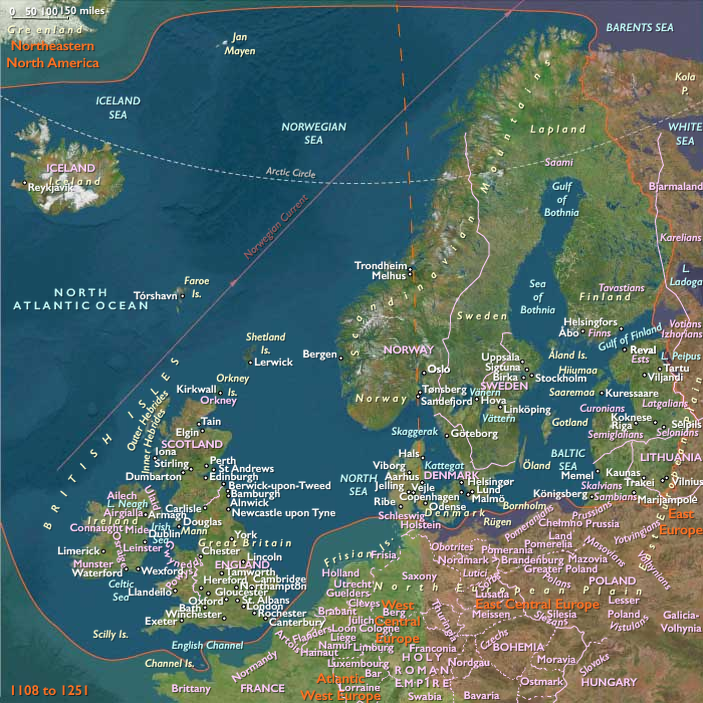
Subregions
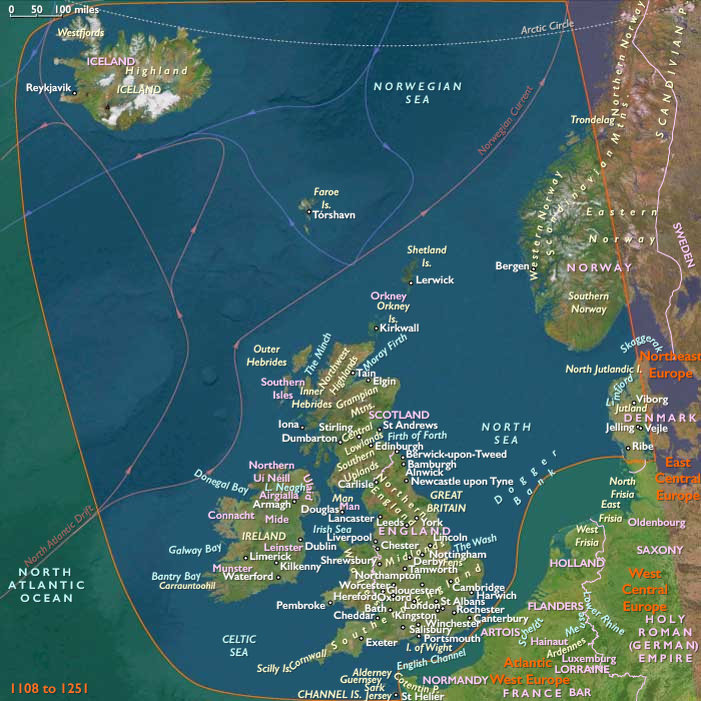
Related Events
Showing 10 events out of 46884 total
Years: 1240 - 1251
People
- Alexander II of Scotland
- Eric IV of Denmark
- Haakon IV of Norway
- Henry III of England
- Snorri Sturluson
- Sturla Þórðarson
- Valdemar II of Denmark
Groups
- Gaels
- Irish people
- Estonia, independent
- Denmark, Kingdom of
- Ireland, medieval
- Flanders, County of
- Alba (Scotland), Scots Kingdom of
- England, (Anglo-Saxon) Kingdom of
- Icelandic Commonwealth, or Icelandic Free State
- Normans
- Norway, independent Kingdom of
- Christians, Roman Catholic
- Franciscans, or Order of St. Francis
- Dominicans, or Order of St. Dominic
- Estonia, Danish
Topics
- Medieval Warm Period (MWP) or Medieval Climate Optimum
- Norway, civil war in
- Taillebourg, Battle of
- Saintes, Siege of
- Saintonge War
Commodoties
Subjects
Regions
Subregions