
Northwest Europe (1216–1227 CE): Consolidation and New …
Years: 1216 - 1227
Northwest Europe (1216–1227 CE): Consolidation and New Realities
England: Restoration and Governance
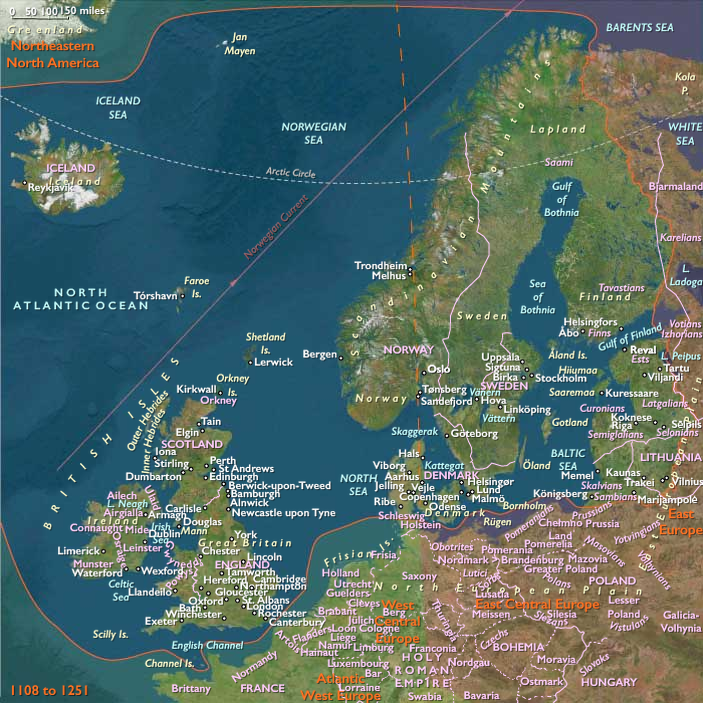
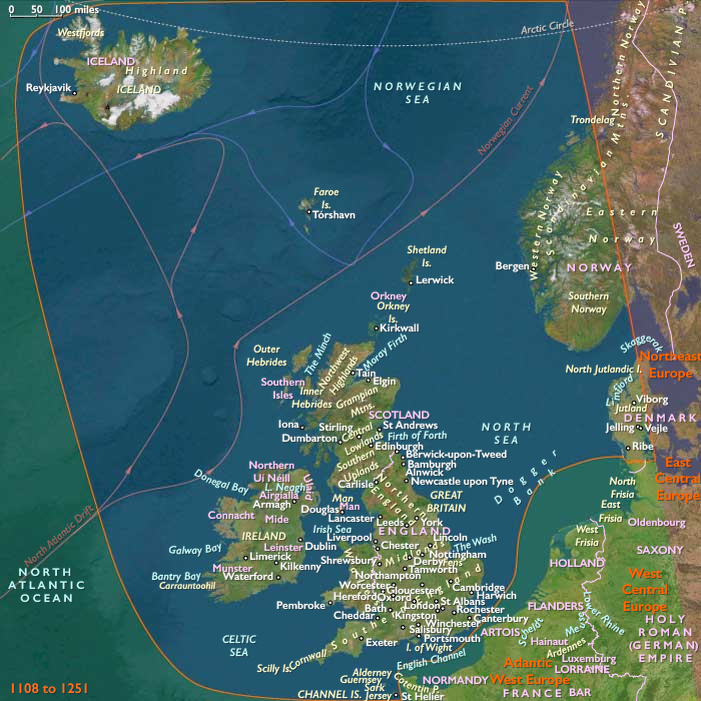
The death of King John in 1216 brought his young son, Henry III (r. 1216–1272), to the throne under regency, leading to the stabilization of English politics after the turmoil surrounding Magna Carta. Regent William Marshal, one of the most respected knights in Europe, successfully defended the young king’s reign, defeating rebellious barons and French invaders at the decisive Battle of Lincoln in 1217. The reissued Magna Carta in 1225, under Henry III, marked a pivotal moment in solidifying its place in English law and governance.
Scotland: Strengthening Royal Authority
Under Alexander II (r. 1214–1249), Scotland experienced growing royal authority and territorial consolidation. Alexander maintained Scotland’s independence from English influence, expanding royal control northward and westward, reducing the power of local magnates, and further centralizing governance. His diplomatic strategies and political marriages also reinforced Scotland's international position.
Ireland: Norman Settlements and Irish Resistance
Ireland continued to see the deepening of Anglo-Norman control, with increased fortifications and town-building activities strengthening the Norman presence. Native Gaelic resistance persisted, particularly in regions less accessible to Norman power, maintaining a complex political landscape. The interplay of Norman authority and indigenous resilience defined the era.
Denmark: Challenges to Baltic Dominance
Despite Valdemar II’s earlier successes, his rule encountered significant setbacks during this period. Captured in 1223 by his vassal, Count Henry of Schwerin, Valdemar was imprisoned until 1225, significantly weakening Danish influence in the Baltic. Upon his release, Denmark was compelled to concede territories and influence, limiting further expansion.
Norway: Steps Toward Stability
The death of King Inge Bårdsson in 1217 led to the ascent of the young Håkon IV Håkonsson (r. 1217–1263), who, under regency initially, gradually brought stability to a fragmented Norway. By 1223, Håkon’s regency began consolidating power, significantly diminishing internal conflicts and laying the groundwork for a more unified Norwegian state.
Iceland: Cultural and Political Continuity
Iceland maintained its political independence and cultural richness during this period, governed by the Althing, its traditional assembly. The era continued the flourishing tradition of saga writing and historical recording, preserving an invaluable literary heritage. The society, largely free of external conflicts, remained culturally vibrant and politically autonomous.
Economic and Cultural Developments
Trade and economic activity grew steadily, with merchants from England, Flanders, and the Baltic states actively engaged in commerce. Commodities like wool, fish, timber, and increasingly popular imported spices and luxury goods continued to shape the economies of Northwest Europe, enhancing urban growth and prosperity.
Religious Orders and Education
The Dominican Order, founded in the previous decade, established itself significantly during this era, emphasizing preaching, education, and combating heresies. Alongside existing monastic communities, these mendicant friars began influencing urban centers profoundly, fostering intellectual debate, education, and religious reform.
Legacy of the Era
By 1227 CE, Northwest Europe had emerged from a period of turmoil into greater stability. England had solidified its constitutional frameworks; Scotland strengthened royal authority; Ireland navigated Norman control and Gaelic resistance; Denmark faced setbacks limiting its Baltic dominance; Norway began the path toward internal unity; and Iceland sustained its distinctive political and cultural identity. These developments collectively established lasting political, economic, and cultural frameworks for future generations.
People
- Alexander II of Scotland
- Haakon IV of Norway
- Henry I, Count of Schwerin
- Henry III of England
- Inge II of Norway
- John of England
- Valdemar II of Denmark
- William Marshal
Groups
- Gaels
- Irish people
- Estonia, independent
- Denmark, Kingdom of
- Ireland, medieval
- Alba (Scotland), Scots Kingdom of
- England, (Anglo-Saxon) Kingdom of
- Icelandic Commonwealth, or Icelandic Free State
- Normans
- Norway, independent Kingdom of
- Christians, Roman Catholic
- Cistercians, Order of the (White Friars)
- Franciscans, or Order of St. Francis
- Dominicans, or Order of St. Dominic
- Estonia, Danish
Topics
- Medieval Warm Period (MWP) or Medieval Climate Optimum
- Crusades, The
- Norway, civil war in
- Dano-Estonian War of 1219-27
Commodoties
Subjects
Regions
Subregions
Years: 1216 - 1227
People
- Alexander II of Scotland
- Haakon IV of Norway
- Henry I, Count of Schwerin
- Henry III of England
- Inge II of Norway
- John of England
- Valdemar II of Denmark
- William Marshal
Groups
- Gaels
- Irish people
- Estonia, independent
- Denmark, Kingdom of
- Ireland, medieval
- Alba (Scotland), Scots Kingdom of
- England, (Anglo-Saxon) Kingdom of
- Icelandic Commonwealth, or Icelandic Free State
- Normans
- Norway, independent Kingdom of
- Christians, Roman Catholic
- Cistercians, Order of the (White Friars)
- Franciscans, or Order of St. Francis
- Dominicans, or Order of St. Dominic
- Estonia, Danish
Topics
- Medieval Warm Period (MWP) or Medieval Climate Optimum
- Crusades, The
- Norway, civil war in
- Dano-Estonian War of 1219-27
Commodoties
Subjects
Regions
Subregions