
Northwest Europe (1192–1203 CE): Crusades, Intrigue, and …
Years: 1192 - 1203
Northwest Europe (1192–1203 CE): Crusades, Intrigue, and Political Shifts
England: The Absentee Reign of Richard I
Richard I (the Lionheart) (r. 1189–1199), though crowned King of England, spent much of his reign abroad, primarily engaged in the Third Crusade and military campaigns in France. His prolonged absence led to the strengthening of royal administration and the rise of capable administrators, notably Hubert Walter, Archbishop of Canterbury. Richard’s captivity in 1192–1194 by the Holy Roman Emperor Henry VI strained the kingdom financially due to the heavy ransom required for his release. Upon Richard’s death in 1199, his brother John ascended the throne, beginning a turbulent reign marked by internal dissent and territorial losses.
Scotland: Strengthened Sovereignty
William the Lion (r. 1165–1214) continued to solidify Scottish independence through effective administration and strategic diplomacy. Following the restoration of sovereignty from the Quitclaim of Canterbury, William invested in strengthening royal authority and reorganizing legal and administrative structures, laying lasting foundations for Scottish statehood.
Ireland: Intensified Anglo-Norman Expansion
Under the rule of Prince John (r. as Lord of Ireland from 1177, as King of England from 1199), Anglo-Norman expansion and consolidation intensified. Though initially unpopular due to harsh taxation and military failures, John’s reign saw the further entrenchment of Norman power, particularly in the regions surrounding Dublin, Munster, and Leinster. The era was marked by the construction of significant fortifications and towns, further embedding Norman influence.
Denmark: Expansion under Valdemar II
Following Canute VI's stable reign, his brother Valdemar II (r. 1202–1241) succeeded to the Danish throne. Known as Valdemar the Victorious, he aggressively expanded Danish control into northern Germany and the Baltic region. His early reign marked Denmark's peak as a regional power, with strengthened centralized authority and extensive territorial expansion.
Norway: Sverre's Consolidation of Power
King Sverre Sigurdsson (r. 1184–1202) continued to consolidate his reign over Norway, overcoming significant opposition from ecclesiastical and noble factions. His rule was characterized by strengthening royal power, reorganizing the military, and resisting Church dominance. Sverre’s death in 1202 left Norway more unified yet still vulnerable to internal factionalism.
Iceland: Flourishing Commonwealth
Iceland maintained its cultural vibrancy, continuing as a center of learning and literature. The period saw the development of significant literary works, including sagas that preserved Norse heritage. Political stability remained under the Althing’s governance, sustaining Icelandic independence and autonomy.
Religious and Cultural Movements
The end of the Third Crusade (1189–1192) significantly impacted religious sentiments across Northwest Europe. Though the crusade had mixed results, the period inspired a wave of religious enthusiasm, pilgrimage, and increased clerical influence. Monastic institutions, particularly the Cistercians, flourished further, contributing significantly to agricultural and economic advancements.
Legacy of the Era
By 1203 CE, Northwest Europe had experienced significant political and territorial shifts. England transitioned to the controversial reign of King John following Richard’s turbulent absentee rule. Scotland further solidified its independence under William the Lion. Anglo-Norman power expanded and embedded deeply into Irish society. Denmark experienced its height as a Baltic power under Valdemar II, and Norway stabilized under Sverre’s authoritative rule. Iceland continued its role as a significant cultural and literary center, maintaining autonomy amidst shifting regional dynamics.
People
- Canute VI of Demnark
- Henry II of England
- Henry VI, Holy Roman Emperor
- Hubert Walter
- John of England
- Richard I of England
- Sverre of Norway
- Valdemar II of Denmark
- William the Lion
Groups
- Denmark, Kingdom of
- Ireland, medieval
- Alba (Scotland), Scots Kingdom of
- England, (Anglo-Saxon) Kingdom of
- Icelandic Commonwealth, or Icelandic Free State
- Normans
- Norway, independent Kingdom of
- Christians, Roman Catholic
Topics
- Medieval Warm Period (MWP) or Medieval Climate Optimum
- Crusades, The
- Norway, civil war in
- Crusade, Third
Subjects
Regions
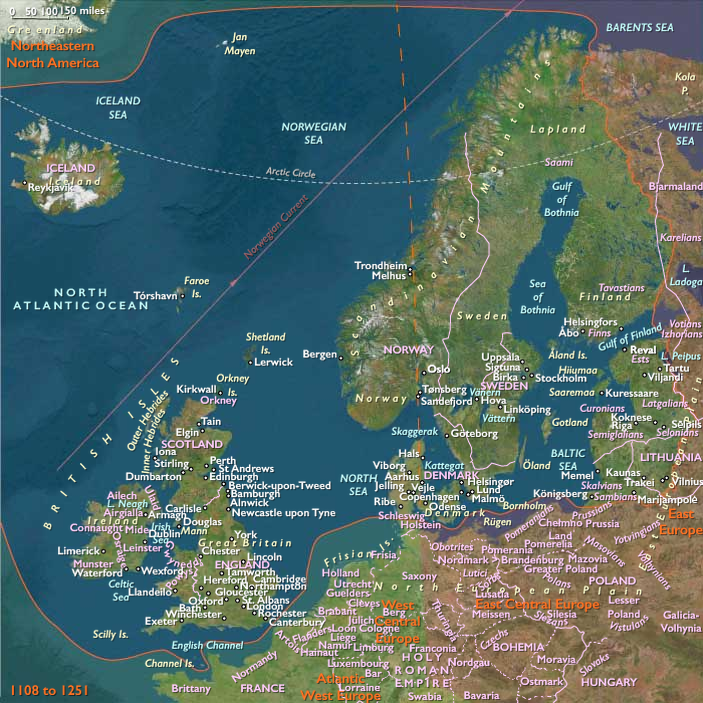
Subregions
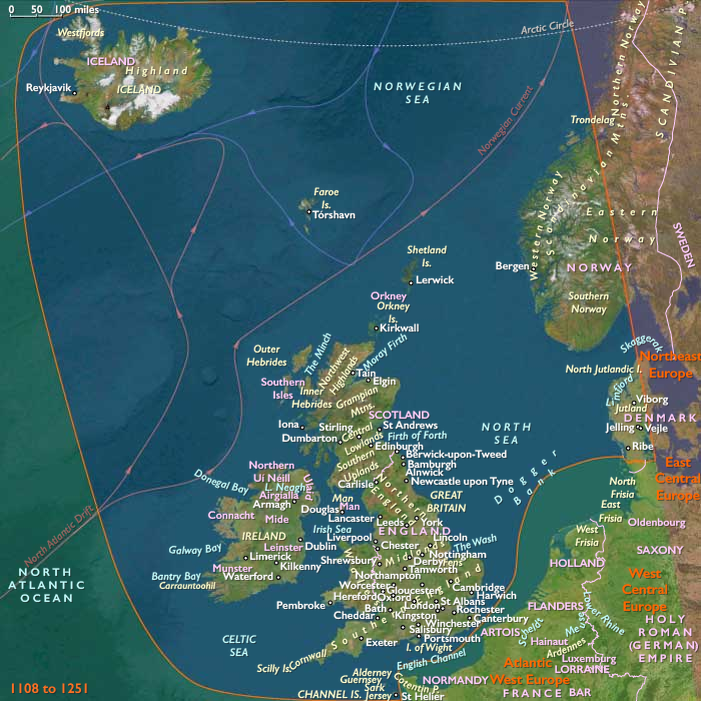
Related Events
Showing 10 events out of 47857 total
Years: 1192 - 1203
People
- Canute VI of Demnark
- Henry II of England
- Henry VI, Holy Roman Emperor
- Hubert Walter
- John of England
- Richard I of England
- Sverre of Norway
- Valdemar II of Denmark
- William the Lion
Groups
- Denmark, Kingdom of
- Ireland, medieval
- Alba (Scotland), Scots Kingdom of
- England, (Anglo-Saxon) Kingdom of
- Icelandic Commonwealth, or Icelandic Free State
- Normans
- Norway, independent Kingdom of
- Christians, Roman Catholic
Topics
- Medieval Warm Period (MWP) or Medieval Climate Optimum
- Crusades, The
- Norway, civil war in
- Crusade, Third
Subjects
Regions
Subregions