
Northwest Europe (1144–1155 CE): Intensified Conflict and …
Years: 1144 - 1155
Northwest Europe (1144–1155 CE): Intensified Conflict and Emerging Stability
England: Height of the Anarchy
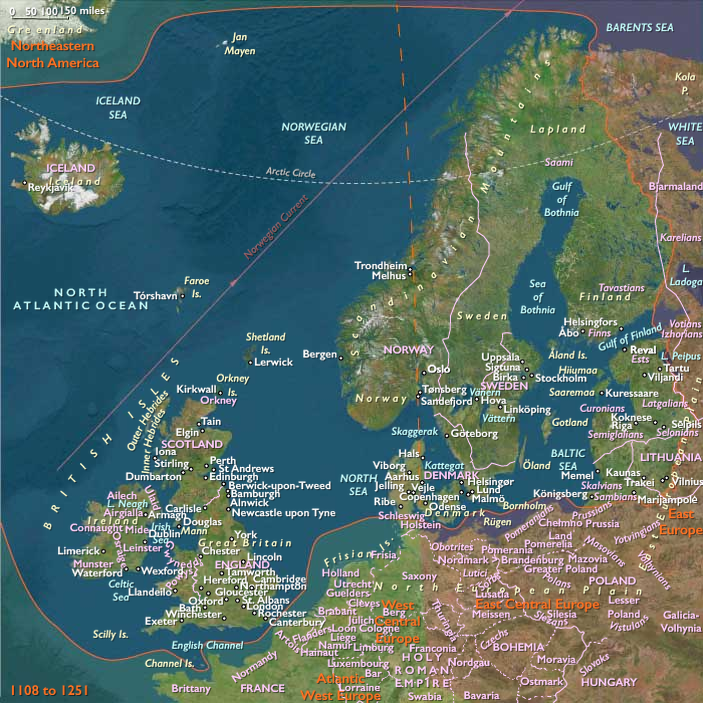
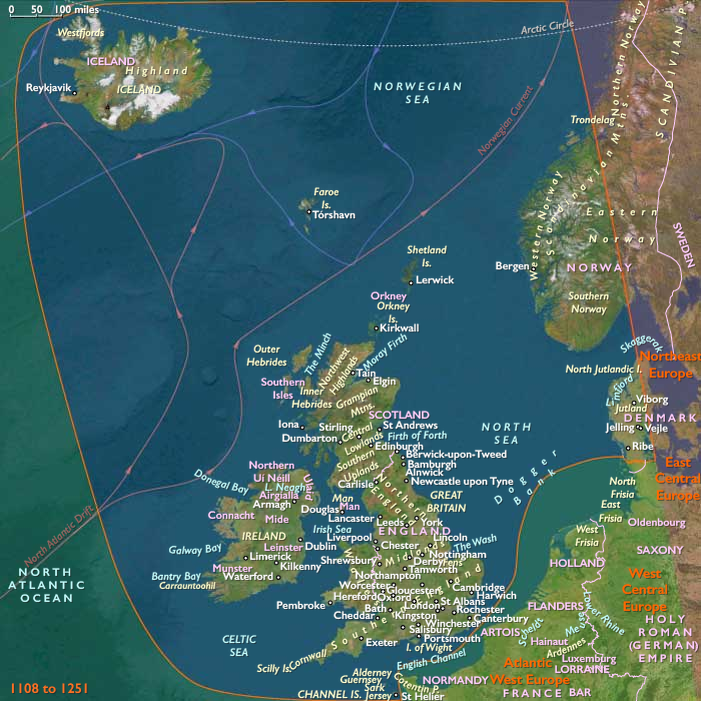
The period 1144–1155 saw the peak of turmoil during The Anarchy (1135–1153), the ongoing civil conflict between King Stephen of Blois and Matilda, daughter of Henry I. England suffered from continuous warfare, exacerbated by shifting loyalties among barons who constructed numerous castles to assert their autonomy. In 1147, Matilda departed England permanently, leaving her son, Henry Plantagenet, to continue the struggle. The prolonged stalemate prompted fatigue among the nobility, leading to the eventual Treaty of Wallingford in 1153, under which Stephen agreed to name Henry Plantagenet as his successor.
Scotland: Continued Growth and Influence
David I (r. 1124–1153) continued his transformative rule until his death in 1153, further developing Scotland's feudal framework and urban infrastructure. His administration saw the establishment of additional monasteries and burghs, enhancing trade and economic stability. David supported his niece, Empress Matilda, in the English succession conflicts, frequently campaigning in Northern England, which consolidated Scotland’s territorial claims and bolstered its influence beyond the border. Upon David’s death, his grandson, Malcolm IV (r. 1153–1165), inherited a relatively stable kingdom.
Ireland: Increased Norman Influence
Ireland remained fragmented politically, yet Norman influence gradually increased. The coastal cities, particularly Dublin and Waterford, prospered through trade and served as gateways for Norman customs and commercial practices. While Ireland was still politically divided, these urban centers became focal points for greater economic and cultural integration with continental Europe and England.
Denmark: Internal Discord and Leadership Changes
Denmark continued to endure internal strife throughout this era. The instability following Eric II Emune's assassination in 1137 extended through successive reigns. Eric III Lamb assumed power in 1137 but struggled to maintain control amid powerful aristocratic factions and eventually abdicated in 1146, paving the way for yet another succession conflict between Sweyn III Grathe, Canute V, and Valdemar the Great, plunging Denmark further into civil war.
Norway: Continued Civil Wars
Norway remained embroiled in civil conflict. The strife initiated by the death of Sigurd I Jorsalfar continued with shifting allegiances and intermittent violence. Battles for the throne between rival claimants marked the decade, reinforcing regional factionalism. Norway’s internal strife weakened central authority and prolonged instability throughout the period.
Iceland and the North Atlantic: Cultural Continuity
Iceland remained largely insulated from mainland conflicts, preserving political stability through its traditional assembly, the Althing. Icelandic culture continued to flourish, as literary and historical works, such as sagas and skaldic poetry, were increasingly documented, thereby enriching cultural heritage and historical preservation.
Religious Expansion and Consolidation
Monastic expansion continued across Northwest Europe, significantly shaping cultural and economic landscapes. The Cistercian order established additional abbeys, playing a critical role in the religious and agricultural development of Scotland and northern England. The influence of monastic institutions reinforced ecclesiastical authority and helped stabilize regions ravaged by warfare.
Legacy of the Era
By 1155 CE, Northwest Europe began transitioning from intense conflict toward emerging stability. England approached the end of its civil war, with Henry Plantagenet poised to ascend the throne, promising restoration of royal authority. Scotland’s political reforms under David I left a stable foundation for his successors. Denmark and Norway, however, continued grappling with internal divisions, delaying lasting peace and unity. Ireland saw steady cultural and economic advancement, facilitated by Norman influence, and Iceland maintained its cultural integrity, largely unaffected by the continental upheaval.
People
- Canute V of Denmark
- David I of Scotland
- Empress Matilda
- Eric II of Denmark
- Eric III of Denmark
- Henry II of England
- Malcolm IV of Sotland
- Sigurd the Crusader
- Stephen of Blois
- Sweyn III of Denmark
- Valdemar I of Denmark
Groups
- Anglo-Saxons
- Denmark, Kingdom of
- Ireland, medieval
- Alba (Scotland), Scots Kingdom of
- Normandy, Duchy of
- England, (Anglo-Saxon) Kingdom of
- Icelandic Commonwealth, or Icelandic Free State
- Normans
- Norway, independent Kingdom of
- Christians, Roman Catholic
- Cistercians, Order of the (White Friars)
Topics
- Medieval Warm Period (MWP) or Medieval Climate Optimum
- Norway, civil war in
- Anarchy, the, or The Nineteen Year Winter, or English Dynastic War
- Danish Civil War of 1137-57
Subjects
Regions
Subregions
Related Events
Showing 10 events out of 48896 total
Years: 1144 - 1155
People
- Canute V of Denmark
- David I of Scotland
- Empress Matilda
- Eric II of Denmark
- Eric III of Denmark
- Henry II of England
- Malcolm IV of Sotland
- Sigurd the Crusader
- Stephen of Blois
- Sweyn III of Denmark
- Valdemar I of Denmark
Groups
- Anglo-Saxons
- Denmark, Kingdom of
- Ireland, medieval
- Alba (Scotland), Scots Kingdom of
- Normandy, Duchy of
- England, (Anglo-Saxon) Kingdom of
- Icelandic Commonwealth, or Icelandic Free State
- Normans
- Norway, independent Kingdom of
- Christians, Roman Catholic
- Cistercians, Order of the (White Friars)
Topics
- Medieval Warm Period (MWP) or Medieval Climate Optimum
- Norway, civil war in
- Anarchy, the, or The Nineteen Year Winter, or English Dynastic War
- Danish Civil War of 1137-57
Subjects
Regions
Subregions