
Northwest Europe (1084–1095 CE): Dynastic Shifts and …
Years: 1084 - 1095
Northwest Europe (1084–1095 CE): Dynastic Shifts and Ecclesiastical Expansion
England: Succession and Continued Norman Control
Following the death of William the Conqueror in 1087, England faced significant succession challenges. William divided his realms among his sons: his eldest, Robert Curthose, inherited Normandy; his second son, William Rufus (William II, r. 1087–1100), became king of England. William Rufus consolidated his power swiftly, suppressing rebellions and firmly maintaining Norman rule. His reign, however, was marked by tensions with both the nobility and the church, particularly concerning royal rights over ecclesiastical appointments and revenues.
William Rufus’s reign saw the continued expansion and fortification of Norman castles and infrastructure. However, his strained relationship with the Church, notably with Anselm, Archbishop of Canterbury, highlighted growing conflicts over ecclesiastical independence, foreshadowing later struggles between Church and Crown.
Scotland: The End of Malcolm III’s Reign
Scotland witnessed the end of an influential era with the deaths of Malcolm III and Queen Margaret in 1093. Malcolm’s reign had significantly strengthened Scottish unity and identity, largely due to Margaret’s cultural and religious influence. Their deaths led to a period of instability marked by internal struggles over succession among their sons and continued border conflicts with England.
Ireland: Urban and Commercial Growth
Ireland continued to experience relative stability, with Norse-Gaelic towns like Dublin, Waterford, and Limerick further developing as commercial and trade centers. These settlements continued to blend Norse and Gaelic cultural elements, enhancing urbanization and trade networks that connected Ireland more closely to continental Europe.
Denmark and Norway: Centralization and Ecclesiastical Influence
In Denmark, King Canute IV (Saint Canute, r. 1080–1086) attempted to centralize royal power and enforce the authority of the church, resulting in increased tensions with the nobility. His efforts culminated in rebellion, and he was killed in 1086 at the Church of St. Alban in Odense. He was succeeded by his brother, Olaf I Hunger (r. 1086–1095), whose reign was marked by famine and internal instability.
Norway, under King Olaf III Kyrre (r. 1067–1093), enjoyed relative peace, and Olaf’s policies fostered prosperity, particularly in trading centers like Bergen. Upon his death in 1093, Olaf was succeeded by his son Magnus III Barefoot (r. 1093–1103), who pursued an aggressive expansionist policy, notably towards the Hebrides and the Irish Sea.
Iceland and North Atlantic Norse Settlements: Continued Prosperity
Iceland’s Althing remained stable, further strengthening the island’s political and cultural life. Literary and scholarly activities continued to thrive, preserving Norse heritage. The Norse settlements of the Faroe Islands, Orkney, and Shetland experienced continued economic growth and prosperity, benefiting from increased trade within North Atlantic networks.
Religious and Cultural Developments
The ecclesiastical landscape of Northwest Europe continued to evolve significantly. England experienced tension between royal authority and Church autonomy, reflecting broader European conflicts linked to the Gregorian reforms. In Scotland, despite political upheaval following the deaths of Malcolm III and Margaret, the religious reforms and monastic foundations they established continued to influence Scottish society profoundly.
Legacy of the Era
By 1095 CE, Northwest Europe had witnessed significant dynastic changes and continued ecclesiastical expansion. England’s Norman monarchy was firmly entrenched despite succession challenges and ecclesiastical disputes. Scotland entered a period of uncertainty following the deaths of Malcolm III and Margaret, shaping its future political landscape. Ireland enjoyed stable urban growth, while Denmark and Norway navigated internal tensions and leadership shifts. Iceland and North Atlantic communities continued cultural and economic prosperity. This era set the stage for ongoing tensions between secular and ecclesiastical powers that characterized much of the subsequent medieval period.
People
- Anselm of Canterbury
- Canute IV of Denmark
- Magnus Barefoot
- Malcolm III of Scotland
- Olaf I of Denmark
- Olaf III of Norway
- Robert Curthose
- Saint Margaret of Scotland
- William II of England
- William the Conqueror
Groups
- Anglo-Saxons
- Denmark, Kingdom of
- Ireland, medieval
- Alba (Scotland), Scots Kingdom of
- Normandy, Duchy of
- England, (Anglo-Saxon) Kingdom of
- Icelandic Commonwealth, or Icelandic Free State
- Normans
- Norway, independent Kingdom of
- Christians, Roman Catholic
Topics
Subjects
Regions
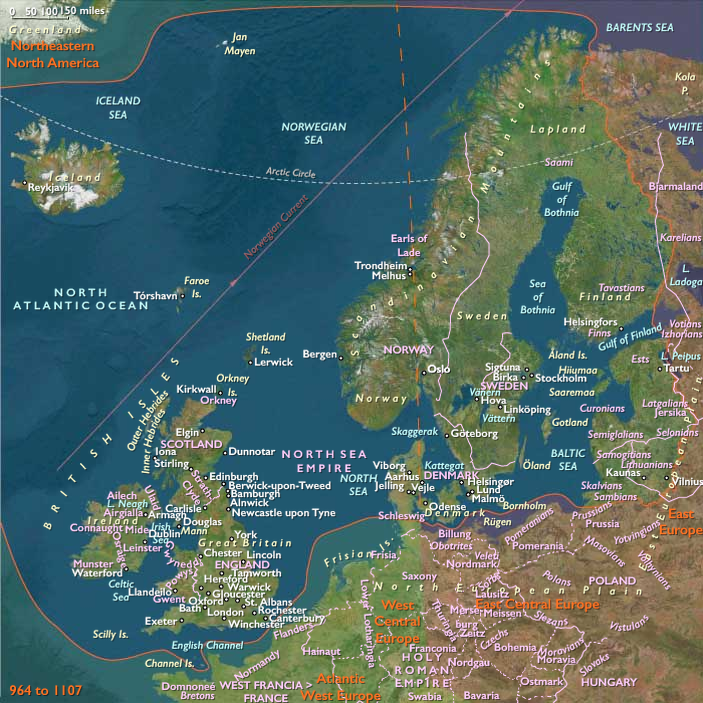
Subregions
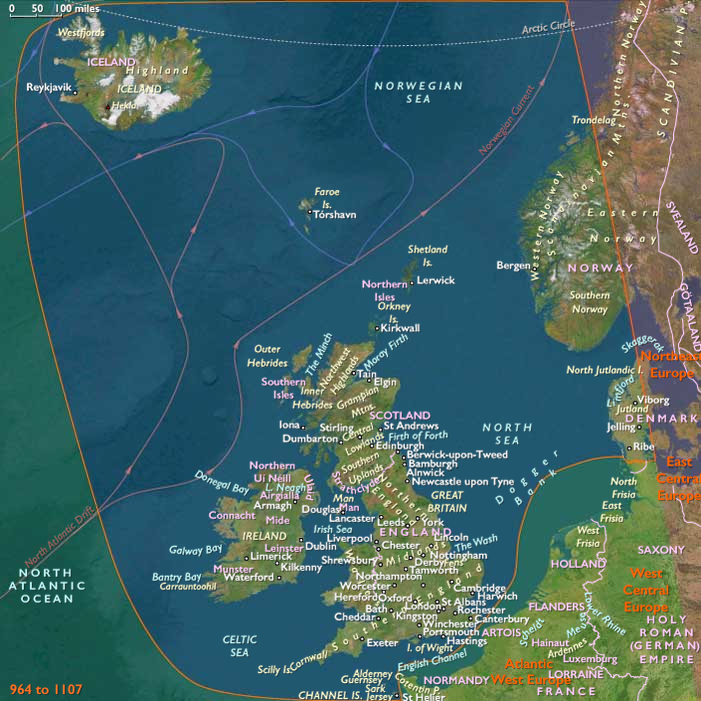
Years: 1084 - 1095
People
- Anselm of Canterbury
- Canute IV of Denmark
- Magnus Barefoot
- Malcolm III of Scotland
- Olaf I of Denmark
- Olaf III of Norway
- Robert Curthose
- Saint Margaret of Scotland
- William II of England
- William the Conqueror
Groups
- Anglo-Saxons
- Denmark, Kingdom of
- Ireland, medieval
- Alba (Scotland), Scots Kingdom of
- Normandy, Duchy of
- England, (Anglo-Saxon) Kingdom of
- Icelandic Commonwealth, or Icelandic Free State
- Normans
- Norway, independent Kingdom of
- Christians, Roman Catholic
Topics
Subjects
Regions
Subregions