
Central Asia (49,293 – 28,578 BCE): Upper …
Years: 49293BCE - 28578BCE
Central Asia (49,293 – 28,578 BCE): Upper Paleolithic I — Periglacial Steppes and River-Terrace Camps
Geographic and Environmental Context
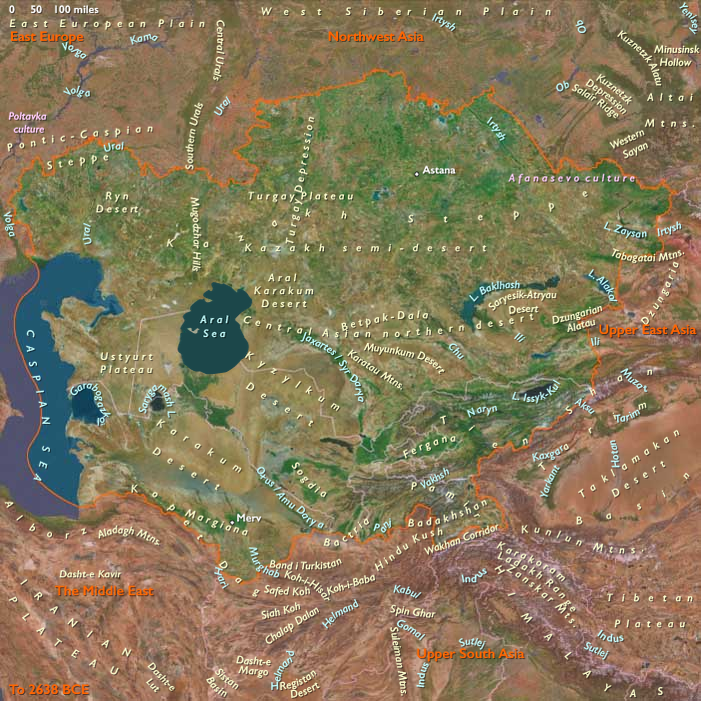
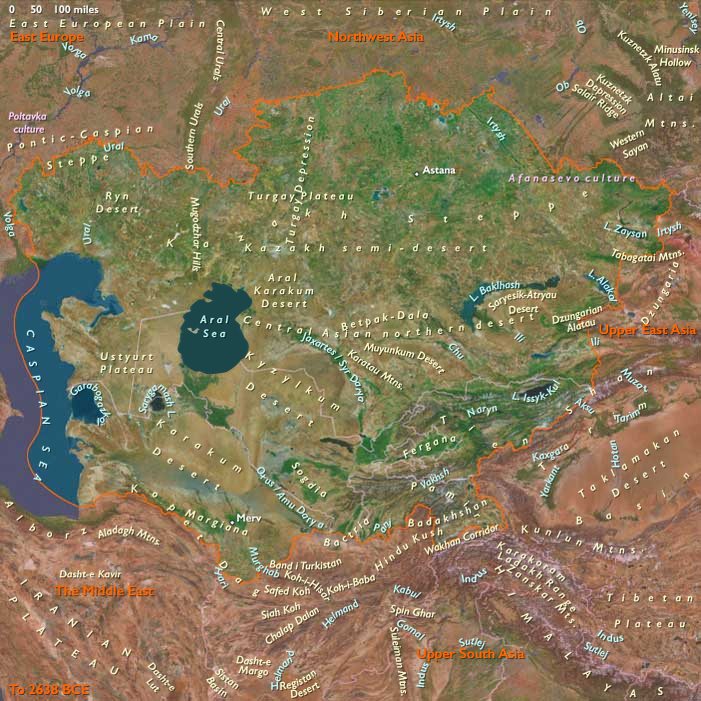
Central Asia includes the Syr Darya (Jaxartes) and Amu Darya (Oxus) basins (Transoxiana), Khwarazm and the Aral–Caspian lowlands, the Ferghana valley, the Merv oasis and Kopet Dag piedmont, the Kazakh steppe to the Aral littoral, and the Tian Shan–Pamir margins.
-
Anchors: Zeravshan and Amu/Syr terrace systems, Kopet Dag foothills, Kyzylkum dune margins, Tian Shan forelands.
-
Wide periglacial plains, braided rivers, and loess plateaus framed hunter ranges.
Climate & Environmental Shifts
-
Peak Last Glacial: colder, drier; steppe–tundra with sparse woodland pockets; dune activity along the Kyzylkum/Ustyurt edges; lower baseflows in rivers compared to the Holocene.
Subsistence & Settlement
-
Big-game foragers tracked horse, saiga antelope, bison, and mammoth on riverine terraces.
-
Seasonal camps perched on aeolian bluffs and spring-fed fans; hearths and knapping floors common.
Technology & Material Culture
-
Blade–microblade toolkits in high-quality cherts; end-scrapers, burins, bone awls; tailored hides for winter.
-
Ornaments: drilled teeth, shell (imported), red ochre.
Movement & Interaction Corridors
-
Amu–Syr trunkways and Zeravshan benches structured movement; leeward routes under the Kopet Dag linked to Iranian forelands.
Cultural & Symbolic Expressions
-
Portable art and ochred burials reflect Upper Paleolithic symbolic repertoires shared across Inner Eurasia.
Environmental Adaptation & Resilience
-
High mobility, riverine focus, and broad prey portfolios buffered climatic extremes.
Topics
Commodoties
Subjects
Regions
Subregions
Related Events
Showing 10 events out of 69706 total
Years: 49293BCE - 28578BCE
Topics
Commodoties
Subjects
Regions
Subregions