
West Indies (820 – 963 CE): Lucayan …
Years: 820 - 963
West Indies (820 – 963 CE): Lucayan Beginnings, Arawakan Corridors, and the Western Canoe Gateways
Geographic and Environmental Context
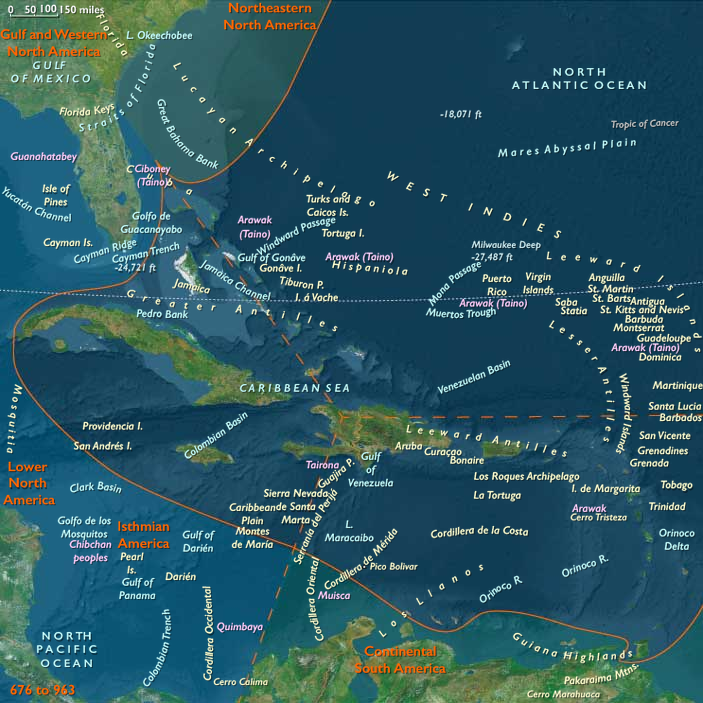
The West Indies formed an arc of islands linking South America to the northern Caribbean through three complementary zones:
-
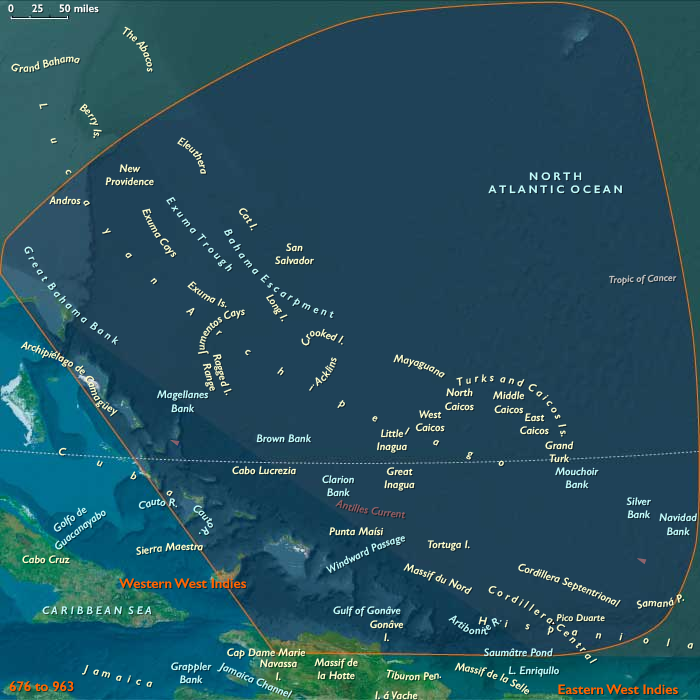
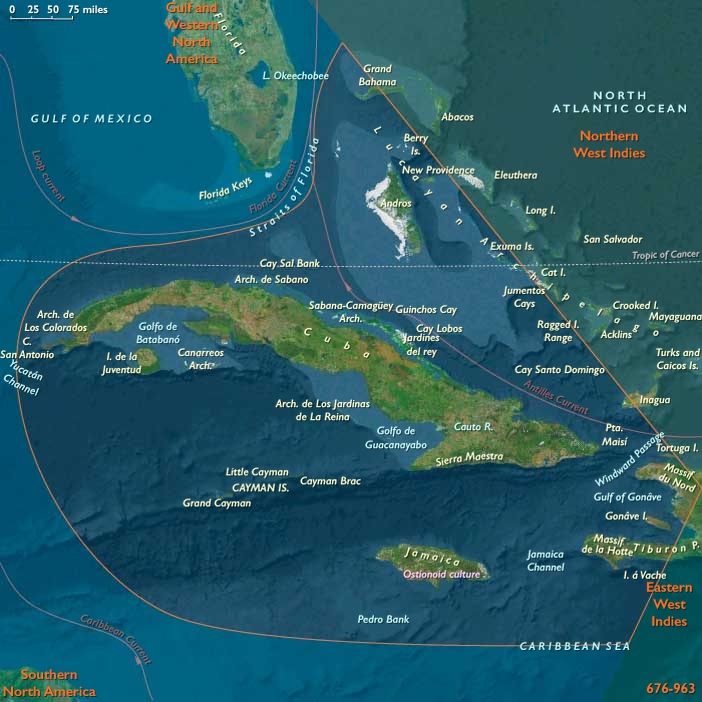
Northern West Indies: the Bahamas (Lucayan Archipelago), Turks & Caicos, and northern Hispaniola (Cap-Haïtien, Massif du Nord, and the Cibao/north coast of the Dominican Republic; Tortuga excluded here).
-
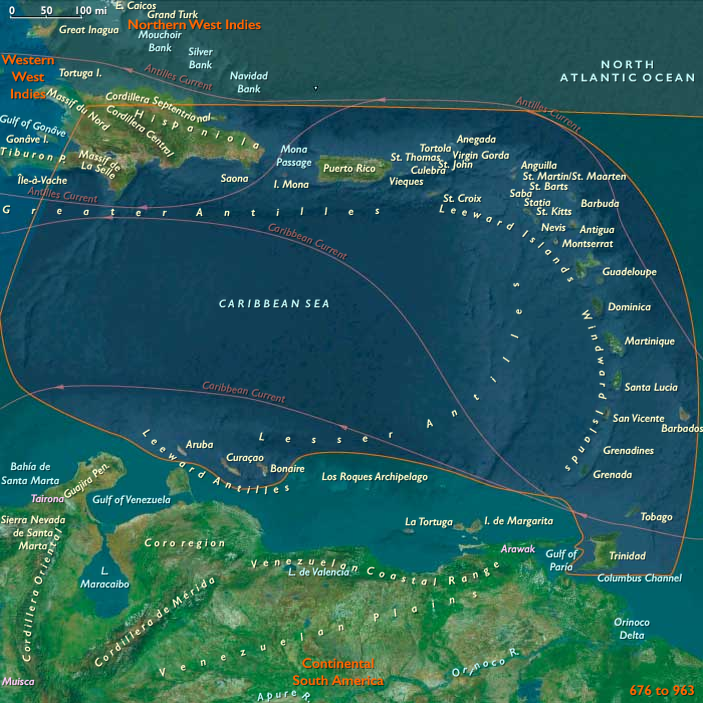
Eastern West Indies: most of Hispaniola (eastern Haiti and all but the northern fringe of the Dominican Republic), Puerto Rico, the Virgin Islands, the Lesser Antilles (Anguilla → Aruba), and Trinidad & Tobago.
-
Western West Indies: Cuba, Jamaica, the Cayman Islands, and western Haiti—including Tortuga, the Massif du Nord’s western flank, the Gonâve Gulf and Peninsula, and Port-de-Paix.
Warm trade-wind climates, fertile interior valleys (Vega Real/Cibao, Puerto Rico, Trinidad), and reef-lined coasts underwrote mixed horticulture and canoe-borne exchange; seasonal hurricanes encouraged dispersed settlement and multiple coastal nodes.
Climate and Environmental Shifts
A stable, humid regime favored year-round cultivation and abundant fisheries.
-
The approach to the Medieval Warm Period modestly enhanced growing seasons without eliminating cyclone risk.
-
Valleys in northern Hispaniola, Puerto Rico, and Trinidad yielded consistent surpluses; smaller isles relied on diversified gardens plus reef harvests.
Societies and Political Developments
-
Northern zone (Lucayan–Taíno frontier):
Arawakan-speaking settlers from Hispaniola expanded into the Bahamas and Turks & Caicos. Farming villages thrived in the Cibao and along Hispaniola’s north coast, while small horticultural hamlets dotted the Turks & Caicos “stepping-stones.” -
Eastern zone (Arawakan migrations and consolidation):
Northbound movements from the Orinoco–Trinidad doorway spread Arawakan communities into the Lesser Antilles and Puerto Rico, precursors of later Taíno. Hispaniola’s eastern valleys grew denser, with plazas and ball-game spaces beginning to appear. -
Western zone (Ostionoid canoe gateways):
Cuba (west/central valleys) and Jamaica saw the spread of Ostionoid hamlets with incipient plazas; western Haiti (Port-de-Paix, Tortuga) functioned as the embarkation hinge to Cuba and Jamaica. Leadership remained kin-based and village-level rather than hereditary cacique monarchies.
Economy and Trade
-
Horticulture: cassava (manioc) dominated conuco raised-mound fields; maize, sweet potato, beans, peanuts, peppers, and cotton rounded the staples.
-
Marine economy: intensive reef fishing, shellfish, turtles, and occasional manatee hunting; lagoons and banks provisioned inter-island voyages.
-
Canoe exchange circuits:
-
Northern: Lucayans moved stone tools, shells, cotton thread, and cassava breads among the Bahamas, Turks & Caicos, and northern Hispaniola.
-
Eastern: shells, stone celts, cotton, and foodstuffs circulated along the Lesser Antilles; Trinidad bridged Orinoco exports (woods, ornaments) to island networks.
-
Western: Port-de-Paix/Tortuga shipped cassava bread, stone celts, cotton thread; Cuba supplied hardwoods, shell artifacts, conuco produce; Jamaica added timber feathers, and cassava; Caymans served as turtle-fishing stations.
-
Subsistence and Technology
-
Conuco systems improved fertility and drainage; cassava griddles and presses ensured safe, portable bread.
-
Fishing technologies: traps, nets, weirs; bone/shell hooks; bank and lagoon fisheries timed to winds and lunar cycles.
-
Canoes: large dugouts capable of dozens of paddlers mastered passages across the Windward Passage, Jamaica Channel, and links to the Old Bahama Channel.
-
Ceramics: Ostionoid red-on-buff wares with incised designs in Cuba/Jamaica/western Hispaniola; eastern Hispaniola and Puerto Rico showed plaza development alongside evolving pottery styles.
Movement and Interaction Corridors
-
Windward Passage: western Hispaniola ⇄ eastern Cuba.
-
Jamaica Channel: Cuba ⇄ Jamaica via Tortuga/Port-de-Paix nodes.
-
Old Bahama Channel: western Hispaniola/Cuba ⇄ northern Bahamian banks (indirect).
-
Leeward–Windward island chain: Trinidad ⇄ Lesser Antilles ⇄ Puerto Rico; canoe relays linked small islands to larger valley hubs.
These corridors knit the archipelago into a single canoe commons, where redundancy in routes mitigated hurricane-disruption.
Belief and Symbolism
-
Animist cosmologies centered on zemí spirits (fertility, weather, ancestors).
-
Ancestor veneration shaped burial practice (shell ornaments, ochre), cave offerings (Cuba/Haiti), and household shrines.
-
Ball-games and early plaza forms appeared in Hispaniola, expressing ritual diplomacy and community identity.
-
Shamans mediated rain, health, and voyaging luck through trance and offerings.
Adaptation and Resilience
-
Dual economies—root-crop horticulture plus reef/turtle harvests—buffered climate shocks.
-
Dispersed settlement across multiple coastal nodes reduced hurricane vulnerability.
-
Archipelagic reciprocity: shortages in arid pockets (e.g., western Haiti) were offset by imports from Cuba/Jamaica or the eastern valleys; cotton and shell valuables balanced exchanges where food was scarce.
-
Canoe capacity and seamanship enabled rapid relief and post-storm rebuilding.
Long-Term Significance
By 963 CE, the West Indies had coalesced into a tricentric island world:
-
Northern West Indies: Lucayan expansion from Hispaniola anchored the Bahamas–Turks & Caicos with steady links to the Cibao and north coast.
-
Eastern West Indies: an Arawakan cultural corridor connected Trinidad to Puerto Rico and Hispaniola’s eastern valleys, deepening plaza and ball-game traditions.
-
Western West Indies: Port-de-Paix/Tortuga emerged as the pivotal canoe hinge to Cuba and Jamaica, where Ostionoid conuco horticulture and ritual cave use spread.
These networks—conucos, zemí shrines, and blue-water dugouts—laid the social and economic foundations for the Taíno cacicazgos that would crystallize in the 11th–12th centuries across the Greater Antilles.
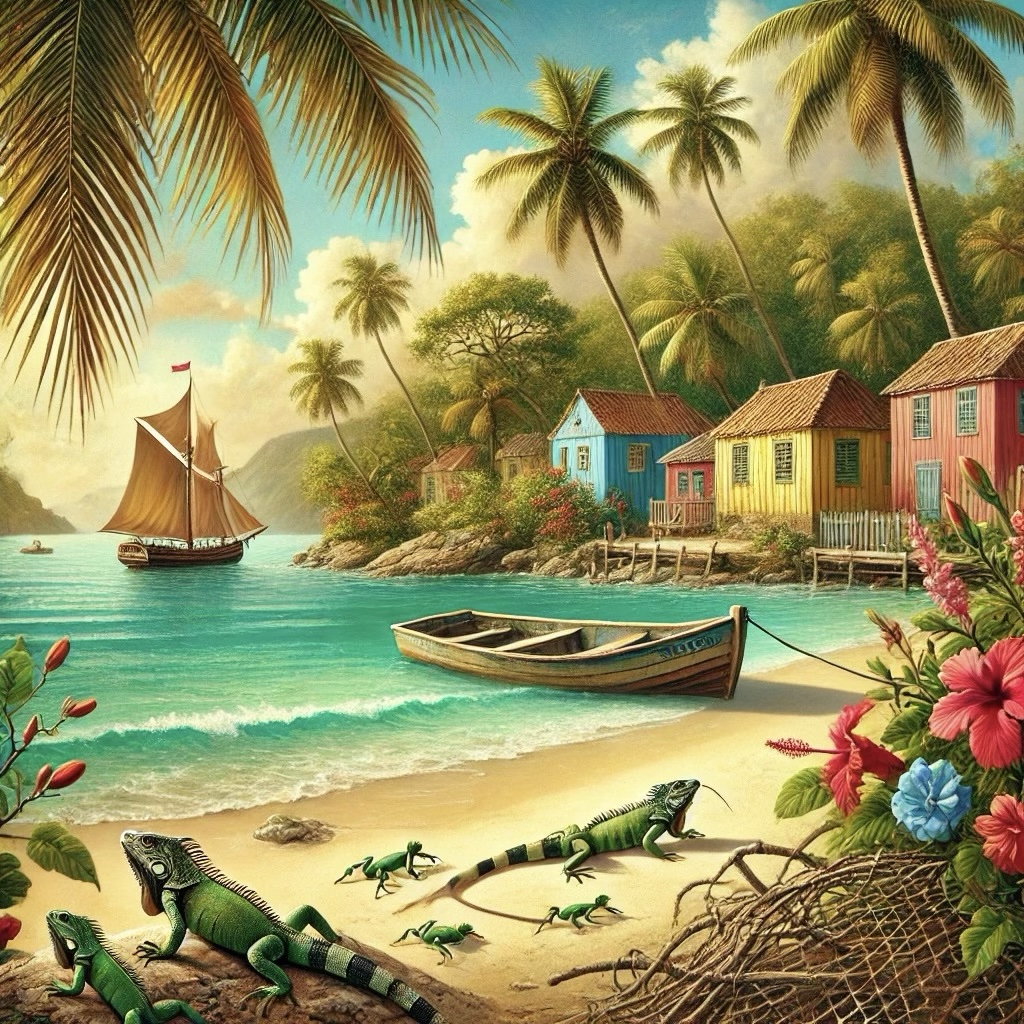
Northern West Indies (with civilization) ©2024-25 Electric Prism, Inc. All rights reserved.
Groups
Topics
Commodoties
Subjects
Regions
Subregions
Years: 820 - 963
Northern West Indies (with civilization) ©2024-25 Electric Prism, Inc. All rights reserved.
Groups
Topics
Commodoties
Subjects
Regions
Subregions