
Northern West Indies (6,093–4,366 BCE) Middle …
Years: 6093BCE - 4366BCE
Northern West Indies (6,093–4,366 BCE) Middle Holocene — Estuary Villages, Upland-Lowland Circuits
Geographic and Environmental Context
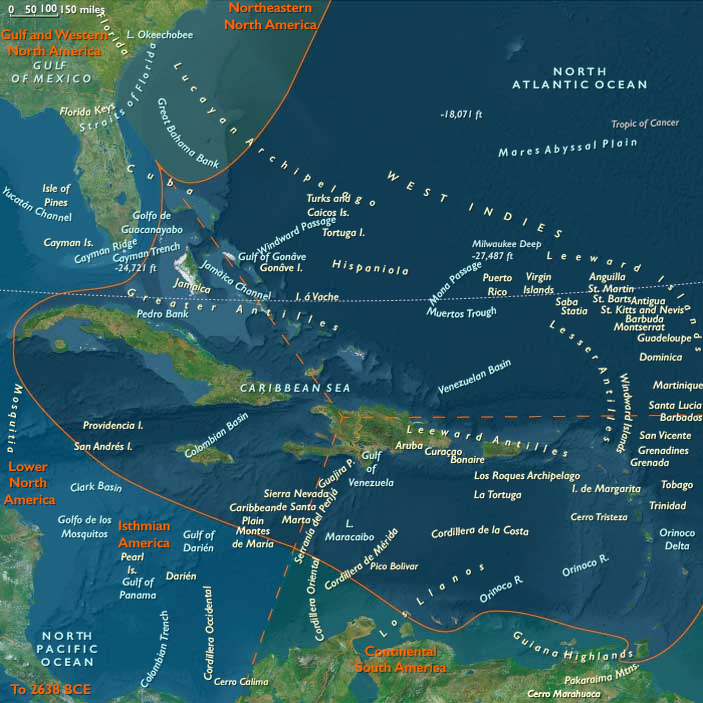
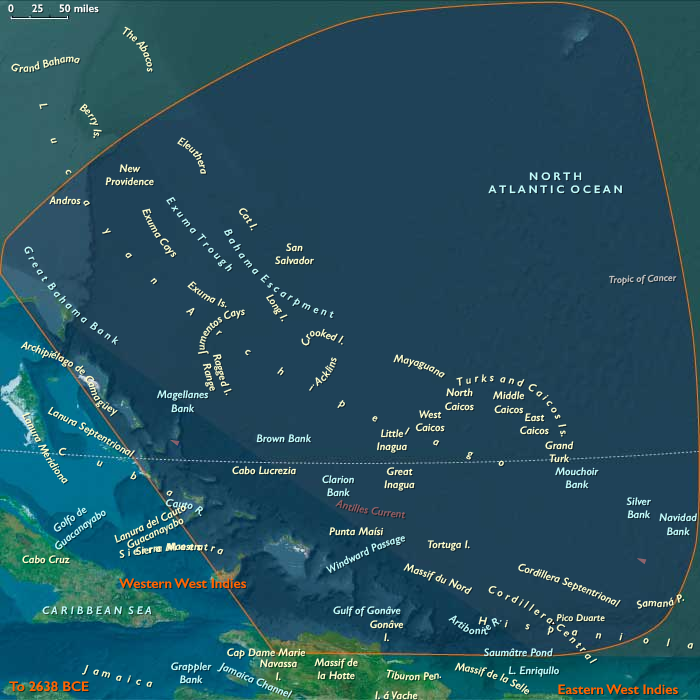
Northern West Indies includes the Outer Bahamas (Lucayan archipelago), the Turks & Caicos Islands, and northern Hispaniola — northern Haiti (Cap-Haïtien, Massif du Nord) and the Cibao/north coast of the Dominican Republic (Santiago de los Caballeros, Puerto Plata).
Anchors: Andros–Abaco–Eleuthera–San Salvador–Exuma banks, Turks & Caicos banks and passes, Cap-Haïtien–Massif du Nord, Cibao–Puerto Plata–Santiago river valleys and coastal shelves.
-
Coastal passes fixed; mangroves stabilized leeward lagoons.
Climate & Environmental Shifts
-
Continued Holocene warmth; storms reworked passes without collapsing fisheries.
Subsistence & Settlement
-
Northern Hispaniola semi-sedentary coastal hamlets; upland excursions into Massif du Nord/Cibao for tubers/fruit.
-
Bahama–Caicos remained without permanent settlements.
Technology & Material Culture
-
Grindstones, net weights; shell beads; refined bone hooks.
Movement & Interaction Corridors
-
Canoe shuttles among north-coast inlets; occasional cross-bank ventures for turtle/salt.
Cultural & Symbolic Expressions
-
Coastal shrine-stones; feasts mark turtle seasons.
Environmental Adaptation & Resilience
-
Stored smoked fish and shellfish; diversification into upland fruit–root rounds.
Transition
By 4,366 BCE, coast–upland economies on Hispaniola were entrenched.
Topics
Commodoties
Subjects
Regions
Subregions
Years: 6093BCE - 4366BCE
Topics
Commodoties
Subjects
Regions
Subregions