
Northern South Atlantic (4,365–2,638 BCE): Mature Holocene …
Years: 4365BCE - 2638BCE
Northern South Atlantic (4,365–2,638 BCE): Mature Holocene Mosaics
Geographic & Environmental Context
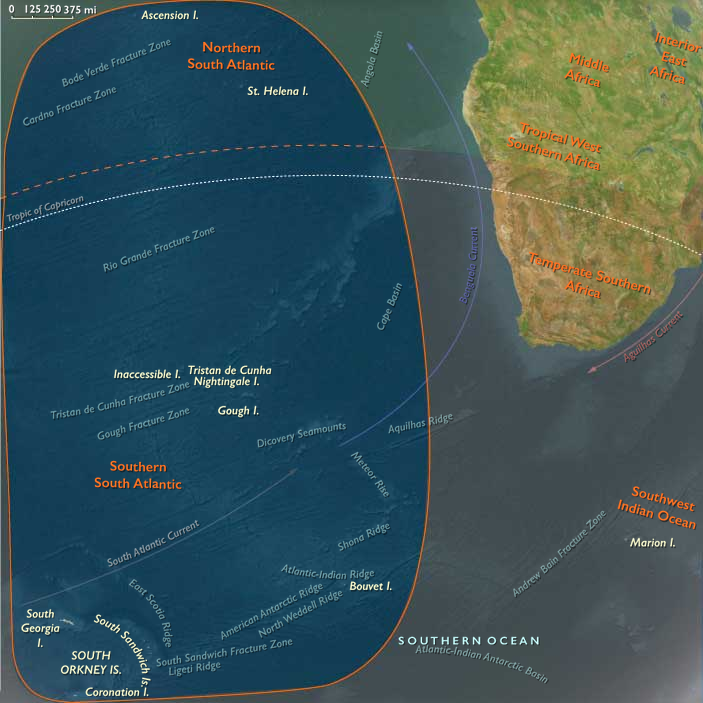
The subregion of Northern South Atlantic includes Saint Helena and Ascension Island. Cliff shelves, talus slopes, and sporadic beaches encircled lava/cap-rock interiors; summit fog belts on Saint Helena contrasted with Ascension’s xeric cones.
Climate & Environmental Shifts
Holocene stability with modest century-scale variability. Trades reliable; occasional ITCZ excursions brought convective rains. Sea level hovered near present.
Subsistence & Settlement
No humans. Saint Helena: better-developed cloud-belt woodlands with tree ferns and shrubs; Ascension: grass-shrub steppe with greener gullies. Seabirds (boobies, terns, petrels) packed ledges; turtles nested on pocket beaches; land invertebrates diversified in moist hollows.
Technology & Material Culture
None. Biogenic signatures—peat lenses, guano crusts, shell middens (natural), and soil charcoal only from lightning/volcanic sources.
Movement & Interaction Corridors
Gyre-edge fronts funneled tunas and billfish; seabird highways linked three continents; turtles rode the South Equatorial drift to forage grounds.
Cultural & Symbolic Expressions
None.
Environmental Adaptation & Resilience
Fog-capture floras stabilized summit soils; deep-rooted shrubs resisted drought; colonies shifted after rockfalls; nesting adjusted to storm seasonality. Nutrient coupling sea→land→sea intensified near rookeries.
Transition
By 2,638 BCE, the islands held mature, though limited, terrestrial mosaics embedded in a highly productive pelagic realm—still unseen by humans.
Topics
Subjects
Regions
Subregions
Years: 4365BCE - 2638BCE
Topics
Subjects
Regions
Subregions