
Upper South Asia (1108 – 1251 CE): …
Years: 1108 - 1251
Upper South Asia (1108 – 1251 CE): Ghurid Expansion, Delhi Sultanate’s Rise, and Himalayan Realms
Geographic and Environmental Context
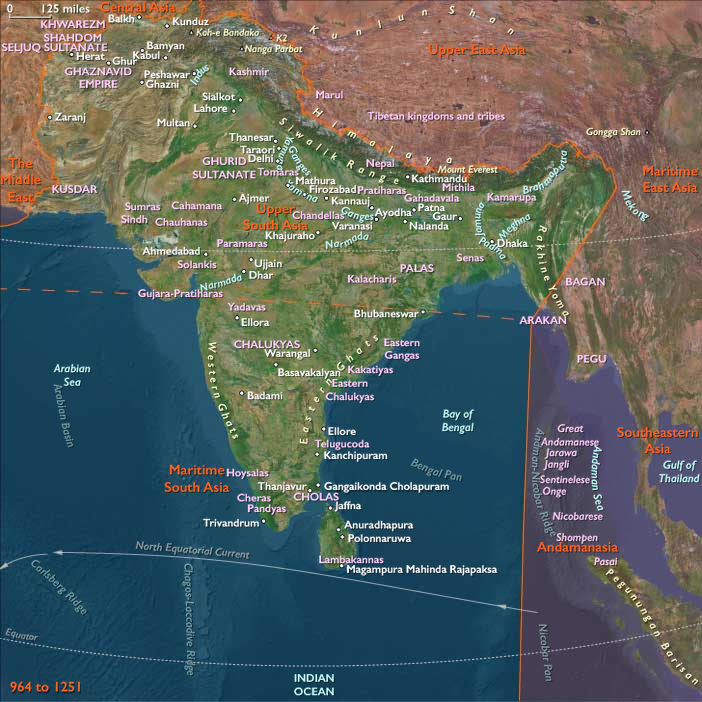
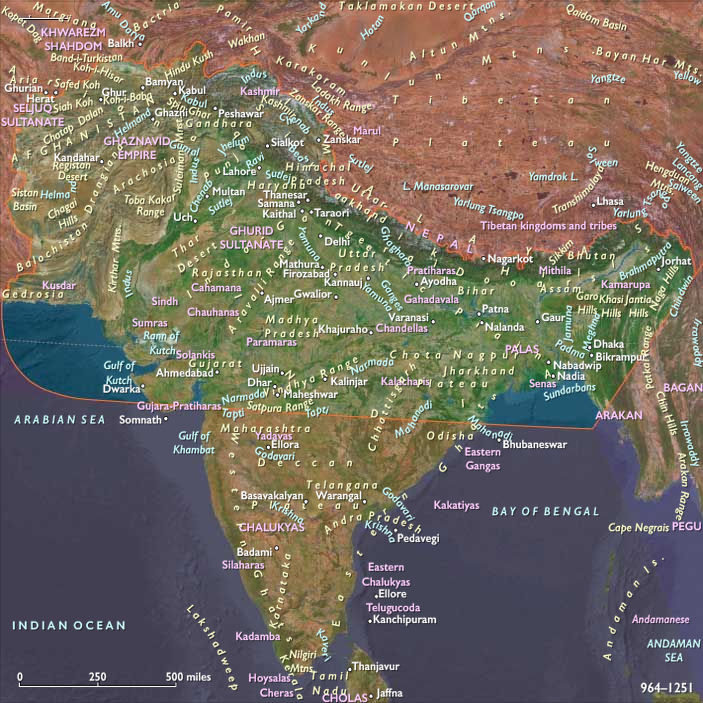
Upper South Asia includes Afghanistan, Pakistan, North India, Nepal, Bhutan, Bangladesh, and northwestern Myanmar (the northern Arakan/Yakhine sector and the Chindwin valley).
-
Anchors: Kabul–Gandhara gateways, Punjab–Doab–Ganga–Brahmaputra plains, the Kathmandu Valley, Himalayan foothills of Nepal and Bhutan, Bengal’s deltaic rice lands, and northwestern Myanmar’s Arakan/Chindwin corridors into Upper Burma.
Climate and Environmental Shifts
-
The tail end of the Medieval Warm Period gave generally favorable rainfall, though localized droughts struck the Doab and Punjab.
-
Bengal’s deltas and Nepal’s irrigated terraces yielded strong surpluses.
-
Himalayan passes remained viable for salt–grain exchanges; coastal storms periodically disrupted Bengal ports.
Societies and Political Developments
-
Afghanistan & North India:
-
Ghurid conquests (late 12th century) swept through the Punjab and Ganga plain; by 1206, the Delhi Sultanate was established under the Mamluk dynasty of Qutb al-Din Aibak.
-
Successors like Iltutmish (r. 1211–1236) consolidated Delhi, repelled challengers, and gained Caliphal recognition.
-
Razia Sultan (1236–1240) briefly ruled, a rare female sovereign.
-
The Sultanate weathered Mongol pressure from the northwest (raids from c. 1221 onward).
-
-
Punjab & Frontier: contested between Ghurids, Khwarazmians, and Mongols; Lahore rose and fell as a key provincial hub.
-
Bengal:
-
Conquered by Bakhtiyar Khalji (c. 1204), with incursions as far as Tibet; Bengal incorporated into the Sultanate but often semi-autonomous.
-
Sonargaon and Lakhnauti grew as riverine entrepôts.
-
-
Kashmir: ruled by the Hindu Lohara dynasty until mid-13th century, maintaining Sanskrit learning and temple patronage despite Turkic pressure.
-
Nepal (Kathmandu Valley): Malla dynasty consolidated after 1200; Newar city-states (Kathmandu, Patan, Bhaktapur) expanded irrigation, crafts, and pagoda architecture.
-
Bhutan: highland valleys under local chieftains, with Tibetan Buddhist influences strengthening (Drukpa Kagyu inroads).
-
Northwestern Myanmar:
-
Arakan developed into the Launggyet kingdom (from mid-13th c.), mediating between Bengal and Upper Myanmar.
-
The Chindwin valley supplied rice, timber, and elephants to Pagan-era Burma.
-
Economy and Trade
-
Agriculture:
-
Doab: wheat, barley, pulses; Bengal: rice, jute, sugarcane; Nepal: irrigated rice and millet.
-
Bhutan: barley and buckwheat; Arakan/Chindwin: rice and elephants.
-
-
Trade & exchange:
-
Delhi connected Central Asian horses and slaves to Indian textiles and cash crops.
-
Bengal exported rice, textiles, and sugar via delta ports; received Arabian horses and Persian silver.
-
Himalayan passes moved salt, wool, paper south; grain and cloth north.
-
-
Coinage: silver tanka and copper jital under Iltutmish became widespread; Bengal mints produced local coinage.
Subsistence and Technology
-
Irrigation: Ghiyath al-Din Tughluq (as governor) began canal works in Doab; Bengal embankments stabilized polders.
-
Military: Turkish cavalry with composite bows; fortified cities (Delhi, Gwalior, Lahore).
-
Architecture & crafts: Delhi’s Qutb complex (Qutb Minar, Quwwat al-Islam mosque); Bengal’s early brick mosques; Newar brick–timber temples; Kashmiri temple architecture.
Movement and Interaction Corridors
-
Khyber and Bolan passes: horse, slave, and silk traffic from Central Asia.
-
Grand Trunk precursor: Lahore ⇄ Delhi ⇄ Bihar ⇄ Bengal, with caravanserais.
-
Bengal delta waterways: Sonargaon ⇄ Lakhnauti ⇄ ports for Bay of Bengal trade.
-
Himalayan passes: trans-Himalayan salt/wool corridors via Nepal–Tibet; Bhutanese valleys tied to monastic houses.
-
Arakan/Chindwin routes: rice and elephants moved into Pagan Burma; Bengal traders crossed into Arakan.
Belief and Symbolism
-
Islam: Delhi Sultanate patronized mosques, madrasas, and khanqahs; Sufis (Chishti order, esp. Nizamuddin Auliya in Delhi) attracted wide followings.
-
Hindu traditions: temple endowments persisted; regional courts in Rajasthan and Kashmir fostered Sanskrit literature.
-
Buddhism: declined in North India but flourished in Nepal (Newar Vajrayana); Bhutan absorbed Tibetan monastic influence.
-
Arakan & Chindwin: Theravāda Buddhism tied to Pagan kingdom; syncretism with Bengal contacts.
Adaptation and Resilience
-
Political flexibility: when Delhi faltered, governors (esp. Bengal) asserted semi-autonomy.
-
Agricultural diversification: rice (Bengal), wheat (Doab), millet/barley (Himalayas) buffered ecological shocks.
-
Trade redundancy: Afghan horse caravans, Bengal sea lanes, Himalayan salt–wool routes kept circulation alive even under Mongol threat.
-
Ritual networks: Sufi hospices, temples, and monasteries mediated crises, redistributed alms, and stabilized society.
Long-Term Significance
By 1251, Upper South Asia had been reshaped:
-
The Delhi Sultanate was entrenched in the Doab, despite Mongol incursions.
-
Bengal served as a semi-autonomous frontier sultanate, linking Ganga–delta agriculture to Indian Ocean trade.
-
Nepal matured into a tri-city Malla polity; Bhutan consolidated Buddhist lineages.
-
Arakan and the Chindwin valley tied Bengal to Pagan Burma, anchoring Indo–Southeast Asian connections.
This era established the foundations for the Sultanate’s wider reach, Bengal’s naval power, and Himalayan resilience in the centuries to come.
People
Groups
- Tajik people
- Kirat people
- Iranian peoples
- Hinduism
- Pashtun people (Pushtuns, Pakhtuns, or Pathans)
- Jainism
- Buddhism
- Buddhism, Tibetan
- Khas peoples
- India, Classical
- Buddhism, Mahayana
- Tokharistan (Kushan Bactria)
- Gandhāra
- Bon
- Bumthang, Kingdom of
- Islam
- Palas of Bengal, Empire of the
- Abbasid Caliphate (Baghdad)
- Paramara dynasty
- Rakhine State (Arakanese Kingdom)
- Chandelas (Candellas) of Khajuraho, Kingdom of the
- Abbasid Caliphate (Baghdad)
- Cauhans (Chamnas) of Ajmer and Delhi, Rajput Kingdom of the
- Ghilzai (Pashtun tribal confederacy)
- Gujarat, Solanki Kingdom of
- Rakhine (Arakanese) people
- Ghurid dynasty
- Senas of Bengal, Kingdom of the
- Gahadvalas
- Ghurid Sultanate
- Delhi, Sultanate of (Ghurid Dynasty)
- Malla (Nepal)
- Delhi, Sultanate of (Mamluk or Ghulam Dynasty)
Topics
Commodoties
Subjects
- Commerce
- Writing
- Architecture
- Sculpture
- Conflict
- Faith
- Government
- Custom and Law
- Metallurgy
- Medicine
- Mathematics
- Astronomy
- Philosophy and logic
Regions
Subregions
Related Events
Showing 1 events out of 1 total
Years: 1108 - 1251
People
Groups
- Tajik people
- Kirat people
- Iranian peoples
- Hinduism
- Pashtun people (Pushtuns, Pakhtuns, or Pathans)
- Jainism
- Buddhism
- Buddhism, Tibetan
- Khas peoples
- India, Classical
- Buddhism, Mahayana
- Tokharistan (Kushan Bactria)
- Gandhāra
- Bon
- Bumthang, Kingdom of
- Islam
- Palas of Bengal, Empire of the
- Abbasid Caliphate (Baghdad)
- Paramara dynasty
- Rakhine State (Arakanese Kingdom)
- Chandelas (Candellas) of Khajuraho, Kingdom of the
- Abbasid Caliphate (Baghdad)
- Cauhans (Chamnas) of Ajmer and Delhi, Rajput Kingdom of the
- Ghilzai (Pashtun tribal confederacy)
- Gujarat, Solanki Kingdom of
- Rakhine (Arakanese) people
- Ghurid dynasty
- Senas of Bengal, Kingdom of the
- Gahadvalas
- Ghurid Sultanate
- Delhi, Sultanate of (Ghurid Dynasty)
- Malla (Nepal)
- Delhi, Sultanate of (Mamluk or Ghulam Dynasty)
Topics
Commodoties
Subjects
- Commerce
- Writing
- Architecture
- Sculpture
- Conflict
- Faith
- Government
- Custom and Law
- Metallurgy
- Medicine
- Mathematics
- Astronomy
- Philosophy and logic
Regions
Subregions