
Upper South Asia (964 – 1107 CE): …
Years: 964 - 1107
Upper South Asia (964 – 1107 CE): Ghaznavids, Palas & Senas, and Himalayan Polities
Geographic and Environmental Context
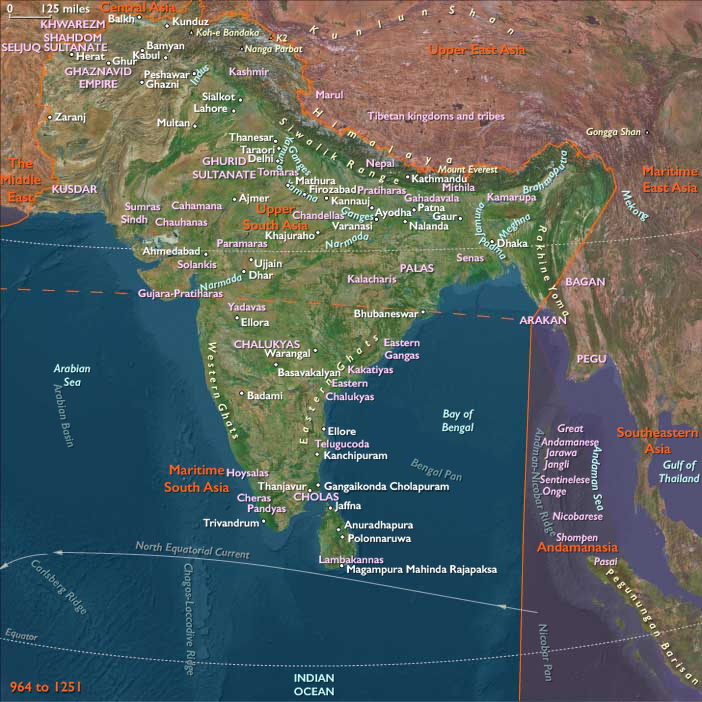
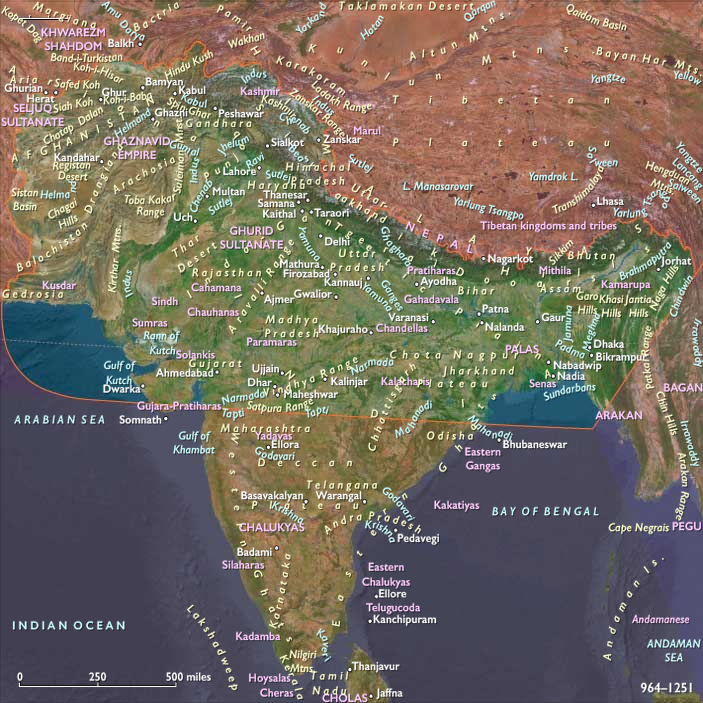
Upper South Asia includes Afghanistan, Pakistan, North India, Nepal, Bhutan, Bangladesh, and northwestern Myanmar (northern Arakan/Yakhine and the Chindwin valley).
-
Anchors: the Indo-Gangetic plain from Punjab to Bengal, the Kathmandu Valley, the Himalayan foothills of Nepal and Bhutan, Kashmir, and the Arakan/Chindwin corridors tying Bengal to Upper Burma.
Climate and Environmental Shifts
-
Favorable monsoons persisted; Bengal deltaic expansion intensified rice cultivation.
-
Himalayan passes remained viable for salt/wool–grain exchange.
-
Steppe pressures brought Turkic migrations into Afghanistan.
Societies and Political Developments
-
Afghanistan & Punjab:
-
Ghaznavid Empire (Mahmud of Ghazni, r. 998–1030) extended from Ghazni to Punjab, conducting raids deep into India.
-
By mid-11th c., Seljuks displaced Ghaznavids from Khurasan; Ghaznavids remained in Punjab.
-
-
Delhi–Doab: fractured into Rajput polities; Tomaras and Chauhans controlled Delhi and Ajmer.
-
Bengal:
-
Palas revived under Mahipala I (r. 988–1038) but declined by 12th c.; Sena dynasty rose (Ballala Sena, Lakshmana Sena), enforcing Hindu orthodoxy and shifting centers to Vikramapura.
-
-
Kashmir: flourished under Hindu/Shahi kings; strong temple patronage.
-
Nepal: Malla dynasty consolidated; Kathmandu Valley urbanism deepened.
-
Bhutan: Buddhist diffusion from Tibet strengthened local monastic centers.
-
Arakan/Chindwin: Buddhist Launggyet and related polities matured, interfacing with Bengal and Pagan Burma.
Economy and Trade
-
Agriculture: wheat/barley (Punjab); rice (Bengal, Nepal); barley/millet (Himalayas).
-
Crafts: Ghazni and Lahore famed for ivory and textiles; Bengal continued bronze statuary.
-
Trade:
-
Horses via Kabul; cotton/textiles from North India; Bengal rice and sugar to Southeast Asia.
-
Himalayan salt, wool, and paper for Indian grain.
-
-
Coinage: Ghaznavid silver dirhams circulated widely.
Subsistence and Technology
-
Irrigation: Ghaznavid Lahore invested in canals; Bengal’s embankments; Nepalese ponds.
-
Military: Ghaznavid Turkish cavalry and elephants; Rajput chivalric warfare; fortified hilltop redoubts.
-
Architecture: Sena Hindu temples; Ghaznavid mosques (Lahore, Ghazni); Nepalese pagodas.
Movement and Interaction Corridors
-
Khyber/Bolan passes: caravans and invasions.
-
Punjab–Doab–Bengal trunk: horses, textiles, revenue flow.
-
Bengal–Arakan–Chindwin: rice and elephants tied to Pagan.
-
Himalayan passes: Kathmandu salt–grain, Bhutanese monastic circuits.
Belief and Symbolism
-
Islam: Ghaznavids sponsored Sunni madrasas, mosques; Sufi presence began in Punjab.
-
Hinduism: Rajput and Sena patrons reinforced orthodoxy.
-
Buddhism: still strong in Bengal, Nepal, Kashmir; Vajrayana radiated from Bihar/Nepal to Tibet.
-
Bhutan: monasteries extended Tibetan Drukpa/Kagyu reach.
Long-Term Significance
By 1107, Upper South Asia was transitioning:
-
Ghaznavids fading, Ghurids poised to strike.
-
Bengal shifting from Palas to Senas.
-
Rajputs held Delhi–Doab.
-
Nepal and Bhutan stabilized into syncretic Buddhist–Hindu realms.
-
Arakan–Chindwin solidified as the link between Bengal and Pagan Burma.
People
Groups
- Tajik people
- Kirat people
- Iranian peoples
- Hinduism
- Pashtun people (Pushtuns, Pakhtuns, or Pathans)
- Jainism
- Buddhism, Tibetan
- Buddhism
- Khas peoples
- Rajasthani people
- Buddhism, Mahayana
- Tokharistan (Kushan Bactria)
- Gandhāra
- Bon
- Baloch people
- Rajasthan, Rajput Kingdoms of
- Rajputs
- Islam
- Gurjara-Pratihara
- Nepal, Kingdom of
- Palas of Bengal, Empire of the
- Rashtrakuta Dynasty
- Abbasid Caliphate (Baghdad)
- Paramara dynasty
- Samanid dynasty
- Chandelas (Candellas) of Khajuraho, Kingdom of the
- Tahirid dynasty
- Abbasid Caliphate (Samarra)
- Utpala Dynasty
- Saffarid dynasty
- Shahi Kingdom, or Hindu Shahi
- Abbasid Caliphate (Baghdad)
- Ghilzai (Pashtun tribal confederacy)
- Cauhans (Chamnas) of Ajmer and Delhi, Rajput Kingdom of the
- Gujarat, Solanki Kingdom of
- India, High Medieval
- Lohara dynasty
- Senas of Bengal, Kingdom of the
- Gahadavala dynasty
Topics
Commodoties
- Gem materials
- Colorants
- Domestic animals
- Fibers
- Textiles
- Strategic metals
- Slaves
- Salt
- Sweeteners
- Money
- Spices
Subjects
- Commerce
- Writing
- Architecture
- Sculpture
- Conflict
- Faith
- Government
- Custom and Law
- Medicine
- Mathematics
- Astronomy
- Philosophy and logic
Regions
Subregions
Related Events
Showing 10 events out of 52798 total
Years: 964 - 1107
People
Groups
- Tajik people
- Kirat people
- Iranian peoples
- Hinduism
- Pashtun people (Pushtuns, Pakhtuns, or Pathans)
- Jainism
- Buddhism, Tibetan
- Buddhism
- Khas peoples
- Rajasthani people
- Buddhism, Mahayana
- Tokharistan (Kushan Bactria)
- Gandhāra
- Bon
- Baloch people
- Rajasthan, Rajput Kingdoms of
- Rajputs
- Islam
- Gurjara-Pratihara
- Nepal, Kingdom of
- Palas of Bengal, Empire of the
- Rashtrakuta Dynasty
- Abbasid Caliphate (Baghdad)
- Paramara dynasty
- Samanid dynasty
- Chandelas (Candellas) of Khajuraho, Kingdom of the
- Tahirid dynasty
- Abbasid Caliphate (Samarra)
- Utpala Dynasty
- Saffarid dynasty
- Shahi Kingdom, or Hindu Shahi
- Abbasid Caliphate (Baghdad)
- Ghilzai (Pashtun tribal confederacy)
- Cauhans (Chamnas) of Ajmer and Delhi, Rajput Kingdom of the
- Gujarat, Solanki Kingdom of
- India, High Medieval
- Lohara dynasty
- Senas of Bengal, Kingdom of the
- Gahadavala dynasty
Topics
Commodoties
- Gem materials
- Colorants
- Domestic animals
- Fibers
- Textiles
- Strategic metals
- Slaves
- Salt
- Sweeteners
- Money
- Spices
Subjects
- Commerce
- Writing
- Architecture
- Sculpture
- Conflict
- Faith
- Government
- Custom and Law
- Medicine
- Mathematics
- Astronomy
- Philosophy and logic
Regions
Subregions