
Upper South Asia (820 – 963 CE): …
Years: 820 - 963
Upper South Asia (820 – 963 CE): Gurjara–Pratiharas, Pala Zenith, and Himalayan Gateways
Geographic and Environmental Context
Upper South Asia includes Afghanistan, Pakistan, North India, Nepal, Bhutan, Bangladesh, and northwestern Myanmar (northern Arakan/Yakhine and the Chindwin valley).
-
Anchors: the Indo-Gangetic plain from Punjab to Bengal, the Kathmandu Valley, the Himalayan foothills of Nepal and Bhutan, Kashmir, and the Arakan/Chindwin corridors tying Bengal to Upper Burma.
Climate and Environmental Shifts
-
The Medieval Warm Period brought generally favorable monsoons and stable agriculture across the plains.
-
Bengal’s delta supported intense rice farming; the Himalayas maintained balanced salt–grain trade flows.
-
Floods and cyclones periodically struck Bengal’s coastal zones.
Societies and Political Developments
-
North India (Gurjara–Pratiharas):
-
At their peak in the 9th–10th centuries, they controlled much of the Ganga–Yamuna heartland from Kannauj, contending with Palas and Rashtrakutas.
-
-
Bengal & Bihar (Palas):
-
The Pala Empire (Dharmapala, Devapala) flourished, patronizing Nalanda and Vikramaśīla monasteries; extended into Bihar, Assam, and parts of Nepal.
-
-
Afghanistan & Frontier:
-
Samanid influence pressed into Kabul; Hindu Shahis of Kabul and Gandhara held out against Muslim expansion until the 10th century.
-
-
Nepal: Licchavi dynasty waned; early Mallas rose by the late 9th century, consolidating Kathmandu’s valley polities.
-
Bhutan: fragmented valley principalities with growing Buddhist influence from Tibet.
-
Northwestern Myanmar:
-
Arakan (Waithali dynasty) remained Buddhist, linked to Bengal.
-
The Chindwin valley integrated into Pagan’s formative networks.
-
Economy and Trade
-
Agriculture: wheat/barley in Punjab; rice in Bengal and Nepal; millet/barley in Himalayan valleys.
-
Crafts: Pala Bengal known for bronze statuary and manuscripts; Kashmir produced high-quality shawls and Buddhist texts.
-
Trade:
-
Overland: Kabul–Punjab horse trade; Bengal–Assam–Arakan ports exchanged rice, elephants, and forest products.
-
Maritime: Bengal ports sent textiles, sugar, and rice to Southeast Asia.
-
Himalayan: salt and wool from Tibet exchanged for Nepalese and Gangetic grain.
-
Subsistence and Technology
-
Irrigation: early canals in the Doab; Bengal embankments; Kathmandu valley ponds and conduits.
-
Architecture: Pala brick monasteries; Pratihara temples in stone; Nepalese pagoda styles.
-
Military: cavalry and elephant corps in plains; fortresses in Kashmir and Kabul.
Movement and Interaction Corridors
-
Grand Trunk precursors: Punjab ⇄ Kannauj ⇄ Bengal.
-
Kabul–Kandahar passes: connected Central Asian Islamicate world to Hindu Shahis.
-
Himalayan passes: salt–grain flows between Tibet and Nepal/Bhutan.
-
Arakan/Chindwin: rice and elephants to Pagan’s early state.
Belief and Symbolism
-
Buddhism: Pala patronage of Mahayana/Vajrayana Buddhism; Nalanda as a global hub.
-
Hinduism: Gurjara–Pratihara and regional Rajput chiefs sponsored temples to Vishnu and Shiva.
-
Nepal: Hindu–Buddhist syncretism blossomed.
-
Arakan: Theravāda Buddhist traditions anchored kingdoms.
Long-Term Significance
By 963, Upper South Asia was a tripartite contest: Pratiharas in the west, Palas in the east, Rashtrakutas pushing north.
-
Bengal’s Pala culture radiated Buddhism across Asia.
-
Himalayan valleys matured into distinct polities.
-
Kabul–Gandhara remained a frontier resisting Islamization.
-
Bengal–Arakan–Chindwin tied the subregion firmly into Southeast Asia.
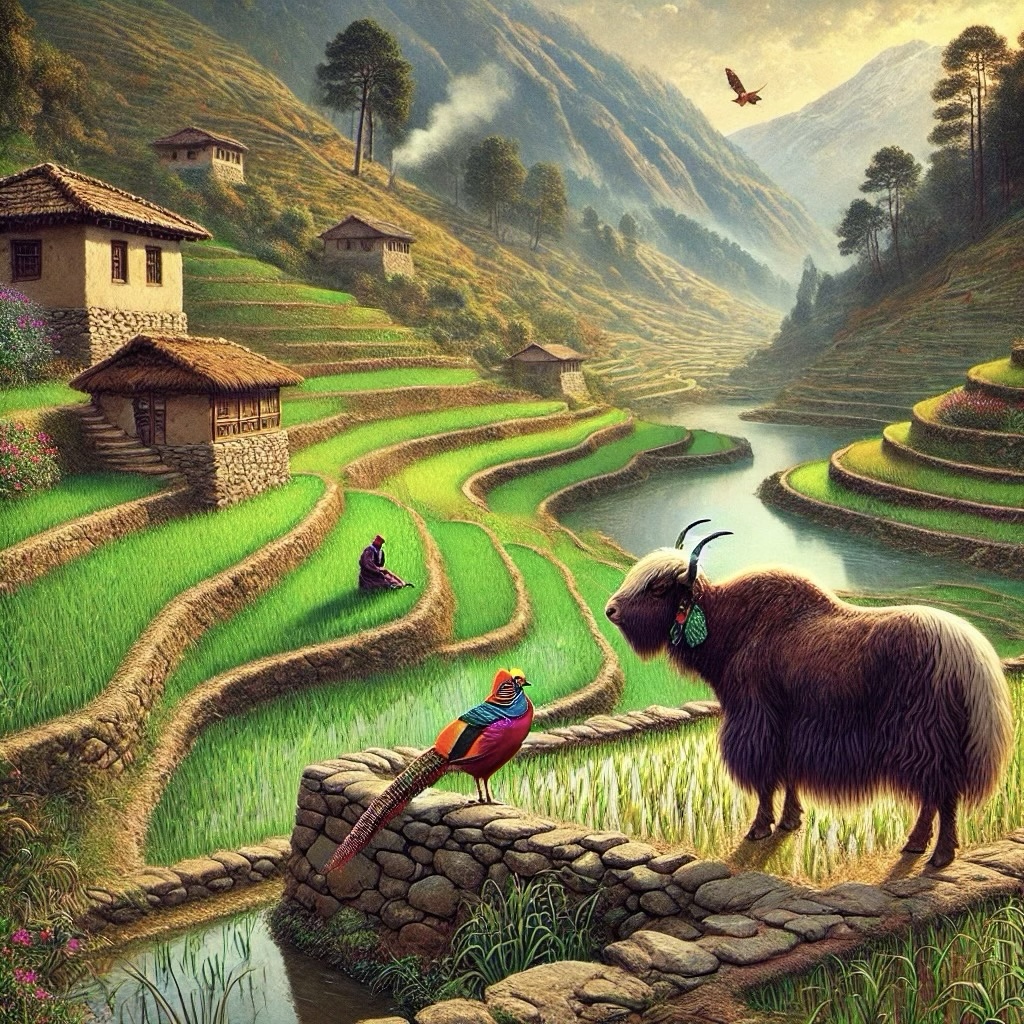
Northern South Asia (with civilization) ©2024-25 Electric Prism, Inc. All rights reserved.
Groups
- Tajik people
- Kirat people
- Iranian peoples
- Sindhi people
- Hinduism
- Arab people
- Bengalis
- Pashtun people (Pushtuns, Pakhtuns, or Pathans)
- Jainism
- Buddhism
- Kashmir, Kingdom of
- Buddhism, Tibetan
- Khas peoples
- Indian people
- Buddhism, Mahayana
- Tokharistan (Kushan Bactria)
- Gandhāra
- Bon
- India, Early Medieval
- Rajasthan, Rajput Kingdoms of
- Islam
- Gurjara-Pratihara
- Nepal, Kingdom of
- Palas of Bengal, Empire of the
- Rashtrakuta Dynasty
- Abbasid Caliphate (Baghdad)
- Samanid dynasty
- Tahirid dynasty
- Abbasid Caliphate (Samarra)
- Utpala Dynasty
- Saffarid dynasty
- Shahi Kingdom, or Hindu Shahi
- Abbasid Caliphate (Baghdad)
Topics
Commodoties
- Hides and feathers
- Gem materials
- Domestic animals
- Oils, gums, resins, and waxes
- Textiles
- Fibers
- Strategic metals
- Salt
- Sweeteners
- Lumber
- Money
- Aroma compounds
- Spices
Subjects
- Commerce
- Writing
- Architecture
- Sculpture
- Conflict
- Faith
- Government
- Custom and Law
- Medicine
- Mathematics
- Astronomy
- Philosophy and logic
Regions
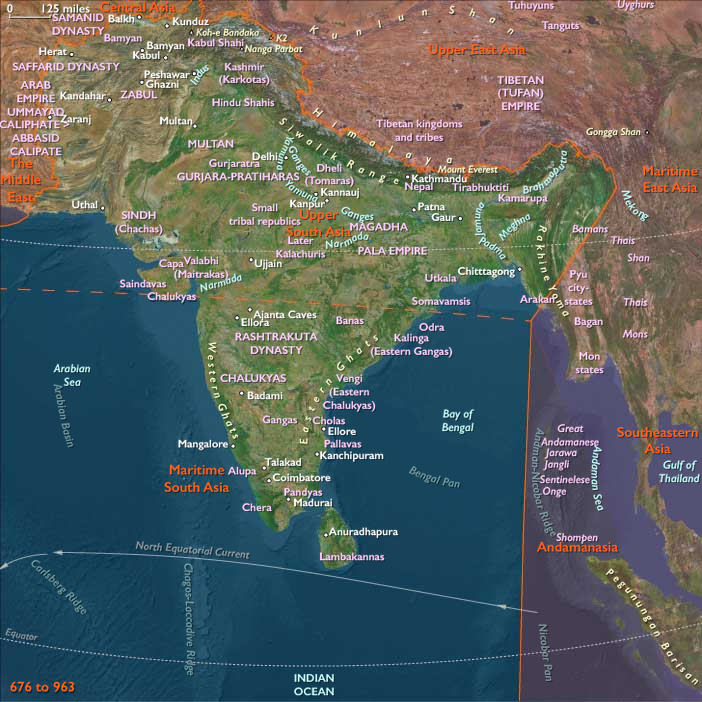
Subregions
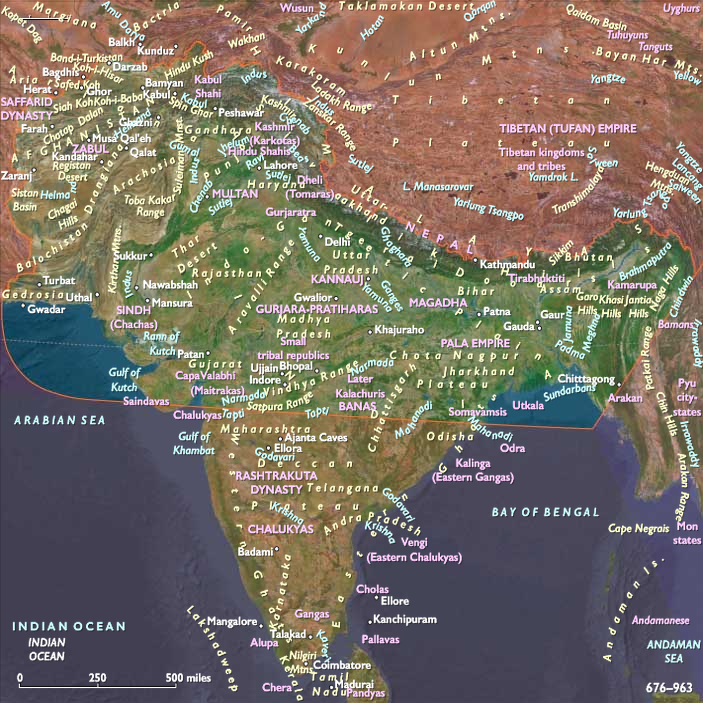
Years: 820 - 963
Northern South Asia (with civilization) ©2024-25 Electric Prism, Inc. All rights reserved.
Groups
- Tajik people
- Kirat people
- Iranian peoples
- Sindhi people
- Hinduism
- Arab people
- Bengalis
- Pashtun people (Pushtuns, Pakhtuns, or Pathans)
- Jainism
- Buddhism
- Kashmir, Kingdom of
- Buddhism, Tibetan
- Khas peoples
- Indian people
- Buddhism, Mahayana
- Tokharistan (Kushan Bactria)
- Gandhāra
- Bon
- India, Early Medieval
- Rajasthan, Rajput Kingdoms of
- Islam
- Gurjara-Pratihara
- Nepal, Kingdom of
- Palas of Bengal, Empire of the
- Rashtrakuta Dynasty
- Abbasid Caliphate (Baghdad)
- Samanid dynasty
- Tahirid dynasty
- Abbasid Caliphate (Samarra)
- Utpala Dynasty
- Saffarid dynasty
- Shahi Kingdom, or Hindu Shahi
- Abbasid Caliphate (Baghdad)
Topics
Commodoties
- Hides and feathers
- Gem materials
- Domestic animals
- Oils, gums, resins, and waxes
- Textiles
- Fibers
- Strategic metals
- Salt
- Sweeteners
- Lumber
- Money
- Aroma compounds
- Spices
Subjects
- Commerce
- Writing
- Architecture
- Sculpture
- Conflict
- Faith
- Government
- Custom and Law
- Medicine
- Mathematics
- Astronomy
- Philosophy and logic
Regions
Subregions