
Maritime South Asia (49,293 – 28,578 …
Years: 49293BCE - 28578BCE
Maritime South Asia
(49,293 – 28,578 BCE) Upper Pleistocene I — Rock Shelters, Rainforest Foragers, and Shelf Coasts
Geographic and Environmental Context
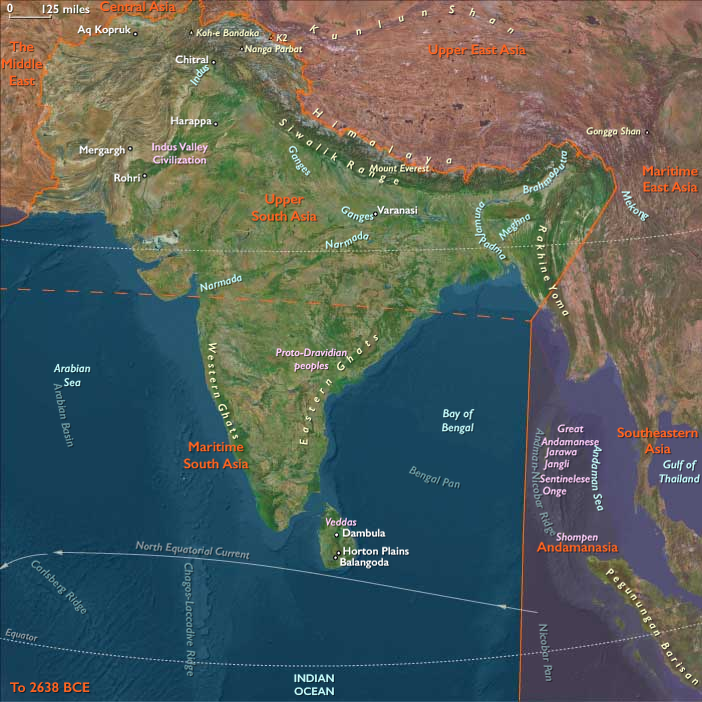
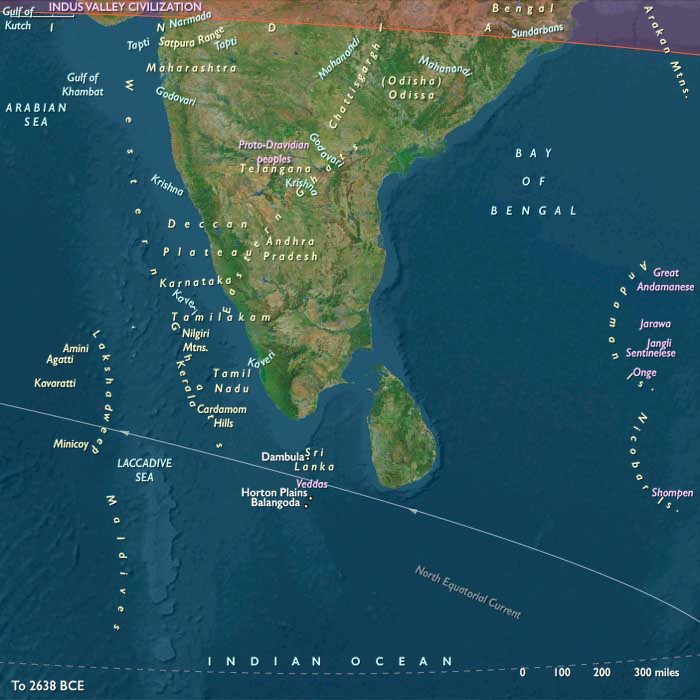
Maritime South Asia includes Peninsular India south of the Narmada — Tamil Nadu, Kerala, Karnataka, Andhra Pradesh, Telangana, Maharashtra, Goa, Dadra & Nagar Haveli and Daman & Diu, southern Odisha, southern Chhattisgarh — plus Sri Lanka, Lakshadweep, the Maldives, and the Chagos Archipelago.-
Anchors: the Deccan (Godavari–Krishna–Tungabhadra–Kaveri basins), the Western/Eastern Ghats and Konkan–Malabar–Coromandel coasts, Sri Lanka’s wet/dry zones (Anuradhapura–Polonnaruwa heartlands), and the Lakshadweep–Maldives–Chagos atolls.
Climate & Environmental Shifts
-
Cooler/drier glacial conditions; monsoon weakened; shelves widened along Konkan–Coromandel; Sri Lanka still connected intermittently to the mainland early, then increasingly insular.
Subsistence & Settlement
-
Microlithic foragers in rock shelters (Kurnool, Jurreru valleys), dunes and tank-bed margins; coastal crews harvested shellfish/fish along widened shelves.
-
Sri Lanka’s Balangoda culture exploited rainforest mammals, fish, and yams; cave sites (Fa-Hien Lena, Batadomba-lenā) show early modern human presence with microliths.
Technology & Material Culture
-
Bladelets, geometric microliths; bone points; digging sticks; hafted scrapers; tailored garments.
-
Ornaments and ochre in cave contexts.
Corridors
-
Godavari–Krishna benches, Palghat and Palakkad gaps across the Ghats, Palk Strait land/raft links to Sri Lanka during lowstands.
Symbolism
-
Rock art and ochred burials at select shelters; ritual treatment of prey.
Adaptation
-
Coast–interior switching smoothed lean seasons; mixed woodland–savanna foraging.
Topics
Commodoties
Subjects
Regions
Subregions
Related Events
Showing 10 events out of 69706 total
Years: 49293BCE - 28578BCE
Topics
Commodoties
Subjects
Regions
Subregions