
Upper South Asia (189–46 BCE): Fragmentation, Cultural …
Years: 189BCE - 46BCE
Upper South Asia (189–46 BCE): Fragmentation, Cultural Flourishing, and Indo-Greek Influences
Fragmentation and Regional Powers
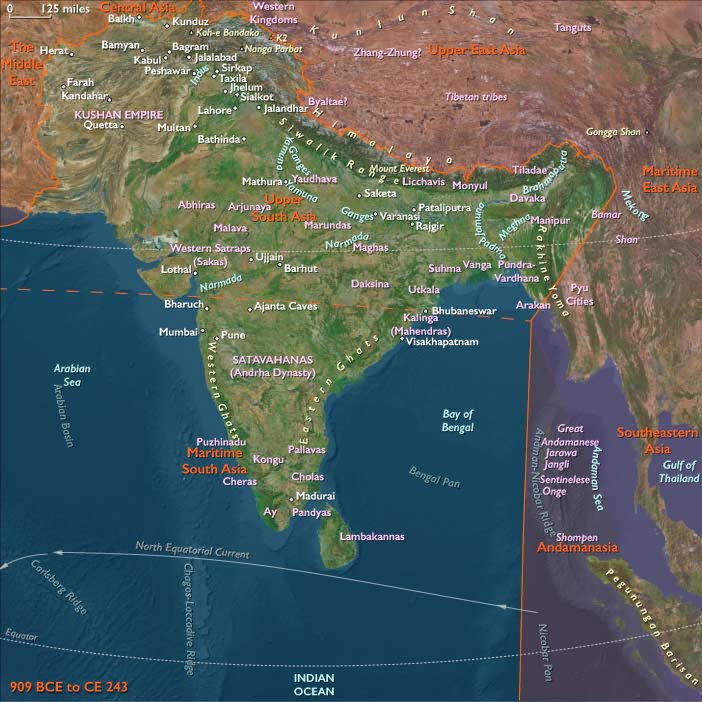
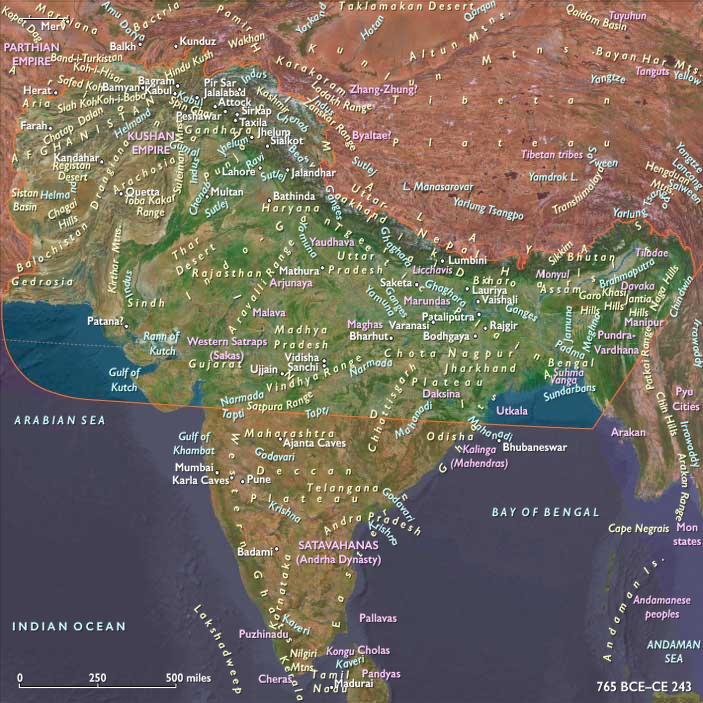
Following the collapse of the Mauryan Empire around 185 BCE, Northern South Asia entered a period marked by political fragmentation and the emergence of numerous regional powers. The vast territories previously unified under Mauryan rule splintered into independent kingdoms, including the Shunga Dynasty in Magadha, which retained control of much of North India. Simultaneously, new powers such as the Satavahanas in central India and various tribal confederacies in the northwest began to assert their dominance.
Indo-Greek Kingdoms and Cultural Synthesis
The northwestern regions, including Gandhara, Balochistan, and parts of present-day Afghanistan, saw the rise of the Indo-Greek Kingdoms following the decline of Mauryan power. These kingdoms, founded by successors of the Greco-Bactrian rulers, notably Menander I (Milinda), brought significant Hellenistic influences that profoundly impacted local culture, art, and governance. Menander's reign (c. 155–130 BCE) is especially remembered for his dialogues with the Buddhist monk Nagasena, immortalized in the philosophical work Milinda Panha.
Indo-Scythian Incursions
During the late second century BCE, the Indo-Scythians (Shakas), a Central Asian nomadic people, began migrating southward into the region, establishing control over parts of present-day Afghanistan, Punjab, and Sindh. Their entry introduced new cultural and martial elements, significantly influencing local governance and social structures.
Economic and Cultural Developments
Despite political fragmentation, the period experienced remarkable economic and cultural developments. Cities such as Taxila and Mathura flourished as important trade hubs, facilitating extensive cultural and commercial exchanges with Persia, Central Asia, and even the Mediterranean world. Art, particularly the unique blend of Greek, Iranian, and Indian styles seen in Gandharan art, reached exceptional sophistication, evident in sculpture and coinage.
Expansion and Consolidation of Buddhism
Buddhism continued to expand and consolidate, benefiting greatly from patronage under the Indo-Greek rulers, especially Menander. The construction of numerous monasteries, stupas, and religious institutions in regions like Gandhara and the Gangetic plains further embedded Buddhist traditions into regional culture. Buddhist philosophy and monastic life thrived, laying the foundation for Buddhism’s future growth beyond the Indian subcontinent.
Regional Kingdoms in the Eastern Himalayan Foothills
In the Himalayan foothills, small kingdoms and tribal entities, such as those of the indigenous Kirāta peoples, maintained distinct cultural identities and political autonomy. They interacted periodically with lowland kingdoms through trade and occasional conflicts, enriching the regional mosaic of cultures and political systems.
Influence of Zoroastrianism and Local Religions
Zoroastrianism maintained a significant presence, especially in areas closer to historical Persian influence, like Balochistan and Gandhara. Local indigenous traditions and practices persisted alongside Buddhism and Zoroastrianism, demonstrating a rich tapestry of religious diversity and tolerance in the region.
Artistic and Intellectual Achievements
The era witnessed notable artistic achievements, exemplified by intricate sculptures and artifacts that integrated Hellenistic realism with Indian symbolism. Educational institutions in cities like Taxila continued to attract students and scholars, fostering advancements in medicine, philosophy, and mathematics, building upon earlier Mauryan intellectual legacies.
Legacy of the Age
The period from 189 to 46 BCE marked an era of profound cultural and political transformation in Northern South Asia. Despite fragmentation, this age saw a unique cultural synthesis fostered by the Indo-Greek and Indo-Scythian influences, significant developments in religious and intellectual traditions, and sustained economic prosperity. These multifaceted developments significantly shaped the cultural identity and historical trajectory of the region, leaving enduring legacies that influenced subsequent eras.
People
Groups
- Kirat people
- Iranian peoples
- Hinduism
- Gandhāra
- Vedic period
- Pashtun people (Pushtuns, Pakhtuns, or Pathans)
- Kashi, Kingdom of
- Scythians, or Sakas
- Zoroastrians
- Shakya
- Buddhism
- Khas peoples
- Greeks, Hellenistic
- Greco-Bactrian Kingdom
- Satavahana Empire
- India, Classical
- Shunga Empire
- Indo-Greeks, Kingdom of the
- Indo-Scythians
- Kanva dynasty
- Magadha, Kanva Kingdom of
Topics
Commodoties
Subjects
- Writing
- Architecture
- Painting and Drawing
- Decorative arts
- Conflict
- Mayhem
- Faith
- Government
- Custom and Law
- Medicine
Regions
Subregions
Related Events
Showing 10 events out of 63449 total
Years: 189BCE - 46BCE
People
Groups
- Kirat people
- Iranian peoples
- Hinduism
- Gandhāra
- Vedic period
- Pashtun people (Pushtuns, Pakhtuns, or Pathans)
- Kashi, Kingdom of
- Scythians, or Sakas
- Zoroastrians
- Shakya
- Buddhism
- Khas peoples
- Greeks, Hellenistic
- Greco-Bactrian Kingdom
- Satavahana Empire
- India, Classical
- Shunga Empire
- Indo-Greeks, Kingdom of the
- Indo-Scythians
- Kanva dynasty
- Magadha, Kanva Kingdom of
Topics
Commodoties
Subjects
- Writing
- Architecture
- Painting and Drawing
- Decorative arts
- Conflict
- Mayhem
- Faith
- Government
- Custom and Law
- Medicine
Regions
Subregions