
Upper South Asia (532–675 CE): Post-Gupta Fragmentation, …
Years: 532 - 675
Upper South Asia (532–675 CE): Post-Gupta Fragmentation, Regional Dynasties, and Cultural Continuities
Fragmentation and Emergence of Regional Powers
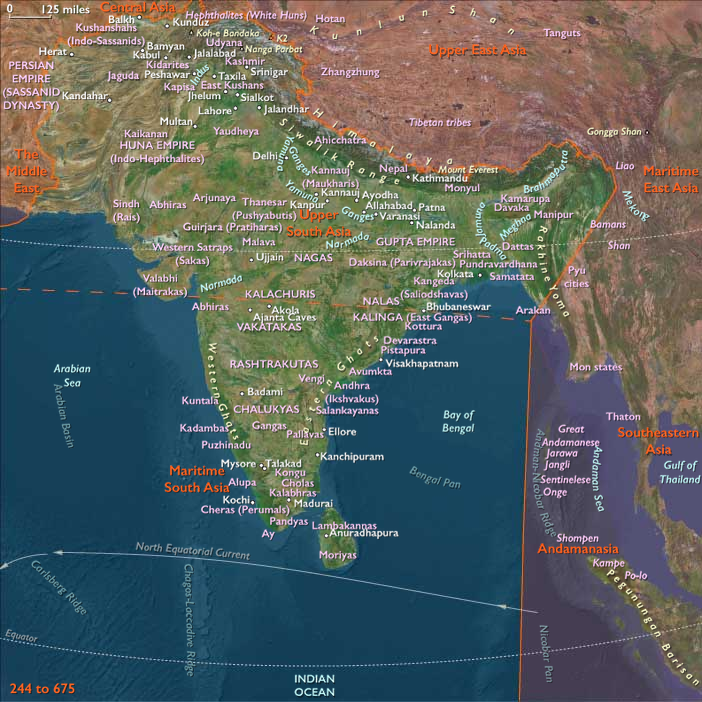
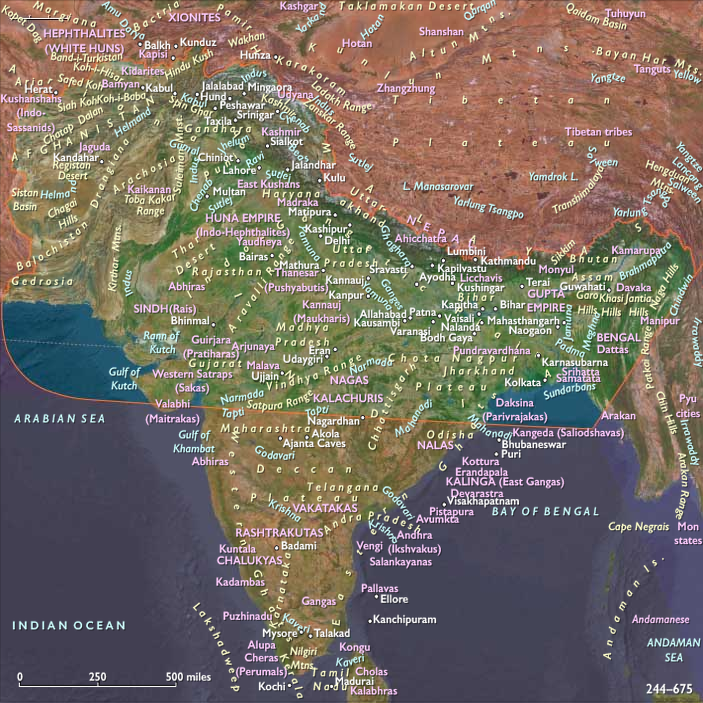
The period from 532 to 675 CE was characterized by the continued political fragmentation following the decline of the Gupta Empire. In the resulting power vacuum, numerous regional dynasties emerged, each asserting autonomy over localized territories. Notable among these were the Later Guptas in Bihar, the Maukharis of Kannauj in Uttar Pradesh, and the rise of the Pushyabhuti (Vardhana) dynasty, centered in Thanesar (modern-day Haryana).
The Reign of Harsha
The most prominent figure of this era was Harsha Vardhana (606–647 CE), ruler of the Pushyabhuti dynasty. Harsha expanded his domain to cover much of North India, including regions of Uttar Pradesh, Punjab, Rajasthan, Bihar, and Odisha. Harsha's reign is remembered for its administrative efficiency, patronage of arts and literature, and promotion of religious tolerance, blending Buddhist and Hindu traditions.
Flourishing of Buddhist and Hindu Cultures
Under Harsha's patronage, Buddhism experienced significant revival, exemplified by his generous support for monasteries and Buddhist learning centers like Nalanda University in Bihar. Nalanda became a renowned international center of learning, attracting scholars from across Asia, including the famous Chinese traveler and scholar, Xuanzang, who provided detailed accounts of contemporary India.
Simultaneously, Hinduism maintained its vitality, with the continuation of religious and philosophical developments initiated during the Gupta period. Hindu temples and pilgrimage sites expanded significantly, reinforcing the integration of diverse regional religious practices.
Literary and Scholarly Contributions
Harsha himself was an accomplished writer and patron of literature, famously authoring Sanskrit plays such as "Ratnavali" and "Nagananda." His court attracted prominent poets and scholars like Banabhatta, author of "Harshacharita," a detailed biographical work highlighting Harsha's rule and cultural achievements. These works significantly influenced later Indian literature.
Regional Dynasties and Cultural Vibrancy
Other regions witnessed the emergence of influential local dynasties such as the Gurjara-Pratiharas in western India, precursors to later Rajput states. In the Himalayan regions, small independent principalities in present-day Nepal, Bhutan, Himachal Pradesh, Uttarakhand, and Sikkim maintained distinct cultural identities and traditions, with limited yet meaningful interactions with lowland kingdoms.
Economic Stability and Trade
Despite political fragmentation, trade networks continued to flourish. Cities like Kannauj, Ujjain, and Mathura remained significant economic and cultural centers. Northern South Asia maintained active trade links with Central Asia, Persia, China, and Southeast Asia, fostering vibrant commercial and cultural exchanges.
Influence of Central Asian Groups
This period also saw intermittent incursions and influences from Central Asian groups, notably remnants of the Hunas. These incursions introduced cultural elements and occasionally disrupted regional stability, though their lasting impact was limited as indigenous cultures proved resilient.
Legacy of the Age
The age from 532 to 675 CE represented a transitional yet culturally vibrant period in Upper South Asia's history. Despite political decentralization, the era saw significant literary, religious, and economic achievements, which sustained cultural continuity and laid foundations for future regional developments.
People
Groups
- Tajik people
- Kirat people
- Iranian peoples
- Hinduism
- Pashtun people (Pushtuns, Pakhtuns, or Pathans)
- Kashi, Kingdom of
- Scythians, or Sakas
- Jainism
- Buddhism, Tibetan
- Buddhism
- Khas peoples
- Indo-Scythians
- Western Satraps
- Buddhism, Mahayana
- Tokharistan (Kushan Bactria)
- Gandhāra
- Huns
- Persian Empire, Sassanid, or Sasanid
- Samatata, Kingdom of
- Gupta Empire
- Bon
- Nepal, Licchavi Kingdom of
- Huna people
- Hephthalite Empire
- Pushyabhuti dynasty
- India, Early Medieval
- Guptas, Later
- Hephthalite Principalities
- Gauda, Kingdom of
- Harsha (Harsavardhana), Empire of (Thaneswar)
- Gurjara-Pratihara
Topics
Commodoties
Subjects
- Commerce
- Writing
- Architecture
- Sculpture
- Painting and Drawing
- Decorative arts
- Conflict
- Mayhem
- Faith
- Government
- Custom and Law
- Medicine
- Mathematics
- Astronomy
- Philosophy and logic
Regions
Subregions
Years: 532 - 675
People
Groups
- Tajik people
- Kirat people
- Iranian peoples
- Hinduism
- Pashtun people (Pushtuns, Pakhtuns, or Pathans)
- Kashi, Kingdom of
- Scythians, or Sakas
- Jainism
- Buddhism, Tibetan
- Buddhism
- Khas peoples
- Indo-Scythians
- Western Satraps
- Buddhism, Mahayana
- Tokharistan (Kushan Bactria)
- Gandhāra
- Huns
- Persian Empire, Sassanid, or Sasanid
- Samatata, Kingdom of
- Gupta Empire
- Bon
- Nepal, Licchavi Kingdom of
- Huna people
- Hephthalite Empire
- Pushyabhuti dynasty
- India, Early Medieval
- Guptas, Later
- Hephthalite Principalities
- Gauda, Kingdom of
- Harsha (Harsavardhana), Empire of (Thaneswar)
- Gurjara-Pratihara
Topics
Commodoties
Subjects
- Commerce
- Writing
- Architecture
- Sculpture
- Painting and Drawing
- Decorative arts
- Conflict
- Mayhem
- Faith
- Government
- Custom and Law
- Medicine
- Mathematics
- Astronomy
- Philosophy and logic
Regions
Subregions