
Upper South Asia (2637–2494 BCE): Early Urbanization …
Years: 2637BCE - 2494BCE
Upper South Asia (2637–2494 BCE): Early Urbanization and Cultural Flourishing
Urban Centers and Expanding Complexity
Between 2637 and 2494 BCE, Upper South Asia witnesses rapid advancements in urbanization, social complexity, and technological innovation. Settlements in the Indus Basin and along the Gangetic Plain evolve into increasingly sophisticated urban centers, reflecting early stages of the civilization soon to flourish in the region.
Indus Valley Civilization Emerges
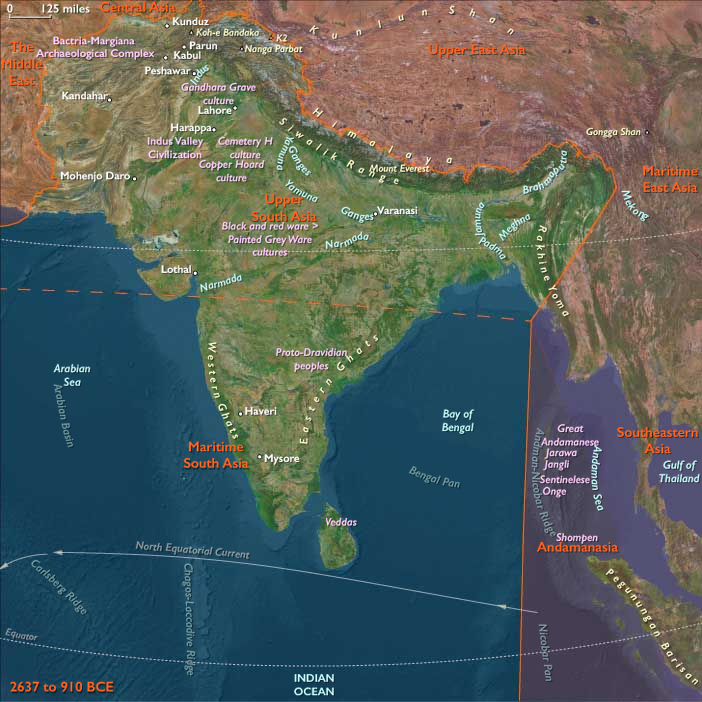
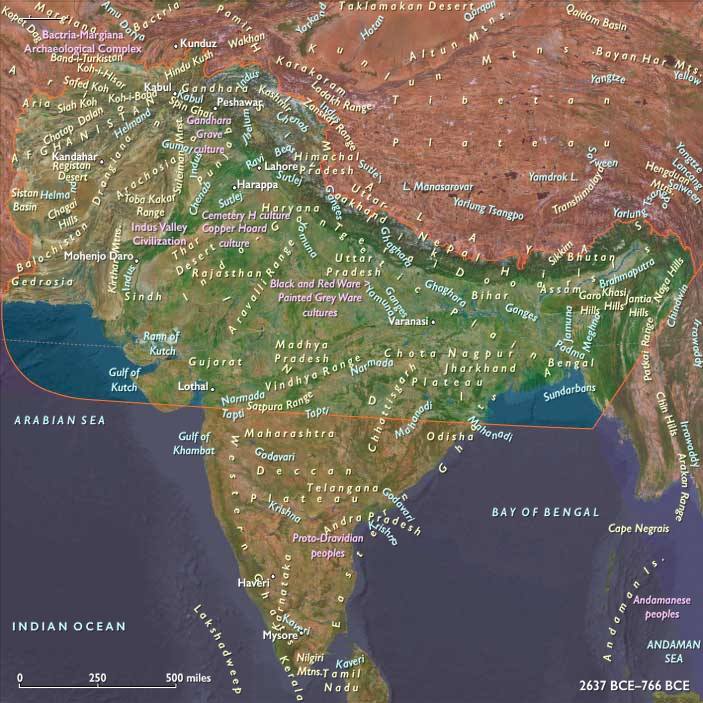
The foundations of the Indus Valley Civilization (Harappan Civilization) become firmly established, particularly across regions such as Sindh, Punjab (both Indian and Pakistani), and Gujarat. Major urban centers, including Harappa (in Pakistani Punjab), Mohenjo-Daro (in Sindh), and Dholavira (in Gujarat), begin to display advanced city planning, elaborate drainage systems, standardized weights and measures, and sophisticated architecture.
Excavations in these regions uncover extensive trade networks linking the Indus cities with settlements in Rajasthan, Haryana, Uttar Pradesh, Madhya Pradesh, and even distant regions of Afghanistan and Iran.
Agricultural and Technological Innovations
Agricultural practices continue to improve dramatically during this period. In regions such as Balochistan, Sindh, and Rajasthan, innovations in irrigation enable intensive farming, including the cultivation of wheat, barley, and cotton. Domestication and animal husbandry practices diversify, expanding the roles of cattle, buffalo, sheep, goats, and domesticated fowl.
Regional Networks and Cultural Exchanges
Enhanced connectivity leads to robust trade and cultural exchanges between urban and rural areas across Northern South Asia. Artifacts and materials such as lapis lazuli from Afghanistan, carnelian from Gujarat, and seashells from coastal regions circulate widely, reflecting broad-reaching networks.
Himalayan and Mountain Societies
In mountainous areas such as Himachal Pradesh, Jammu and Kashmir, Ladakh, Uttarakhand, and extending into Nepal, Bhutan, and Sikkim, societies further adapt agricultural practices to their rugged terrains. Communities in these regions also facilitate important trade routes through high-altitude passes, notably connecting the Gangetic Plain with the Tibetan plateau and Central Asia.
Expansion and Interaction in the Eastern Regions
The eastern reaches, encompassing modern-day Bangladesh, northeastern India (Assam, Nagaland, Manipur, Tripura, Meghalaya, Mizoram, Arunachal Pradesh), and extending into northwestern Myanmar (Kachin State, Sagaing Region, Chin State, northern Rakhine State), see significant settlement expansion driven by rice agriculture, fishing, and specialized flood management. Early urban-like settlements in these regions begin to form, supported by flourishing trade along the vast river networks.
Social Structures and Specialization
Increasingly complex social structures emerge, reflected in differentiated housing, specialized workshops, and distinct social roles. Craft specialization, particularly pottery, weaving, metallurgy, and jewelry-making, becomes central to many settlements, notably in the Indus urban centers.
Religious and Ritualistic Practices
Ceremonial activities and symbolic artifacts continue to evolve, revealing more sophisticated religious and social structures. Ritual bathing areas, ceremonial platforms, and burial practices uncovered in Indus cities and rural settlements alike reflect deepening spiritual and communal traditions.
Legacy of the Age
The period from 2637 to 2494 BCE is marked by substantial urban and cultural advancement. The rise of the Indus Valley Civilization establishes enduring patterns of urbanization, technological innovation, trade connectivity, and social complexity that profoundly shape subsequent historical developments across Upper South Asia.
Groups
Topics
- Neolithic Revolution
- Older Peron Transgression during the Neolithic Subpluvial
- 5.9 kiloyear event during the Neolithic Subpluvial
- Piora Oscillation ending the Neolithic Subpluvial
Commodoties
- Weapons
- Gem materials
- Colorants
- Domestic animals
- Grains and produce
- Fibers
- Textiles
- Strategic metals
Subjects
Regions
Subregions
Years: 2637BCE - 2494BCE
Groups
Topics
- Neolithic Revolution
- Older Peron Transgression during the Neolithic Subpluvial
- 5.9 kiloyear event during the Neolithic Subpluvial
- Piora Oscillation ending the Neolithic Subpluvial
Commodoties
- Weapons
- Gem materials
- Colorants
- Domestic animals
- Grains and produce
- Fibers
- Textiles
- Strategic metals
Subjects
Regions
Subregions