
Upper South Asia (1948–1959 CE): Consolidation, Conflict, …
Years: 1948 - 1959
Upper South Asia (1948–1959 CE): Consolidation, Conflict, and New Beginnings
Post-Independence Challenges and Nation-Building
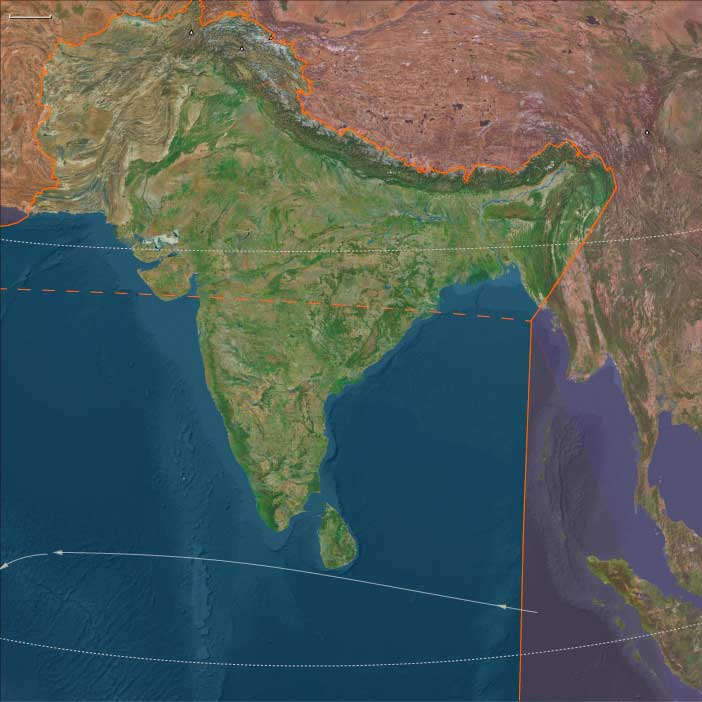
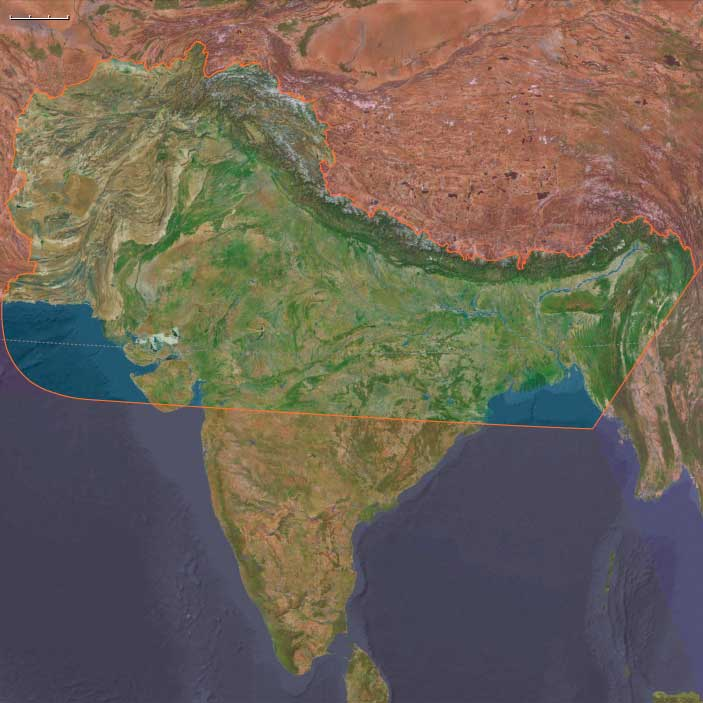
From 1948 to 1959 CE, Upper South Asia experienced profound geopolitical and social realignments as the newly formed nations of India and Pakistan grappled with internal consolidation and external tensions following the Partition of 1947. Bangladesh, still East Pakistan, faced unique challenges related to cultural identity and geographic isolation from West Pakistan.
Indo-Pakistani Relations: Early Conflicts and Kashmir Dispute
The first decade following independence was dominated by tensions over Jammu and Kashmir, resulting from its disputed accession to India. The First Indo-Pakistani War (1947–1948) concluded with a United Nations-mediated ceasefire in 1949, establishing the Line of Control (LoC) that divided Kashmir between Pakistani- and Indian-administered regions. Pakistan administered Azad Kashmir and Gilgit-Baltistan, while India retained control over Jammu, Kashmir Valley, and Ladakh. Despite the ceasefire, Kashmir remained a volatile point of contention.
Political and Economic Consolidation in India
Under Prime Minister Jawaharlal Nehru, India pursued democratic governance and secular policies, laying a solid foundation for parliamentary democracy. The Indian Constitution, adopted on January 26, 1950, established India as a federal republic committed to democratic values, secularism, and social equality. The nation embarked on ambitious economic and industrial initiatives under its first Five-Year Plan (1951–1956), focusing on agricultural improvements, industrialization, and infrastructure development.
Political Dynamics and Military Influence in Pakistan
In contrast, Pakistan confronted significant internal political instability and identity challenges. The death of its founder, Muhammad Ali Jinnah, in 1948 and assassination of Prime Minister Liaquat Ali Khan in 1951 intensified political uncertainty. Debates over the role of Islam, language, and federalism strained relations between West Pakistan and East Pakistan, exacerbating regional grievances. Military influence progressively increased, culminating in 1958, when General Ayub Khan declared martial law, establishing Pakistan’s first military dictatorship.
Afghanistan: Stability, Neutrality, and Development
Afghanistan remained under the relatively stable rule of King Mohammed Zahir Shah (1933–1973), who emphasized neutrality during Cold War geopolitics. The country sought economic and technical aid from both Soviet and Western powers without aligning explicitly. Infrastructure projects expanded, notably with Soviet support, including road construction and modernization initiatives. Afghanistan’s modernization was cautious yet steady, although ethnic tensions, especially involving Pashtun dominance over minorities like the Hazara, persisted.
Himalayan Region: Transformations in Nepal and Bhutan
In Nepal, popular dissatisfaction with the autocratic Rana regime led to significant political transformations. The Nepalese Revolution of 1951, supported by India, abolished the Rana dynasty’s rule and reestablished the monarchy’s power under King Tribhuvan Bir Bikram Shah, who sought to initiate democratic governance. Nepal began its slow journey toward modernization and political pluralism, introducing limited constitutional frameworks and parliamentary reforms.
Bhutan maintained internal stability under King Jigme Dorji Wangchuck (r. 1952–1972), who introduced cautious modernization. Bhutan established formal diplomatic ties with independent India, affirming its national sovereignty and independence, while progressively opening up to limited external influences, particularly Indian assistance in development projects, notably infrastructure and education.
Ethnic and Regional Tensions: Pashtuns, Baloch, and Bengalis
In Pakistan, ethnic and regional tensions intensified. The Pashtuns in the North-West Frontier Province (now Khyber Pakhtunkhwa) sought greater autonomy, and the Baloch people in Balochistan began expressing grievances against central authority. In East Pakistan, the Bengali language movement (1952) challenged the imposition of Urdu as the sole national language, setting the stage for future conflicts culminating in the independence of Bangladesh in 1971.
Socioeconomic and Cultural Developments
Across Northern South Asia, cultural and social developments flourished amid political turmoil. In India, institutions like the Indian Institutes of Technology (IITs) were established (starting in 1951 at Kharagpur), fostering technical expertise and innovation. Pakistan emphasized the development of higher education and scientific research, notably establishing the Pakistan Atomic Energy Commission (PAEC) in 1956.
Culturally, literary and cinematic industries blossomed, reflecting contemporary concerns. In India, the Hindi film industry (Bollywood) and regional cinemas expanded dramatically, becoming integral to the cultural fabric. Similarly, in Pakistan, Urdu-language cinema and poetry remained vibrant, with poets such as Faiz Ahmed Faiz reflecting on national identity and societal challenges.
Legacy of the Era
The period from 1948 to 1959 CE set critical political, economic, and cultural foundations for the contemporary nations of Upper South Asia. While India solidified its democratic and secular identity, Pakistan grappled with political instability leading to military rule. Afghanistan navigated Cold War neutrality amid cautious modernization, and Nepal and Bhutan initiated significant political transformations. Regional tensions and unresolved territorial disputes—particularly over Kashmir—continued shaping geopolitical realities for decades to come.
People
- Faiz Ahmad Faiz
- Jawaharlal Nehru
- Jigme Dorji Wangchuck
- Liaquat Ali Khan
- Mohammed Zahir Shah
- Muhammad Ali Jinnah
- Muhammad Ayub Khan
- Tribhuvan of Nepal
Groups
- Pashtun people (Pushtuns, Pakhtuns, or Pathans)
- Baloch people
- Hazara people
- Bhutan, Kingdom of
- Nepal, Shah Kingdom of
- Britain (United Kingdom of Great Britain and Ireland)
- India, Late Modern
- Indian National Congress
- All-India Muslim League
- Afghanistan, Kingdom of
- Pakistan, Islamic Republic of
- Jammu and Kashmir, state of
- India, Republic of
Topics
Subjects
Regions
Subregions
Related Events
Showing 10 events out of 4916 total
Years: 1948 - 1959
People
- Faiz Ahmad Faiz
- Jawaharlal Nehru
- Jigme Dorji Wangchuck
- Liaquat Ali Khan
- Mohammed Zahir Shah
- Muhammad Ali Jinnah
- Muhammad Ayub Khan
- Tribhuvan of Nepal
Groups
- Pashtun people (Pushtuns, Pakhtuns, or Pathans)
- Baloch people
- Hazara people
- Bhutan, Kingdom of
- Nepal, Shah Kingdom of
- Britain (United Kingdom of Great Britain and Ireland)
- India, Late Modern
- Indian National Congress
- All-India Muslim League
- Afghanistan, Kingdom of
- Pakistan, Islamic Republic of
- Jammu and Kashmir, state of
- India, Republic of
Topics
Subjects
Regions
Subregions