
Upper South Asia (45 BCE–CE 99): Consolidation …
Years: 45BCE - 99
Upper South Asia (45 BCE–CE 99): Consolidation of Empires, Trade Networks, and Cultural Dynamism
Rise of the Kushan Empire
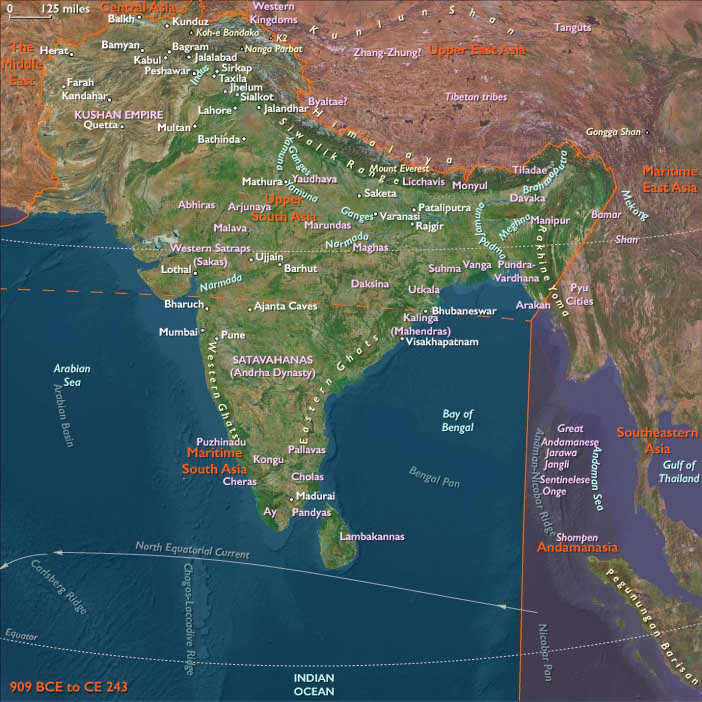
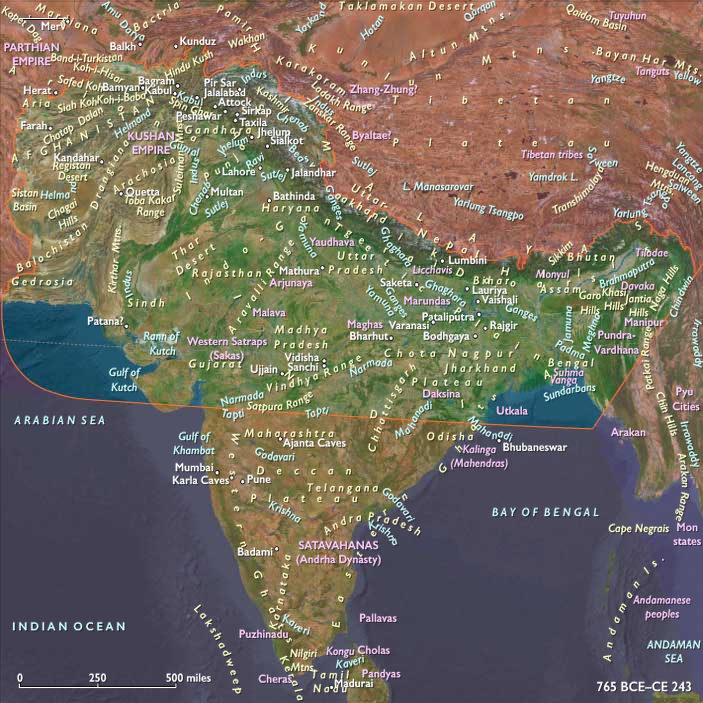
The period from 45 BCE to CE 99 saw the emergence and consolidation of the Kushan Empire, founded by the Yuezhi people from Central Asia. Initially settled in Bactria, the Kushans expanded southward, absorbing territories including Gandhara, Balochistan, and parts of present-day Afghanistan and Punjab. Under leaders such as Kujula Kadphises (ca. 30–80 CE), the empire fostered trade, cultural exchange, and political stability across Northern South Asia.
Expansion of Trade Networks
This age was marked by significant expansion of international trade, as Northern South Asia became an integral part of the flourishing Silk Road. The Kushans' control of key trade routes facilitated the movement of goods, ideas, and people between China, India, Persia, and the Mediterranean world. Cities such as Taxila, Mathura, and Pushkalavatibecame vibrant trade and cultural centers, thriving from increased commerce.
Cultural and Artistic Flourishing
The Kushan period witnessed an unprecedented cultural flourishing, particularly in the realm of art and architecture. Gandharan art, blending Hellenistic realism and Indian symbolism, reached new heights, producing renowned sculptures depicting Buddha with Greco-Roman features. Similarly, the artistic school of Mathura evolved its distinct indigenous style, influencing religious iconography across the subcontinent.
Religious Developments and Buddhist Expansion
Under Kushan patronage, Buddhism continued its expansive growth. Rulers such as Kujula Kadphises and later Kanishka I (ca. 127–150 CE) actively supported Buddhist monasteries and institutions. Buddhism became increasingly institutionalized, developing intricate monastic systems that further solidified its presence throughout the region. Buddhist texts were codified, and extensive missionary activities carried Buddhist teachings into Central Asia and China.
Zoroastrianism and Religious Pluralism
Zoroastrianism continued to be influential in the western regions under the Kushans, notably in Balochistan, Gandhara, and areas closer to Persia. The empire's cosmopolitan nature facilitated a pluralistic environment, allowing diverse religious traditions—Buddhism, Zoroastrianism, indigenous practices, and emerging Brahmanical traditions—to coexist and thrive.
Political and Social Structures
The Kushans introduced sophisticated administrative structures influenced by Persian and Greek models. They maintained a centralized bureaucracy supported by regional governors, enhancing political cohesion and stability. Society became increasingly stratified, with distinct roles for merchants, artisans, priests, warriors, and laborers, reflecting both local traditions and influences from conquered territories.
Intellectual and Educational Developments
Educational institutions in Taxila continued to be major centers of learning, attracting scholars from across Asia. Significant advancements occurred in mathematics, medicine, philosophy, and astronomy. The period saw notable scholars, whose works would profoundly influence subsequent intellectual traditions.
Indigenous Cultures and Himalayan Foothills
Small kingdoms and tribal confederations in the Himalayan foothills and regions such as Sikkim and Nepal maintained distinct cultural identities and political autonomy. Indigenous peoples like the Kirāta continued their traditions relatively undisturbed, with occasional interactions, trade, and cultural exchanges with the Kushan Empire and other lowland states.
Legacy of the Age
The era from 45 BCE to CE 99 was transformative, marked by the rise of the influential Kushan Empire, flourishing trade networks, vibrant cultural and artistic expressions, and the expansion of religious and intellectual traditions. This period set critical foundations for the interconnected cultural and economic landscape that characterized Upper South Asia in the following centuries, leaving a rich legacy evident in the diverse cultural heritage of the region.
People
Groups
- Kirat people
- Iranian peoples
- Gandhāra
- Hinduism
- Yuezhi
- Pashtun people (Pushtuns, Pakhtuns, or Pathans)
- Kashi, Kingdom of
- Scythians, or Sakas
- Zoroastrians
- Buddhism
- Khas peoples
- Parthian Empire
- India, Classical
- Indo-Greeks, Kingdom of the
- Indo-Scythians
- Kanva dynasty
- Magadha, Kanva Kingdom of
- Indo-Parthians, Kingdom of the
- Kushan Empire
- Western Satraps
- Tokharistan (Kushan Bactria)
Commodoties
Subjects
- Writing
- Architecture
- Sculpture
- Painting and Drawing
- Decorative arts
- Conflict
- Mayhem
- Faith
- Government
- Custom and Law
- Medicine
- Mathematics
- Astronomy
- Philosophy and logic
Regions
Subregions
Related Events
Showing 5 events out of 5 total
Years: 45BCE - 99
People
Groups
- Kirat people
- Iranian peoples
- Gandhāra
- Hinduism
- Yuezhi
- Pashtun people (Pushtuns, Pakhtuns, or Pathans)
- Kashi, Kingdom of
- Scythians, or Sakas
- Zoroastrians
- Buddhism
- Khas peoples
- Parthian Empire
- India, Classical
- Indo-Greeks, Kingdom of the
- Indo-Scythians
- Kanva dynasty
- Magadha, Kanva Kingdom of
- Indo-Parthians, Kingdom of the
- Kushan Empire
- Western Satraps
- Tokharistan (Kushan Bactria)
Commodoties
Subjects
- Writing
- Architecture
- Sculpture
- Painting and Drawing
- Decorative arts
- Conflict
- Mayhem
- Faith
- Government
- Custom and Law
- Medicine
- Mathematics
- Astronomy
- Philosophy and logic
Regions
Subregions