
Upper South Asia (1852–1863 CE): Rebellion, Realignment, …
Years: 1852 - 1863
Upper South Asia (1852–1863 CE): Rebellion, Realignment, and Consolidation of British Power
Prelude to Revolt: British Policies and Tensions
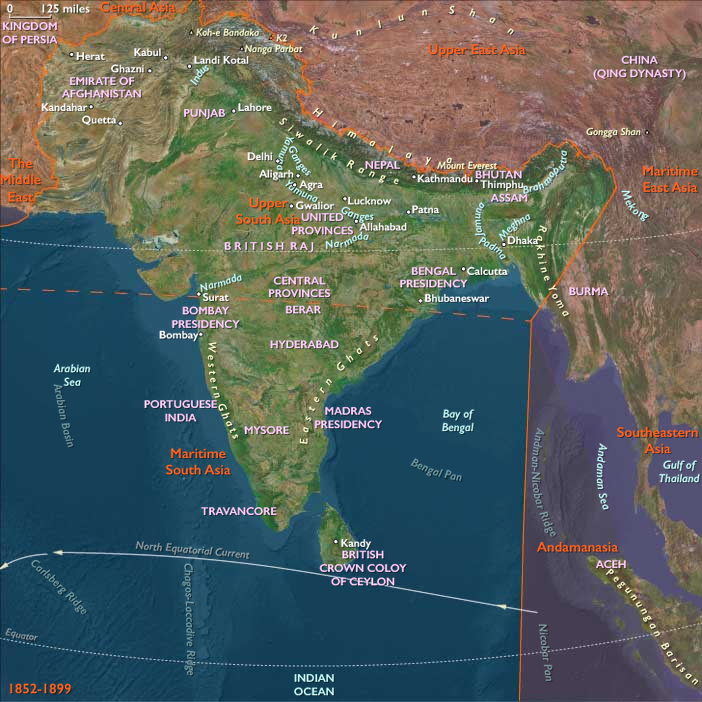
Between 1852 and 1863, British authority in Upper South Asia appeared stable yet masked simmering discontent. The British increasingly relied on the Punjab and its predominantly Sikh and Muslim troops, who had proved loyal during earlier conflicts, notably the Anglo-Sikh Wars and the Second Anglo-Afghan War (1878–1880). Policies based on "martial races" theory emerged, favoring recruitment from Punjab and frontier provinces over Bengal and southern regions, significantly reshaping the British Indian Army's ethnic composition.
The Great Rebellion of 1857–1858
In 1857, resentment erupted into the massive Sepoy Rebellion, often called India's "first war of independence." Triggered initially by cultural insensitivity—specifically the rumored use of cow and pig fat on rifle cartridges offensive to Hindus and Muslims—the rebellion quickly escalated into a broad anti-colonial uprising.
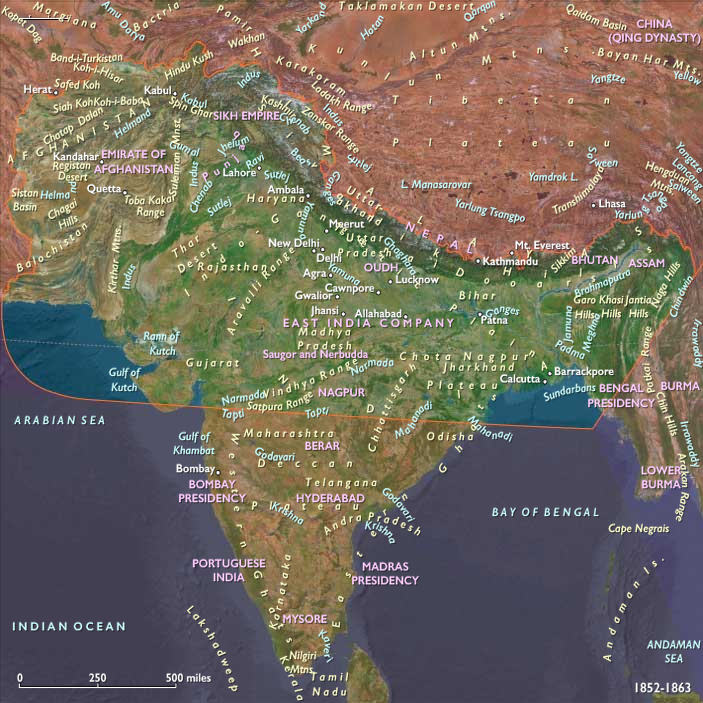
Mutinous sepoys from Meerut marched to Delhi, declaring allegiance to the nominal Mughal Emperor Bahadur Shah II. Fierce fighting engulfed large areas of North India, notably in present-day Uttar Pradesh and Bihar, as well as the city of Delhi. The British response was ruthless, employing loyal Punjabi and Pashtun troops to crush the rebellion. By mid-1858, Delhi had been recaptured, the emperor exiled to Burma, and Mughal sovereignty formally extinguished.
Transition to Direct British Rule
In the rebellion's aftermath, the British East India Company was dissolved by the Government of India Act of 1858. Direct control was assumed by the British Crown, marking the beginning of the British Raj. Queen Victoria formally pledged greater sensitivity to Indian customs and faiths, yet simultaneously reinforced British paramountcy and racial hierarchy.
The reorganization introduced significant administrative changes: the appointment of a Viceroy of India, creation of provincial and district governance structures, and incorporation of local elites into advisory roles, marking the beginning of gradual political reforms.
Realignment and Rewarding Loyalty: Punjab and the Northwest
The post-rebellion period entrenched Punjab’s prominence in the Raj. Recognizing Punjabi loyalty, the British substantially expanded irrigation and agricultural projects, transforming the province into the economic "breadbasket" of British India. Sikh and Muslim Punjabi communities increasingly became pillars of the colonial military, cementing a deep socio-political alignment with British interests.
Afghanistan: Reassertion of Neutrality
During this period, Afghanistan under Amir Dost Mohammad Khan cautiously reasserted autonomy from both British and Russian influence. Though mindful of the imperial rivalry known as the "Great Game," the Afghan ruler maintained careful neutrality, effectively securing internal stability while navigating intense geopolitical pressures along its frontiers.
Jung Bahadur Rana’s Consolidation in Nepal
In Nepal, Prime Minister Jung Bahadur Rana further solidified the hereditary Rana autocracy. In 1856, a royal decree legally cemented his family's political dominance, granting the Rana rulers unprecedented powers over the monarchy. Jung Bahadur skillfully aligned with British interests, notably assisting Britain during the Sepoy Rebellion by sending Nepalese troops to aid in suppressing rebel forces. In return, Britain restored territories in the Tarai, bolstering Nepal’s agricultural and economic base.
Bhutan’s Growing Tensions
To the east, Bhutan faced increased pressure as its southern territories (the Bengal and Assam Duars) became contested zones with British India. Tensions over control of these fertile lowlands intensified, setting the stage for future confrontations.
Socio-Cultural and Economic Shifts
The revolt underscored socio-economic grievances across the region. Urban and rural divides deepened, and religious communities grappled with shifting power dynamics. Meanwhile, increased global trade, facilitated by enhanced railways and telegraph lines established by the British, integrated Northern South Asia more closely into international markets, reshaping local economies and social relations.
Legacy of the Era
The era from 1852 to 1863 marked a significant turning point in Upper South Asia's colonial history. The brutal suppression of the rebellion firmly established direct British rule, while rewarding loyalty reshaped regional power dynamics. Crucially, this period entrenched administrative structures and economic patterns that shaped Northern South Asia’s trajectory towards modernity, nationalism, and eventual decolonization.
People
Groups
- Indian people
- Islam
- Muslims, Sunni
- East India Company, British (The Company of Merchants of London Trading into the East Indies)
- Bhutan, Kingdom of
- Mughal Empire (Delhi)
- British Empire
- Russian Empire
- India, East India Company rule in
- Bengal Presidency
- Nepal, Shah Kingdom of
- Britain (United Kingdom of Great Britain and Ireland)
- India, Late Modern
- Jammu, Dogra Kingdom of the
- British Raj; India (Indian Empire)
Topics
Commodoties
Subjects
Regions
Subregions
Years: 1852 - 1863
People
Groups
- Indian people
- Islam
- Muslims, Sunni
- East India Company, British (The Company of Merchants of London Trading into the East Indies)
- Bhutan, Kingdom of
- Mughal Empire (Delhi)
- British Empire
- Russian Empire
- India, East India Company rule in
- Bengal Presidency
- Nepal, Shah Kingdom of
- Britain (United Kingdom of Great Britain and Ireland)
- India, Late Modern
- Jammu, Dogra Kingdom of the
- British Raj; India (Indian Empire)
Topics
Commodoties
Subjects
Regions
Subregions