
Upper South Asia (1396–1539 CE): Sultanates, Mountain …
Years: 1396 - 1539
Upper South Asia (1396–1539 CE): Sultanates, Mountain Kingdoms, and Arakanese Gateways
Geographic & Environmental Context
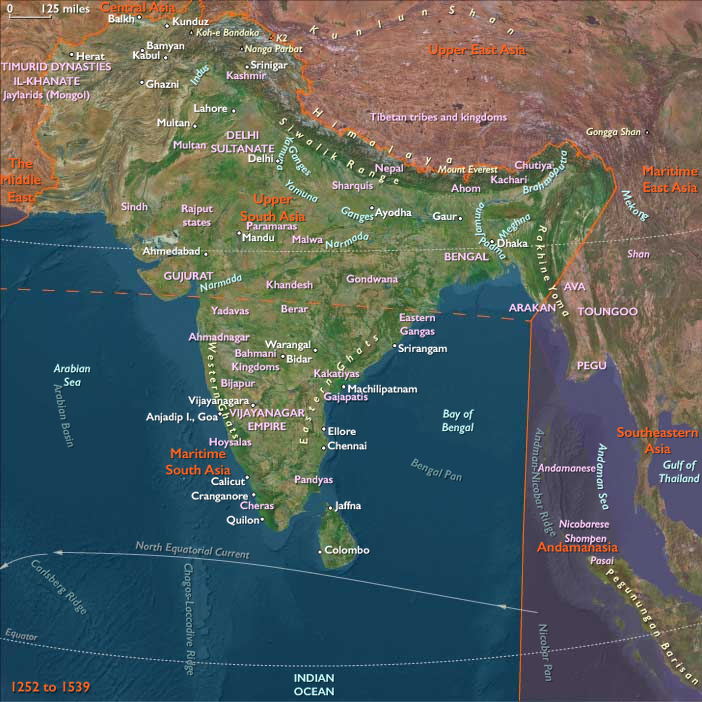
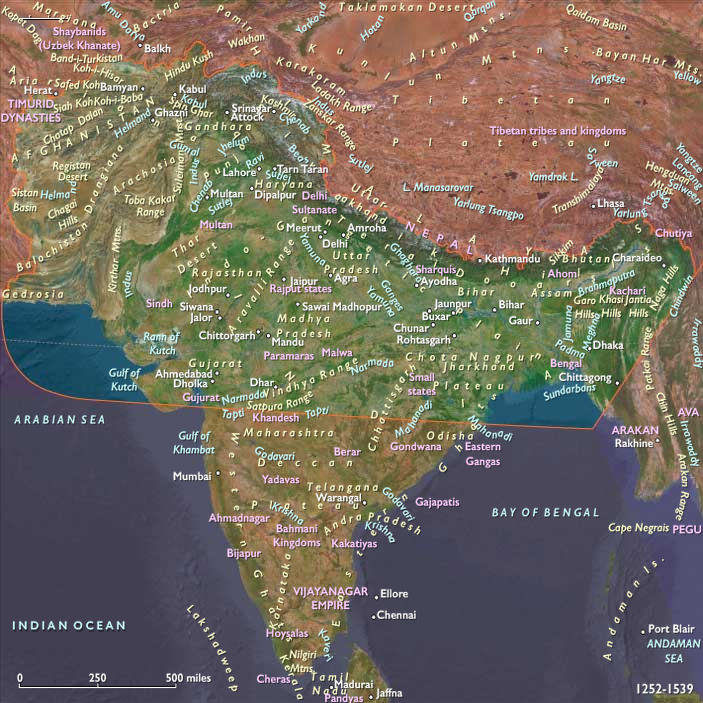
The subregion of Upper South Asia includes Afghanistan, Pakistan, northern India, Nepal, Bhutan, Bangladesh, and northwestern Myanmar (the northern Arakan/Yakhine sector and the Chindwin valley). Anchors included the Hindu Kush and Khyber gateways, the Indus and Ganges–Yamuna basins, the Tarai and Himalayan hills, the Brahmaputra delta, and the Arakan coast with its river valleys (Kaladan, Chindwin). This corridor linked Central Asia to the Indo-Gangetic plain and the Bay of Bengal through Bengal–Arakan exchanges.
Climate & Environmental Shifts
The Little Ice Age brought cooler temperatures and heightened climate variability. Western disturbances delivered winter snows to the Hindu Kush and rains to the Indus basin; the summer monsoon fluctuated, producing flood years on the Ganges and Brahmaputra followed by shortfalls that stressed rice and wheat zones. Himalayan glaciers advanced in pulses, affecting river regimes; in the Tarai, malarial wetlands waxed and waned with rainfall.
Subsistence & Settlement
-
Indus–Gangetic plains: Wheat, barley, and pulses in the west; rice, sugarcane, and jute in the east. Irrigation by canals and nadi diversions expanded around sultanate centers; village tank systems persisted in the doabs.
-
Afghanistan and northwest uplands: Oasis and valley farming (wheat, orchards, vines) combined with transhumant herding of sheep, goats, and horses; caravan towns thrived on the Kabul–Peshawar route.
-
Nepal and Bhutan: Terrace agriculture of rice (middle hills), millet, buckwheat, and barley (higher zones); pastoral yak and sheep herding on alpine pastures; salt–grain exchange across passes.
-
Bengal delta: Intensive wet-rice cultivation, fishponds, and palm groves supported dense settlement along levees and backswamps.
- Northwestern Myanmar: Rice farming in the Arakan littoral and shifting cultivation in the Chindwin valley supported Arakanese states. The Kingdom of Mrauk U (founded 1430) became a major power, mediating between Bengal, the Bay of Bengal, and inland valleys. Muslim refugees and traders from Bengal enriched its cosmopolitan court..
Technology & Material Culture
Persianate hydraulics and sultanate canal-building complemented village tanks; Persian wheels lifted water in the doabs. Fortified stone and brick citadels, ribbed domes, and chahar-bagh gardens marked courtly landscapes. Paper mills and scriptoria expanded Persian and vernacular manuscript culture; coinage reforms standardized silver and copper issues. In the hills, dry-stone terrace walls, timber monasteries, and metalwork (bells, ritual objects, blades) anchored local craft ecologies; Bengal excelled in cotton textiles and fine metal casting.
Movement & Interaction Corridors
-
Khyber and Bolan passes: Funneled Central Asian contingents: Timur’s invasion (1398) devastated Delhi; later Turkic–Mongol lineages probed the plains.
-
Grand Trunk–style trunk roads: Linked Lahore–Delhi–Agra–Varanasi to Bengal river ports; caravanserais and market towns multiplied.
-
Himalayan trade paths: Carried salt, wool, and metalware between Tibet, Nepal, and the Gangetic plains; Bhutan’s passes tied monastic polities to Assam and Bengal.
-
Delta waterways: The Ganges–Brahmaputra arterial network moved rice, jute, and textiles from the interior to coastal entrepôts.
Cultural & Symbolic Expressions
Persianate court culture flourished under the Delhi Sultanate, blending with Indic forms in mosque complexes, madrasas, and Sufi hospices; qawwali, Persian poetry, and vernacular bhakti spread in parallel. In the Himalaya, Buddhist and Vajrayana monasteries patronized thangka painting, scholastic lineages, and festival calendars; Hindu shrines and royal cults thrived in Nepal’s Malla courts. In the plains, bhakti saints and Sufi pirs localized universal ideals—shared shrine circuits and urs feasts mediated social worlds in towns and villages. Bengal’s mosques and temples integrated terracotta reliefs, signaling interlaced aesthetic idioms.
Environmental Adaptation & Resilience
Farmers rotated wheat–pulses and paddy–legumes, used flood-recession rice and raised-bed cultivation in the delta, and relied on tanks and canal check-gates in drought years. Terrace walls and forest belts stabilized Himalayan slopes; transhumant routes staggered herds across elevations. Monasteries, mosques, and temples held waqf/devadana lands that provisioned relief in dearth; village grain banks and merchant guild credit buffered shortfalls.
Technology & Power Shifts (Conflict Dynamics)
Timur’s sack of Delhi (1398) fractured sultanate authority; regional houses (Jaunpur, Malwa, Gujarat) rose across the fifteenth century as the Delhi court recovered fitfully. In Afghanistan and the northwest, Babur—a Timurid prince—seized Kabul (1504), probing the Punjab via Panipat (1526) to found the Mughal polity, then consolidated at Khanwa (1527) and Chanderi (1528). Bengal maintained semi-autonomy with powerful governors; Rajput houses bargained war and marriage with rising Mughals; in the hills, Nepal’s Malla kingdoms and Bhutanese monastic states managed succession and pass politics amid Tibetan currents.
Transition
By 1539 CE, Upper South Asia balanced Timurid–Mughal beginnings in the northwest with Sultanate polities in the plains, Malla courts in Nepal, and the Arakanese kingdom of Mrauk U linking Bengal to Myanmar’s coasts.
People
- Babur
- Bahlul Lodi
- Gurū Nānak
- Humayun
- Ibrahim Lodi
- Jami
- Kabir
- Kamāl ud-Dīn Behzād
- Sher Shah Suri
- Sikander Lodi
Groups
- Tajik people
- Kirat people
- Iranian peoples
- Hinduism
- Pashtun people (Pushtuns, Pakhtuns, or Pathans)
- Jainism
- Buddhism, Tibetan
- Kashmir, Kingdom of
- Buddhism
- Khas peoples
- India, Classical
- Buddhism, Mahayana
- Tokharistan (Kushan Bactria)
- Gandhāra
- Bon
- Bumthang, Kingdom of
- Islam
- Muslims, Sunni
- Muslims, Shi'a
- Ghilzai (Pashtun tribal confederacy)
- Mongols
- Hazara people
- Malla (Nepal)
- Delhi, Sultanate of (Tughluq Dynasty)
- Vijayanagara, Kingdom of
- Bengal, Sultanate of
- Timurid Empire
- Jaunpur Sultanate
- Timurid Emirates
- Delhi, Sultanate of (Sayyid Dynasty)
- Kantipur
- Lalitpur, also known as Patan, Kingdom of
- Bhaktapur, Kingdom of
- Mrauk U, Arakanese (Rakhine) Kingdom of
- Delhi, Sultanate of (Lodi, or Afghan, Dynasty)
- Vijayanagara, (Saluva) Kingdom of
- Vijayanagara, (Tuluva) Kingdom of
- Mughal Empire (Agra)
Topics
Commodoties
Subjects
- Commerce
- Writing
- Architecture
- Sculpture
- Conflict
- Faith
- Government
- Custom and Law
- Medicine
- Mathematics
- Astronomy
- Philosophy and logic
Regions
Subregions
Years: 1396 - 1539
People
- Babur
- Bahlul Lodi
- Gurū Nānak
- Humayun
- Ibrahim Lodi
- Jami
- Kabir
- Kamāl ud-Dīn Behzād
- Sher Shah Suri
- Sikander Lodi
Groups
- Tajik people
- Kirat people
- Iranian peoples
- Hinduism
- Pashtun people (Pushtuns, Pakhtuns, or Pathans)
- Jainism
- Buddhism, Tibetan
- Kashmir, Kingdom of
- Buddhism
- Khas peoples
- India, Classical
- Buddhism, Mahayana
- Tokharistan (Kushan Bactria)
- Gandhāra
- Bon
- Bumthang, Kingdom of
- Islam
- Muslims, Sunni
- Muslims, Shi'a
- Ghilzai (Pashtun tribal confederacy)
- Mongols
- Hazara people
- Malla (Nepal)
- Delhi, Sultanate of (Tughluq Dynasty)
- Vijayanagara, Kingdom of
- Bengal, Sultanate of
- Timurid Empire
- Jaunpur Sultanate
- Timurid Emirates
- Delhi, Sultanate of (Sayyid Dynasty)
- Kantipur
- Lalitpur, also known as Patan, Kingdom of
- Bhaktapur, Kingdom of
- Mrauk U, Arakanese (Rakhine) Kingdom of
- Delhi, Sultanate of (Lodi, or Afghan, Dynasty)
- Vijayanagara, (Saluva) Kingdom of
- Vijayanagara, (Tuluva) Kingdom of
- Mughal Empire (Agra)
Topics
Commodoties
Subjects
- Commerce
- Writing
- Architecture
- Sculpture
- Conflict
- Faith
- Government
- Custom and Law
- Medicine
- Mathematics
- Astronomy
- Philosophy and logic
Regions
Subregions