
Northeastern North America (1888 to 1899 …
Years: 1888 - 1899
Northeastern North America
(1888 to 1899 CE): Industrial Titans, Immigration, Public Health, and Cultural Evolution
Between 1888 and 1899, Northeastern North America witnessed extraordinary industrial expansion, intensified immigration, health crises, cultural shifts, and significant political evolution. These years shaped the region through economic consolidation, urbanization, and profound social changes.
Rise of Industrial Titans
Rapid economic growth gave rise to powerful industrialists, including Cornelius Vanderbilt in railroads, John D. Rockefeller in petroleum, and Andrew Carnegie in steel. Banking emerged as a key economic driver, notably under the guidance of financier J. P. Morgan. Technological innovations by Thomas Edison and Nikola Tesla transformed urban life, distributing electricity broadly for industry, home use, and street lighting.
Trusts and Monopolies
Corporations such as Standard Oil dominated their industries. The formation of monopolistic trusts extended beyond oil to sugar, whiskey, and lead. After the Sugar Trust was ruled illegal in 1891, Henry Osborne Havemeyer and Theodore A. Havemeyer were elected chairman and president, respectively, of the American Sugar Refining Company, which in May 1896 became one of the original twelve companies listed in the Dow Jones Industrial Average. After absorbing the E.C. Knight Company and others, it controlled ninety-eight percent of sugar refining in America, surviving a Supreme Court antitrust challenge in 1895.
Immigration and Urbanization
Urban centers swelled with immigrants, especially from Southern and Eastern Europe, creating labor surpluses fueling industrial growth and significantly transforming regional culture. Nearly a quarter of the Canadian population emigrated southward to the U.S. between 1871 and 1896, reshaping the demographics further.
Public Health Challenges
Massive immigration and urban growth intensified public health crises. Infectious diseases caused severe fatalities, with an estimated twenty-five to thirty-three percent mortality among European immigrants to Canada before 1891. Cholera outbreaks, notably in Chicago in 1854, underscored ongoing urban health vulnerabilities.
Cultural and Social Shifts
The late nineteenth century saw heightened narcotic consumption, particularly opium. By 1896, American addiction peaked at over three hundred thousand individuals. Sensationalist media coverage by publishers like William Randolph Hearst fueled xenophobic fears, associating narcotic use with immigrants and criminals, prompting early narcotics regulation.
Intellectual and Cultural Trends
Robert G. Ingersoll, known as "the great agnostic," popularized scientific rationalism, humanism, and higher criticism of religious texts. His compelling lectures attracted national attention, influencing public discourse with intellectual vigor and challenging established orthodoxies.
Hudson River School artists, including John Frederick Kensett, George Inness, and Frederick Edwin Church, reached the zenith of their influence, romanticizing American landscapes and reinforcing the cultural identity rooted in the natural environment.
Fashion shifted toward more relaxed, country-inspired attire, with Norfolk jackets and knickerbockers—named after Washington Irving's fictional Dutch family—becoming popular among men.
Political Dynamics
Presidential elections reflected shifting political landscapes and changing cultural norms. Benjamin Harrison, notable for his full beard, defeated mustachioed incumbent Grover Cleveland in 1888. However, Cleveland reclaimed the presidency in 1892, overcoming Harrison and Populist candidate James A. Weaver. In 1896, clean-shaven Republican William McKinley defeated similarly beardless Democrat and Populist William Jennings Bryan, reflecting evolving political and social attitudes.
Legacy of the Era (1888–1899 CE)
This transformative period, marked by powerful industrial leaders, massive immigration, evolving cultural practices, and shifting political alliances, established a framework that profoundly shaped Northeastern North America's socioeconomic and cultural landscapes for decades to follow.
People
- Andrew Carnegie
- Benjamin Harrison
- Cornelius Vanderbilt II
- Frederic Edwin Church
- George Inness
- Grover Cleveland
- Henry Osborne Havemeyer
- J. P. Morgan
- James B. Weaver
- John D. Rockefeller
- Nikola Tesla
- Robert Green Ingersoll
- Theodore Augustus Havemeyer
- Thomas Edison
- William Jennings Bryan
- William McKinley
- William Randolph Hearst
Groups
Topics
Commodoties
- Rocks, sand, and gravel
- Strategic metals
- Sweeteners
- Beer, wine, and spirits
- Fuels, lubricants and sealants
- Narcotics
Subjects
- Commerce
- Writing
- Painting and Drawing
- Public health
- Fashion
- Conflict
- Faith
- Government
- Custom and Law
- Catastrophe
- Human Migration
Regions
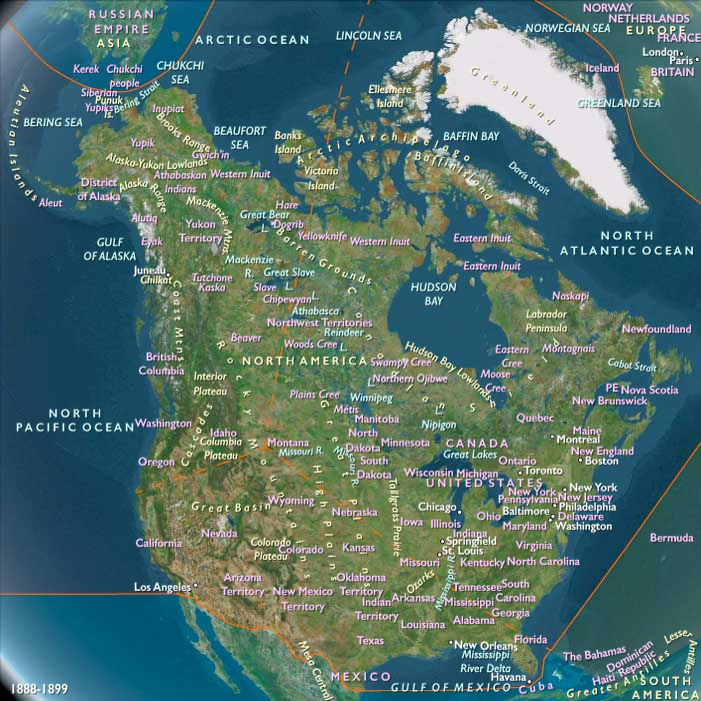
Subregions
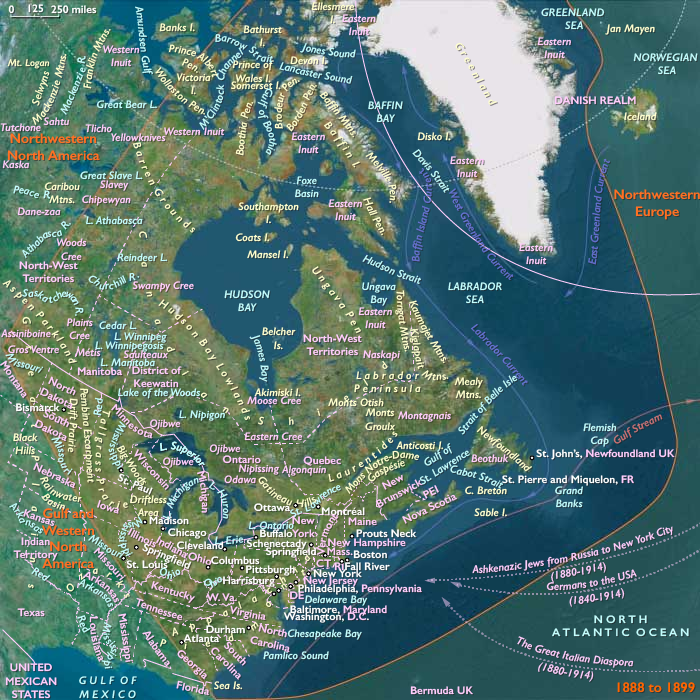
Years: 1888 - 1899
People
- Andrew Carnegie
- Benjamin Harrison
- Cornelius Vanderbilt II
- Frederic Edwin Church
- George Inness
- Grover Cleveland
- Henry Osborne Havemeyer
- J. P. Morgan
- James B. Weaver
- John D. Rockefeller
- Nikola Tesla
- Robert Green Ingersoll
- Theodore Augustus Havemeyer
- Thomas Edison
- William Jennings Bryan
- William McKinley
- William Randolph Hearst
Groups
Topics
Commodoties
- Rocks, sand, and gravel
- Strategic metals
- Sweeteners
- Beer, wine, and spirits
- Fuels, lubricants and sealants
- Narcotics
Subjects
- Commerce
- Writing
- Painting and Drawing
- Public health
- Fashion
- Conflict
- Faith
- Government
- Custom and Law
- Catastrophe
- Human Migration
Regions
Subregions