
Northeastern North America (1864 to 1875 …
Years: 1864 - 1875
Northeastern North America
(1864 to 1875 CE): Conclusion of the Civil War, Reconstruction, Canadian Confederation, and Continued Industrial Expansion
From 1864 to 1875, Northeastern North America experienced the conclusion of the American Civil War, complex Reconstruction efforts, the formation of the Canadian Confederation, significant industrial and economic growth, and ongoing cultural development. This period was characterized by intense political restructuring, expanding infrastructure, evolving relationships with indigenous peoples, and the continued flourishing of regional industries.
American Civil War and Reconstruction
Conclusion and Aftermath
The American Civil War concluded in 1865, marking a profound turning point for Northeastern North America. The Northeast played a crucial role, contributing industrial resources, manpower, and economic support that proved vital for Union victory. Indigenous participation was significant; about twenty thousand Native Americans fought on both sides, including prominent contributions by the Cherokee, Choctaw, Chickasaw, Creek, Seminole, and Iroquois peoples. Notably, about forty-five Iowa tribesmen served in the Union Army, including Chief James White Cloud, grandson of Chief Mahaska. Irish and other immigrant communities also fought prominently, exemplifying the complex demographic dynamics of the war. The post-war Reconstruction era saw efforts to integrate formerly enslaved populations into society and rebuild a nation divided by war, facing resistance, social upheaval, and political struggle.
Formation of the Canadian Confederation
Constitutional Conferences and Confederation
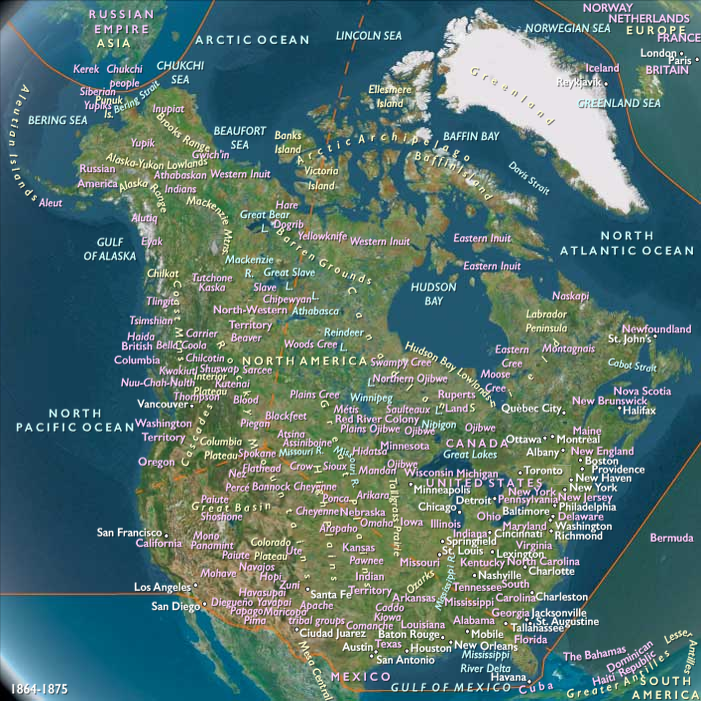
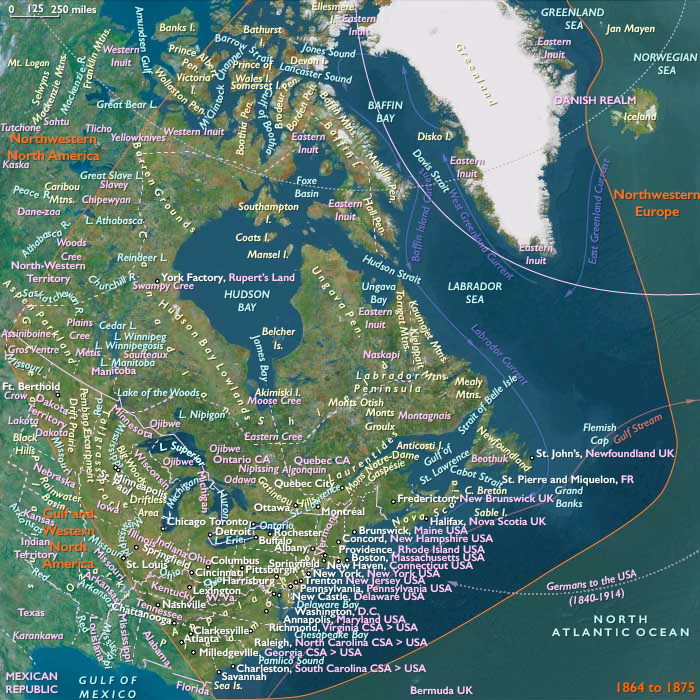
Following several constitutional conferences, the Constitution Act officially proclaimed the Canadian Confederationon July 1, 1867, initially uniting four provinces: Ontario, Quebec, Nova Scotia, and New Brunswick. This marked a significant political realignment aimed at ensuring stability, economic prosperity, and defense against potential American expansionism.
Expansion and Indigenous Relations
In 1870, Canada assumed control of Rupert's Land and the North-Western Territory, forming the Northwest Territories. Tensions surrounding land rights and governance ignited the Red River Rebellion, led by the Métis under Louis Riel, resulting in the creation of the province of Manitoba in July 1870. Further territorial expansion occurred as British Columbia, including Vancouver Island (united in 1866), joined the Confederation in 1871, and Prince Edward Island followed in 1873.
Industrial and Economic Growth
Bluestone and Infrastructure Development
The bluestone industry continued to thrive, playing a critical role in urban development. Cities like New York and Kingston relied on shipments from hubs like Rondout and Malden, utilizing barges and tugboats operated by entrepreneurs such as Thomas Cornell. Bluestone became a staple material for sidewalks, curbstones, and building foundations, defining the architectural character of urban environments.
Notable examples included Kingston’s sidewalks and curbstones and the Old Dutch Church in Kingston, designed by Minard Lefever, constructed of native-dressed bluestone blocks between 1850 and 1852. Similarly, in 1858, entrepreneur Henry Samson built an Italian villa using ashlar and rusticated bluestone blocks on West Chestnut Street in Kingston.
Ice Harvesting and Brick Manufacturing
Ice harvesting along the Hudson River remained essential for refrigeration and food preservation, supported by large warehouses and extensive straw insulation methods. Brick manufacturing near major waterways and transportation hubs further reinforced the economic vitality and industrial capability of the region.
Artistic and Cultural Continuity
Hudson River School Influence
The Hudson River School, though past its zenith, continued influencing American art and culture. Paintings from artists such as Frederick Edwin Church and Sanford Robinson Gifford persisted in capturing landscapes that symbolized America's natural beauty and national identity, reflecting ongoing themes of exploration, settlement, and harmony with nature.
Legacy of the Era (1864–1875 CE)
Between 1864 and 1875, Northeastern North America navigated the challenging aftermath of the Civil War, fostered the political and territorial growth of Canada, and sustained industrial and cultural advancement. The transformations of this era, from Reconstruction to Confederation and industrial prosperity, continued to shape the region’s historical trajectory, significantly influencing the subsequent decades.
People
- Abraham Lincoln
- Frederic Edwin Church
- Frederick Douglass
- Henry David Thoreau
- James White Cloud
- Louis Riel
- Ralph Waldo Emerson
- Sanford Robinson Gifford
- Thomas C. Cornell
- William Lloyd Garrison
Groups
- Iroquois (Haudenosaunee, also known as the League of Peace and Power, Five Nations, or Six Nations)
- Muscogee, or Creek, people (Amerind tribe)
- Arapaho people (Amerind tribe)
- Hidatsa people (Amerind tribe)
- Mandan (Amerind tribe)
- Arikara people (Amerind tribe)
- Cherokee, or Tsalagi (Amerind tribe)
- Chickasaw (Amerind tribe)
- Choctaw (Amerind tribe)
- Iowa (Amerind tribe)
- Métis in Canada
- Rupert's Land
- Seminole (Amerind tribe)
- Nova Scotia (British Colony)
- New Hampshire, State of (U.S.A.)
- New Brunswick, British colony of
- New York State (U.S.A.)
- Prince Edward Island (British colony)
- United States of America (US, USA) (Washington DC)
- Britain (United Kingdom of Great Britain and Ireland)
- Red River Colony
- Illinois, State of (U.S.A.)
- Vancouver Island, Crown Colony of
- British Columbia, Colony of
- Canada, Province of
- Vancouver Island and British Columbia, United Colonies of
- Canada, Province of
- Nova Scotia (Canadian province)
- Ontario (Canadian province)
- New Brunswick (Canadian province)
- Quebec (Canadian province)
- Canada, Dominion of
- Manitoba (Canadian province)
- Northwest Territories
- British Columbia (Canadian province)
- Prince Edward Island (Canadian province)
Topics
- Middle Subatlantic Period
- Little Ice Age (LIA)
- Highland Clearances
- Great Awakening, Second
- Party System, Second (United States)
- Literature: 1828 to 1972
- Little Ice Age, Warm Phase IV
- Western Art: Romanticism
- cholera pandemic, 1846-1860
- American Civil War (War between the States, War of the Rebellion, War of Secession, War for Southern Independence)
- cholera pandemic, 1863–1875
- Red River Rebellion (Riel's First Rebellion)
Commodoties
Subjects
- Commerce
- Writing
- Painting and Drawing
- Public health
- Conflict
- Faith
- Government
- Custom and Law
- Catastrophe
Regions
Subregions
Years: 1864 - 1875
People
- Abraham Lincoln
- Frederic Edwin Church
- Frederick Douglass
- Henry David Thoreau
- James White Cloud
- Louis Riel
- Ralph Waldo Emerson
- Sanford Robinson Gifford
- Thomas C. Cornell
- William Lloyd Garrison
Groups
- Iroquois (Haudenosaunee, also known as the League of Peace and Power, Five Nations, or Six Nations)
- Muscogee, or Creek, people (Amerind tribe)
- Arapaho people (Amerind tribe)
- Hidatsa people (Amerind tribe)
- Mandan (Amerind tribe)
- Arikara people (Amerind tribe)
- Cherokee, or Tsalagi (Amerind tribe)
- Chickasaw (Amerind tribe)
- Choctaw (Amerind tribe)
- Iowa (Amerind tribe)
- Métis in Canada
- Rupert's Land
- Seminole (Amerind tribe)
- Nova Scotia (British Colony)
- New Hampshire, State of (U.S.A.)
- New Brunswick, British colony of
- New York State (U.S.A.)
- Prince Edward Island (British colony)
- United States of America (US, USA) (Washington DC)
- Britain (United Kingdom of Great Britain and Ireland)
- Red River Colony
- Illinois, State of (U.S.A.)
- Vancouver Island, Crown Colony of
- British Columbia, Colony of
- Canada, Province of
- Vancouver Island and British Columbia, United Colonies of
- Canada, Province of
- Nova Scotia (Canadian province)
- Ontario (Canadian province)
- New Brunswick (Canadian province)
- Quebec (Canadian province)
- Canada, Dominion of
- Manitoba (Canadian province)
- Northwest Territories
- British Columbia (Canadian province)
- Prince Edward Island (Canadian province)
Topics
- Middle Subatlantic Period
- Little Ice Age (LIA)
- Highland Clearances
- Great Awakening, Second
- Party System, Second (United States)
- Literature: 1828 to 1972
- Little Ice Age, Warm Phase IV
- Western Art: Romanticism
- cholera pandemic, 1846-1860
- American Civil War (War between the States, War of the Rebellion, War of Secession, War for Southern Independence)
- cholera pandemic, 1863–1875
- Red River Rebellion (Riel's First Rebellion)
Commodoties
Subjects
- Commerce
- Writing
- Painting and Drawing
- Public health
- Conflict
- Faith
- Government
- Custom and Law
- Catastrophe
Regions
Subregions