
Northeastern North America (1816 to 1827 …
Years: 1816 - 1827
Northeastern North America
(1816 to 1827 CE): Expansion, Industrial Growth, and Rising Tensions
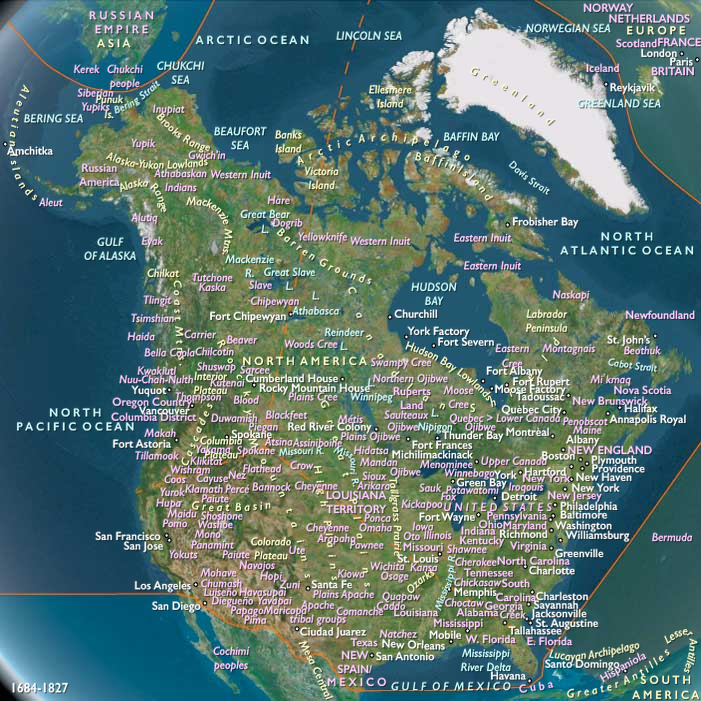
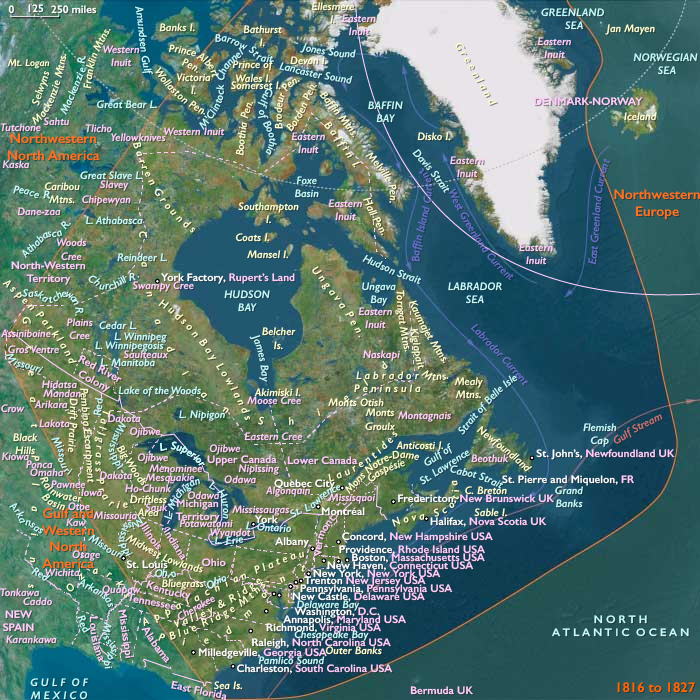
From 1816 to 1827, Northeastern North America experienced rapid territorial expansion, surging industrial and commercial activity, intensifying slavery, and escalating tensions with Indigenous peoples. Although the post-War of 1812 era appeared as a period of national unity—the so-called "Era of Good Feelings"—beneath the surface, profound sectional divisions deepened, driven by economic and cultural forces reshaping the continent.
Territorial Expansion and Military Incursions
Acquisition of Florida and the Gulf Coast
A series of aggressive U.S. military incursions into Spanish-held Florida, notably by General Andrew Jackson, culminated in Spain ceding Florida and Gulf Coast territories to the United States through the Adams-Onís Treaty (1819). This acquisition significantly enhanced American control along the southern frontier and eliminated a refuge for runaway slaves and hostile Indigenous groups.
Transportation Revolution and Infrastructure Development
Canals and the Rise of Steamboats
Expansion was greatly facilitated by revolutionary improvements in transportation. Steamboats now navigated major river systems, dramatically reducing travel times and fueling westward migration. The completion of the Erie Canal (1817–1825) linked New York City directly to the Great Lakes, stimulating unprecedented commercial growth. Similar projects, such as the Illinois and Michigan Canal (I&M), further integrated frontier economies with eastern markets, laying foundations for a unified national economy.
Early Railroads on the Horizon
Although still nascent in the 1820s, railroad construction would soon accelerate, promising even faster, cheaper, and more extensive transportation networks that would further transform the region’s economic landscape.
The Expansion of Slavery and the Cotton Economy
Cotton Boom and the Internal Slave Trade
Despite the 1808 federal prohibition of the international slave trade, the institution of slavery dramatically intensified due to the surging demand for cotton. After 1820, cotton cultivation exploded throughout the Deep South, particularly in the fertile Black Belt region. The cotton gin, invented earlier by Eli Whitney, made short-staple cotton profitable, significantly expanding slave labor.
With international slave imports banned, an internal slave market developed, selling enslaved persons from states such as Virginia and Maryland—where shifting agricultural practices had reduced labor needs—to rapidly expanding cotton plantations in the Deep South. Terms such as "breeding slaves," "child-bearing women," and "breeding period" emerged, reflecting an increasingly brutal commodification of enslaved people, driven by economic necessity and racial anxieties.
South Carolina’s Slave-Based Economy
South Carolina epitomized this expansion. By 1820, enslaved Africans made up nearly half the state’s population. The plantation elite solidified their power through stringent property and slave-ownership qualifications for political participation, reinforcing an economic and social hierarchy based explicitly on slavery.
The Asian and Maritime Fur Trade
American Involvement in Asian Markets
The lucrative Asian trade emerged as a crucial economic driver for the northeastern United States, especially for merchants based in Salem, Boston, Providence, New York, Philadelphia, and Baltimore. The maritime fur trade connected these ports to Asian markets such as Guangzhou (Canton), Kolkata (Calcutta), Chennai (Madras), Manila, Jakarta (Batavia), Mauritius, and Sumatra.
American merchants exported furs, rum, ammunition, ginseng, lumber, ice, salt, silver dollars, iron, tobacco, opium, and tar, while importing Asian commodities like silks, muslins, spices, cassia, porcelain, tea, sugar, and drugs.
Opium Trade and Wealth Accumulation
Bostonian entrepreneurs, including John Perkins Cushing (through his uncles’ firm, J. & T.H. Perkins), Samuel Russell (founder of Russell & Company, 1823), and John Jacob Astor, amassed immense wealth by smuggling Turkish opium into China, where its sale was prohibited. Protected by British naval strength, these American merchants entered this clandestine but lucrative trade, significantly influencing early American industrial capital accumulation.
Industrialization and Textile Manufacturing
Capital Shift: "From Wharf to Waterfall"
Profits from the declining maritime fur trade and Asian commerce provided capital that shifted from shipping ("wharf") to industrial textile production ("waterfall"). New England became the heart of the burgeoning textile industry, facilitated by ample waterpower. This industrialization reshaped the American economy, accelerating technological advancements and urban growth.
Demand for Cotton and Connection to Slavery
Textile manufacturing dramatically increased demand for Southern cotton, binding northern industrialists to southern slaveholders economically. This economic dependency reinforced slavery’s importance nationwide, deepening sectional divides over the institution and sowing the seeds of future conflict.
Frontier Expansion and Indigenous Conflict
Increased Westward Migration and Indigenous Displacement
American settlers poured westward into territories like Ohio, Indiana, Illinois, Kentucky, Tennessee, Missouri, and Alabama. This massive influx led to intensified conflict with Indigenous peoples, who fiercely resisted encroachment on their ancestral lands. Settlers often disregarded treaties, provoking confrontations that escalated violence and displacement.
Mandan, Hidatsa, and Plains Tribes
On the Northern Plains, Indigenous groups like the Mandan and Hidatsa suffered severely from epidemics, notably smallpox, dramatically reducing their populations and social cohesion. Meanwhile, tribes such as the Crow, Assiniboine, Sioux, Blackfeet, and Arikara engaged in fierce competition over territory, resources, and horse herds, reshaping tribal alliances and conflicts.
Social, Religious, and Cultural Developments
Second Great Awakening and Reform Movements
The Second Great Awakening (1790–1840) continued to thrive, especially in frontier regions. Revivalist meetings, such as the famous Cane Ridge Revival of 1801, spread evangelical Christianity widely, energizing reform movements including abolitionism, women’s rights, temperance, and education reform.
Emergence of Temperance Societies
Temperance advocates, responding to rising alcoholism and associated social problems, founded numerous societies urging moderation or abstinence, reflecting a growing concern for moral reform and social improvement.
Political Dynamics and National Identity
Era of Good Feelings and National Unity
Despite the period’s superficial harmony under President James Monroe (1817–1825), unresolved conflicts simmered beneath national unity. The Monroe Doctrine (1823) asserted U.S. dominance over Western Hemisphere affairs, reflecting growing confidence in American national identity and foreign policy aspirations.
Andrew Jackson and Populist Politics
General Andrew Jackson’s military successes, particularly in the First Seminole War and his broader aggressive frontier policies, increased his popularity among western settlers. His emergence foreshadowed a populist, frontier-oriented political realignment soon to challenge eastern elites.
The Legacy of this Era (1816–1827 CE)
Between 1816 and 1827, Northeastern North America underwent transformative change, marked by territorial expansion, accelerating industrial growth, intensified slavery, and escalating tensions over Indigenous displacement. The acquisition of new territories, the explosive growth of the cotton economy, and burgeoning industrialization—financed in part by the lucrative yet morally complex Asian opium and maritime fur trades—redefined American society.
Yet beneath apparent national unity lay deepening sectional tensions and moral contradictions, particularly over slavery. The era set the stage for intensifying conflicts as the United States continued its relentless westward push, ultimately shaping the course of its future development and sectional divisions for decades to come.
People
- Andrew Jackson
- Eli Whitney
- James Monroe
- John Jacob Astor
- John Perkins Cushing
- Samuel Russell
- Thomas Handasyd Perkins
Groups
- Blackfoot Confederacy
- Lakota, aka Teton Sioux (Amerind tribe)
- Dakota, aka Santee Sioux (Amerind tribe)
- Arikara people (Amerind tribe)
- Mandan (Amerind tribe)
- Assiniboine people (Amerind tribe)
- Crow people, aka Absaroka or Apsáalooke (Amerind tribe)
- Hidatsa people (Amerind tribe)
- Protestantism
- France, (Bourbon) Kingdom of
- Ohio Country
- Baptists
- Illinois Country
- Seminole (Amerind tribe)
- Spain, Bourbon Kingdom of
- Britain, Kingdom of Great
- Hudson's Bay Company (HBC)
- Nova Scotia (British Colony)
- Methodists
- West Florida
- Pennsylvania, Commonwealth of (U.S.A.)
- Maryland, State of (U.S.A.)
- Virginia, Commonwealth of (U.S.A.)
- North Carolina, State of (U.S.A.)
- Rhode Island, State of (U.S.A.)
- Connecticut, State of (U.S.A.)
- New Hampshire, State of (U.S.A.)
- North West Company
- Massachusetts, Commonwealth of (U.S.A.)
- Spanish Florida
- New Brunswick, British colony of
- Northwest Territory (U.S.A.)
- New York State (U.S.A.)
- South Carolina, State of (U.S.A.)
- Canada, Lower, (British province)
- Canada, Upper, (British province)
- Kentucky, Commonwealth of (U.S.A.)
- Tennessee, State of (U.S.A.)
- Mississippi, Territory of (U.S.A.)
- Indiana, Territory of (U.S.A.)
- United States of America (US, USA) (Washington DC)
- Ohio, State of (U.S.A.)
- Michigan, Territory of (U.S.A.)
- Illinois, Territory of (U.S.A.)
- Disciples of Christ (Campbell Movement)
- Louisiana, State of (U.S.A.)
- Missouri, Territory of (U.S.A.)
- Indiana, State of (U.S.A.)
- Mississippi, State of (U.S.A.)
- Alabama, Territory of (U.S.A.)
- Illinois, State of (U.S.A.)
- Alabama, State of (U.S.A.)
- Missouri, State of (U.S.A.)
- Florida, Territory of (U.S.A.)
Topics
- Middle Subatlantic Period
- Little Ice Age (LIA)
- Colonization of the Americas, Spanish
- North American Fur Trade
- Great Awakening, Second
- Good Feelings, Era of
- Seminole War, First
- Seminole Wars
Commodoties
- Weapons
- Hides and feathers
- Domestic animals
- Grains and produce
- Textiles
- Fibers
- Strategic metals
- Slaves
- Salt
- Beer, wine, and spirits
- Lumber
- Narcotics
- Stimulants
- Spices
- Tobacco
Subjects
Regions
Subregions
Related Events
Showing 10 events out of 20863 total
Years: 1816 - 1827
People
- Andrew Jackson
- Eli Whitney
- James Monroe
- John Jacob Astor
- John Perkins Cushing
- Samuel Russell
- Thomas Handasyd Perkins
Groups
- Blackfoot Confederacy
- Lakota, aka Teton Sioux (Amerind tribe)
- Dakota, aka Santee Sioux (Amerind tribe)
- Arikara people (Amerind tribe)
- Mandan (Amerind tribe)
- Assiniboine people (Amerind tribe)
- Crow people, aka Absaroka or Apsáalooke (Amerind tribe)
- Hidatsa people (Amerind tribe)
- Protestantism
- France, (Bourbon) Kingdom of
- Ohio Country
- Baptists
- Illinois Country
- Seminole (Amerind tribe)
- Spain, Bourbon Kingdom of
- Britain, Kingdom of Great
- Hudson's Bay Company (HBC)
- Nova Scotia (British Colony)
- Methodists
- West Florida
- Pennsylvania, Commonwealth of (U.S.A.)
- Maryland, State of (U.S.A.)
- Virginia, Commonwealth of (U.S.A.)
- North Carolina, State of (U.S.A.)
- Rhode Island, State of (U.S.A.)
- Connecticut, State of (U.S.A.)
- New Hampshire, State of (U.S.A.)
- North West Company
- Massachusetts, Commonwealth of (U.S.A.)
- Spanish Florida
- New Brunswick, British colony of
- Northwest Territory (U.S.A.)
- New York State (U.S.A.)
- South Carolina, State of (U.S.A.)
- Canada, Lower, (British province)
- Canada, Upper, (British province)
- Kentucky, Commonwealth of (U.S.A.)
- Tennessee, State of (U.S.A.)
- Mississippi, Territory of (U.S.A.)
- Indiana, Territory of (U.S.A.)
- United States of America (US, USA) (Washington DC)
- Ohio, State of (U.S.A.)
- Michigan, Territory of (U.S.A.)
- Illinois, Territory of (U.S.A.)
- Disciples of Christ (Campbell Movement)
- Louisiana, State of (U.S.A.)
- Missouri, Territory of (U.S.A.)
- Indiana, State of (U.S.A.)
- Mississippi, State of (U.S.A.)
- Alabama, Territory of (U.S.A.)
- Illinois, State of (U.S.A.)
- Alabama, State of (U.S.A.)
- Missouri, State of (U.S.A.)
- Florida, Territory of (U.S.A.)
Topics
- Middle Subatlantic Period
- Little Ice Age (LIA)
- Colonization of the Americas, Spanish
- North American Fur Trade
- Great Awakening, Second
- Good Feelings, Era of
- Seminole War, First
- Seminole Wars
Commodoties
- Weapons
- Hides and feathers
- Domestic animals
- Grains and produce
- Textiles
- Fibers
- Strategic metals
- Slaves
- Salt
- Beer, wine, and spirits
- Lumber
- Narcotics
- Stimulants
- Spices
- Tobacco
Subjects
Regions
Subregions