
Northeastern North America (1792 to 1803 …
Years: 1792 - 1803
Northeastern North America
(1792 to 1803 CE): Frontier Expansion, New Conflicts, and Early National Consolidation
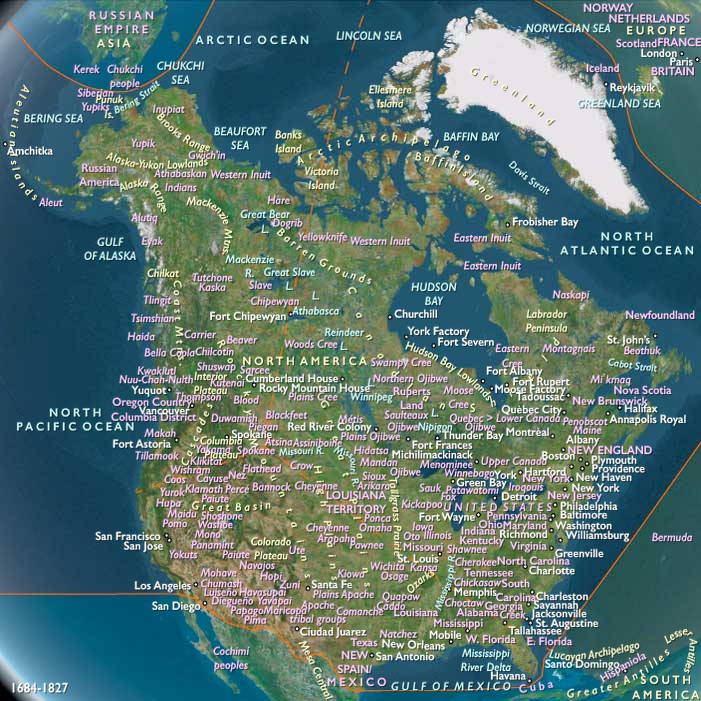
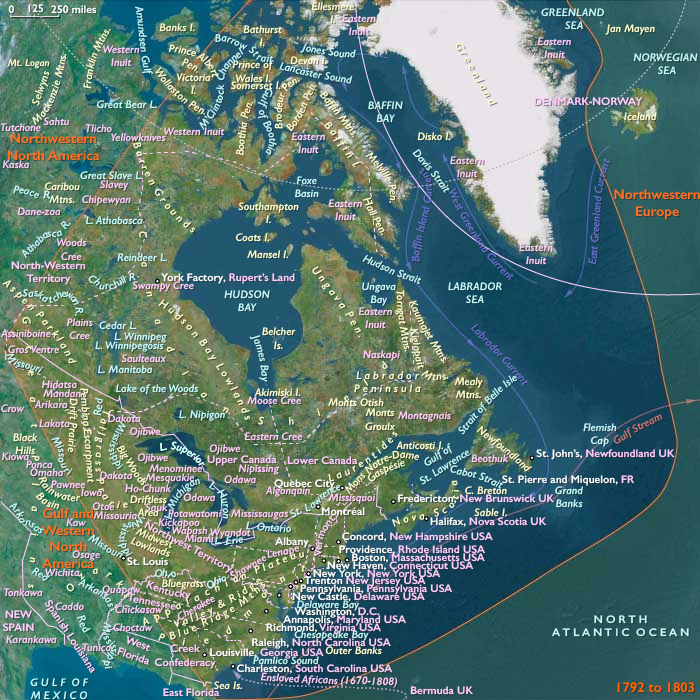
The years 1792 to 1803 in Northeastern North America witnessed accelerated frontier expansion into the Northwest Territory, intensified conflicts between settlers and indigenous nations, significant political developments under the early U.S. republic, critical territorial changes with European powers, and deepening economic reliance on enslaved labor in the plantation South. The era defined enduring challenges in managing growth, conflict, and national identity.
Intensified Westward Movement and Frontier Settlement
Settlement of the Northwest Territory
During the 1790s, settlers poured into the Northwest Territory (present-day Ohio, Indiana, Illinois, Michigan, Wisconsin, and Minnesota east of the Mississippi River). The settlement at Marietta, Ohio (1788) expanded rapidly, followed by new settlements at Cincinnati (1788), Cleveland (1796), and Dayton (1796). These towns became key trade and agricultural hubs, serving settlers traveling via the Ohio River and frontier trails.
Pioneers initially faced harsh conditions, building small log cabins and farms from dense forests, and relying heavily on hunting and subsistence agriculture. Yet, by 1800, Ohio's population exceeded 45,000, foreshadowing its admission as a state in 1803.
Kentucky and Tennessee Statehood
West of the Appalachian Mountains, settlements flourished as populations surged. Kentucky, settled earlier via Daniel Boone’s Wilderness Road, was admitted as the 15th state in 1792, becoming a gateway for further migration westward. Similarly, Tennessee achieved statehood in 1796, reflecting rapid expansion along southern frontier corridors.
These new states were deeply agrarian, their economies based on small farms initially, but increasingly large-scale agriculture emerged, often dependent on enslaved labor, especially in western Kentucky and Tennessee.
Frontier Life and Democratization
As new districts became territories, settlers established elected legislatures, with governors appointed by the president. Once territories reached populations of one hundred thousand, they sought statehood. Frontiersmen typically discarded eastern formalities and restrictive franchise systems, embracing more democratic and egalitarian principles.
By 1800, the western frontier had reached the Mississippi River. St. Louis, Missouri, under Spanish control until 1803, emerged as the largest frontier town and primary gateway for westward travel and trade.
Indigenous Resistance and American Military Response
Northwest Indian War (1785–1795)
Westward movement provoked fierce indigenous resistance, escalating into the Northwest Indian War, fought predominantly between an indigenous confederacy (including Miami, Shawnee, and Delaware peoples) and American settlers backed by the U.S. military.
In 1791, indigenous forces under Little Turtle and Blue Jacket inflicted a crushing defeat on American forces at the Battle of the Wabash (St. Clair’s Defeat). In response, President George Washington appointed General Anthony Wayne, who reorganized American troops and achieved a decisive victory at the Battle of Fallen Timbers (1794), near modern Toledo, Ohio. This forced indigenous leaders to negotiate peace terms.
Treaty of Greenville (1795)
The resulting Treaty of Greenville (1795) compelled indigenous nations to cede vast territories in present-day Ohio and parts of Indiana, opening even greater frontier settlement. However, many tribes viewed the treaty as imposed and illegitimate, sowing the seeds for future resistance under leaders such as Tecumseh and his brother Tenskwatawa.
Political and Territorial Developments
Early U.S. Political Consolidation
Politically, the young United States stabilized under the presidency of George Washington (1789–1797). The federal government, having suppressed Shays’ Rebellion (1786–1787), reaffirmed authority in suppressing the Whiskey Rebellion (1794) in western Pennsylvania, signaling the strength of the new federal structure.
Under President John Adams (1797–1801), political divisions between Federalists and Democratic-Republicans intensified, reflecting competing visions for America’s economic future, foreign alliances, and central authority.
In 1800, Thomas Jefferson defeated Adams in a highly contentious presidential election, marking the first peaceful transfer of power between opposing political parties—a defining moment for American democracy.
Louisiana Purchase (1803)
In 1803, President Jefferson authorized the Louisiana Purchase from France, doubling the size of the United States by acquiring vast territories west of the Mississippi River. This transaction transformed America’s geopolitical scope, significantly influencing subsequent western migration, settlement patterns, and indigenous-European relations.
Growth of Slavery and Plantation Economies
Expansion of Slavery in the Deep South
Despite revolutionary rhetoric of liberty and equality, slavery expanded significantly throughout this era, especially after the invention of the cotton gin (1793) by Eli Whitney. Cotton cultivation surged across the Deep South—particularly Georgia, South Carolina, and the newly settled frontier areas of Tennessee, Mississippi Territory, and western Kentucky.
South Carolina’s Economic and Social Growth
Columbia, South Carolina’s new state capital founded in 1790, expanded after its connection to Charleston by the Santee Canal (1800), one of the nation’s first canals. South Carolina’s population grew dramatically from nearly 250,000 in 1790 to approximately 340,000 by 1800, including 146,000 enslaved persons. Charleston, South Carolina, became the fifth-largest city in the country and, along with Savannah, Georgia, held the largest Jewish communities in America at the time.
This growing dependence on enslaved labor deepened sectional divisions between North and South, laying the foundation for future conflict.
Religious Revival and the Second Great Awakening
The frontier saw a surge in religious revival known as the Second Great Awakening (1790–1840), marked by outdoor camp meetings and emotional evangelical preaching. Notably, the Cane Ridge, Kentucky revival in 1801 drew thousands. Methodists and Baptists became dominant frontier religions, Methodists employing circuit-riding preachers, while Baptists favored independent local churches. A new denomination, the Disciples of Christ, also emerged.
Trade and Indigenous Societies
Mandan, Hidatsa, and Assiniboine Communities
Following the devastating smallpox epidemic of 1781, the Mandan and Hidatsa peoples consolidated along the Missouri River, serving as intermediaries in trade. The Assiniboine became essential trading partners for British fur companies (Hudson's Bay Company, North West Company) and American enterprises (American Fur Company, Rocky Mountain Fur Company), exchanging beaver pelts and bison hides for guns, ammunition, metal goods, and textiles.
Early American Economic and Technological Developments
The Carolina Gold Rush
In 1799, young Conrad Reed discovered a seventeen-pound gold nugget in Little Meadow Creek, Cabarrus County, North Carolina—the first verified gold discovery in America. Although initially undervalued, Reed’s discovery ignited the first significant gold mining operations in the United States, transforming regional economies and foreshadowing future gold rushes.
Revolts and Challenges to Authority
During this period, three notable rebellions occurred: two tax rebellions—the Whiskey Rebellion and Fries' Rebellion in Pennsylvania, protesting federal taxes—and Gabriel’s Rebellion (1800), America’s first major slave revolt. Gabriel’s conspiracy, though suppressed, highlighted the unresolved tensions over slavery and foreshadowed future conflicts.
Legacy of the Era (1792–1803 CE)
From 1792 to 1803, Northeastern North America experienced transformative territorial expansion, heightened frontier conflict, profound indigenous displacement, and the entrenchment of slavery-driven agriculture in the American South. Politically, the era saw early consolidation under the U.S. Constitution, landmark democratic transitions, and profound territorial growth through the Louisiana Purchase.
The sustained westward movement fundamentally reshaped indigenous life, prompting severe resistance and devastating losses. Economically, technological and agricultural innovations intensified divisions between North and South and propelled early industrialization.
This period firmly established the young United States’ trajectory as a continental power, set the stage for intensified sectional conflicts over slavery, and irrevocably transformed indigenous societies, creating conditions that defined subsequent generations.
People
- Anthony Wayne
- Arthur St. Clair
- Blue Jacket
- Daniel Boone
- Eli Whitney
- George Washington
- John Adams
- Little Turtle
- Niels Egede
- Tecumseh
- Tenskwatawa
- Thomas Jefferson
Groups
- Jews
- Lakota, aka Teton Sioux (Amerind tribe)
- Mandan (Amerind tribe)
- Assiniboine people (Amerind tribe)
- Cherokee, or Tsalagi (Amerind tribe)
- Lenape or Lenni-Lenape (later named Delaware Indians by Europeans)
- Protestantism
- New France (French Colony)
- Shawnees, or Shawanos (Amerind tribe)
- France, (Bourbon) Kingdom of
- Ohio Country
- Baptists
- Comanche (Amerind tribe)
- Illinois Country
- Massachusetts, Province of (English Crown Colony)
- Spain, Bourbon Kingdom of
- Britain, Kingdom of Great
- Hudson's Bay Company (HBC)
- Nova Scotia (British Colony)
- Methodists
- South Carolina, Province of (British Colony)
- East Florida
- West Florida
- Louisiana (Spanish colony)
- North Carolina, State of (U.S.A.)
- Pennsylvania, Commonwealth of (U.S.A.)
- Virginia, Commonwealth of (U.S.A.)
- United States of America (US, USA) (Philadelphia PA)
- North West Company
- Massachusetts, Commonwealth of (U.S.A.)
- United States of Americs (US, USA) (Annapolis MD)
- New Brunswick, British colony of
- Northwest Territory (U.S.A.)
- United States of America (US, USA) (New York NY)
- United States of America (US, USA) (Philadelphia PA)
- Canada, Upper, (British province)
- Canada, Lower, (British province)
- French First Republic
- Kentucky, Commonwealth of (U.S.A.)
- Tennessee, State of (U.S.A.)
- Mississippi, Territory of (U.S.A.)
- Louisiana (French colony)
- Ohio, State of (U.S.A.)
- Louisiana, District of (U.S.A.)
- Reed Gold Mine
Topics
- Middle Subatlantic Period
- Little Ice Age (LIA)
- Colonization of the Americas, Spanish
- North American Fur Trade
- Northwest Indian War
- Great Awakening, Second
- Whiskey Rebellion
- St. Clair's Defeat
- Fallen Timbers, Battle of
- Fries Rebellion
- Gabriel's Rebellion
- Louisiana Purchase
Commodoties
Subjects
- Commerce
- Public health
- Conflict
- Mayhem
- Faith
- Government
- Scholarship
- Custom and Law
- Catastrophe
- Human Migration
Regions
Subregions
Related Events
Showing 10 events out of 23942 total
Years: 1792 - 1803
People
- Anthony Wayne
- Arthur St. Clair
- Blue Jacket
- Daniel Boone
- Eli Whitney
- George Washington
- John Adams
- Little Turtle
- Niels Egede
- Tecumseh
- Tenskwatawa
- Thomas Jefferson
Groups
- Jews
- Lakota, aka Teton Sioux (Amerind tribe)
- Mandan (Amerind tribe)
- Assiniboine people (Amerind tribe)
- Cherokee, or Tsalagi (Amerind tribe)
- Lenape or Lenni-Lenape (later named Delaware Indians by Europeans)
- Protestantism
- New France (French Colony)
- Shawnees, or Shawanos (Amerind tribe)
- France, (Bourbon) Kingdom of
- Ohio Country
- Baptists
- Comanche (Amerind tribe)
- Illinois Country
- Massachusetts, Province of (English Crown Colony)
- Spain, Bourbon Kingdom of
- Britain, Kingdom of Great
- Hudson's Bay Company (HBC)
- Nova Scotia (British Colony)
- Methodists
- South Carolina, Province of (British Colony)
- East Florida
- West Florida
- Louisiana (Spanish colony)
- North Carolina, State of (U.S.A.)
- Pennsylvania, Commonwealth of (U.S.A.)
- Virginia, Commonwealth of (U.S.A.)
- United States of America (US, USA) (Philadelphia PA)
- North West Company
- Massachusetts, Commonwealth of (U.S.A.)
- United States of Americs (US, USA) (Annapolis MD)
- New Brunswick, British colony of
- Northwest Territory (U.S.A.)
- United States of America (US, USA) (New York NY)
- United States of America (US, USA) (Philadelphia PA)
- Canada, Upper, (British province)
- Canada, Lower, (British province)
- French First Republic
- Kentucky, Commonwealth of (U.S.A.)
- Tennessee, State of (U.S.A.)
- Mississippi, Territory of (U.S.A.)
- Louisiana (French colony)
- Ohio, State of (U.S.A.)
- Louisiana, District of (U.S.A.)
- Reed Gold Mine
Topics
- Middle Subatlantic Period
- Little Ice Age (LIA)
- Colonization of the Americas, Spanish
- North American Fur Trade
- Northwest Indian War
- Great Awakening, Second
- Whiskey Rebellion
- St. Clair's Defeat
- Fallen Timbers, Battle of
- Fries Rebellion
- Gabriel's Rebellion
- Louisiana Purchase
Commodoties
Subjects
- Commerce
- Public health
- Conflict
- Mayhem
- Faith
- Government
- Scholarship
- Custom and Law
- Catastrophe
- Human Migration
Regions
Subregions