
Northeastern North America (1684–1827 CE): Empires, Nations, …
Years: 1684 - 1827
Northeastern North America (1684–1827 CE): Empires, Nations, and Atlantic Gateways
Geography & Environmental Context
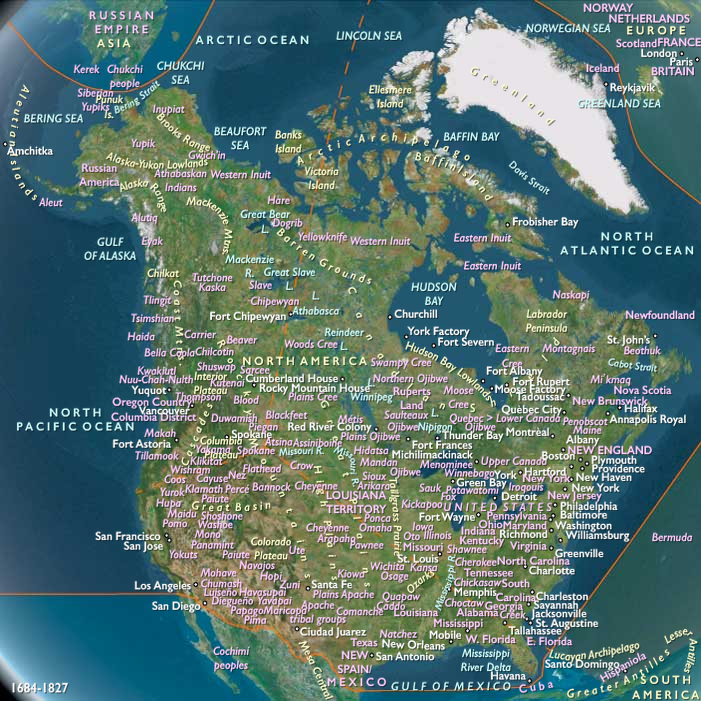
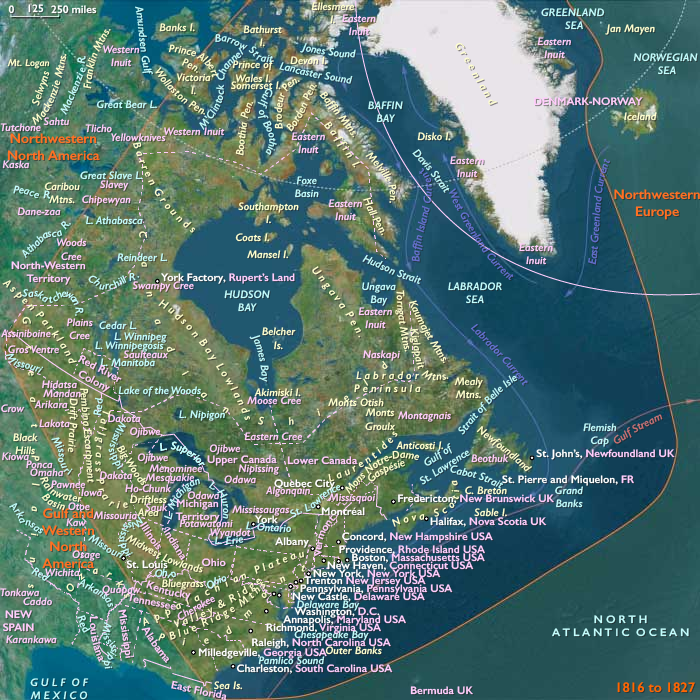
Northeastern North America includes all territory east of 110°W, except the lands belonging to Gulf and Western North America. This encompasses the Great Lakes basin, the St. Lawrence River corridor, Hudson Bay and Labrador, Newfoundland, Greenland, the Arctic, the Maritime provinces, and the Atlantic seaboard from New England through Virginia, the Carolinas, and most of Georgia. It also contains the Mississippi Valley north of Illinois’ Little Egypt and the Upper Missouri above the Iowa–Nebraska crossing, as well as northeast Alabama, central and eastern Tennessee, and nearly all of Kentucky.
Anchors included the Great Lakes–St. Lawrence system, Hudson Bay, the Mississippi headwaters, the Appalachian piedmont and coastal plain, and the Greenland ice sheet. This was a land of forests and prairies, river valleys and tundra, increasingly tied to transatlantic markets.
Climate & Environmental Shifts
This age unfolded under the continuing Little Ice Age. Winters were harsh: ice closed the St. Lawrence, snow lingered across New England and the Maritimes, and Greenland’s fjords froze for longer periods, forcing Inuit hunters to adapt routes and tools. In the Great Lakes and Midwest, shorter growing seasons sometimes strained maize harvests. Atlantic storms battered coastlines, while the cod-rich Grand Banks remained among the world’s most productive fisheries.
Subsistence & Settlement
-
Indigenous nations:
-
Iroquois (Haudenosaunee), Huron-Wendat, and Algonquian peoples relied on maize horticulture, deer, moose, caribou, and fisheries.
-
Inuit in Greenland and Labrador centered subsistence on seals, whales, and caribou, adapting to changing sea ice.
-
Southeastern groups (Cherokee, Creek) combined horticulture with hunting.
-
-
Colonial settlements:
-
New France spread from Quebec to the Great Lakes and Mississippi through forts and missions.
-
New England, New York, and the Chesapeake grew rapidly, displacing Native peoples.
-
Hudson’s Bay Company (chartered 1670) expanded posts like York Factory and Fort Albany, anchoring the fur trade.
-
Spanish Florida persisted tenuously until ceded to Britain (1763), then to the U.S. (1821).
-
Greenland saw Inuit continuity until Danish missions after 1721.
-
-
Economic systems: Fur and cod in the north, wheat and mixed farms in the interior, tobacco, rice, and indigo in the southern reaches.
Technology & Material Culture
-
Indigenous technologies: canoes, snowshoes, fishing gear, longhouses, wampum belts, dog sleds, umiaks, and harpoons.
-
European imports: firearms, iron tools, textiles, plows, ships, and mills.
-
Trade goods: kettles, knives, and muskets became embedded in Native economies.
-
Colonial towns: churches, courthouses, colleges, and printing presses reflected European traditions, while frontier cabins and missions reflected adaptation.
Movement & Interaction Corridors
-
Fur trade networks: Carried beaver pelts from the Great Lakes and Hudson Bay into Europe, exchanged for manufactured goods.
-
Maritime corridors: The Grand Banks drew fleets from England, France, Spain, and Portugal; New England merchants trafficked with the Caribbean and Africa.
-
Indigenous corridors: Canoe routes and portages linked Hudson Bay, the Great Lakes, and the Mississippi basin.
-
Greenland: Inuit maintained ice routes across Baffin Bay; Danish missions established lasting presence after 1721.
Cultural & Symbolic Expressions
-
Indigenous nations:
-
The Haudenosaunee Confederacy remained a powerful political and diplomatic bloc.
-
Oral traditions, seasonal rituals, and clan governance reinforced autonomy.
-
-
Colonial cultures:
-
Catholic missions dominated New France; Protestant congregations spread in New England and the South.
-
Anglicanism tied seaboard elites to Britain.
-
Jewish communities established early synagogues in port cities like Newport.
-
-
Greenland Inuit: Rituals around whale and seal hunting persisted; Christian teaching blended with older cosmologies after Danish missions.
-
Symbols of territory: forts, flags, treaties, and wampum belts embodied contested claims of sovereignty.
Environmental Adaptation & Resilience
Indigenous farmers rotated crops, built surpluses, and shifted villages as conditions required. Hunters diversified prey; Inuit adjusted hunting gear and routes to ice changes. Colonists overexploited cod, timber, and beaver but also relied on Native knowledge for survival in harsh climates. Beaver depletion shifted fur trade routes deeper into the interior, while forest clearing transformed seaboard ecosystems.
Political & Military Shocks
-
Imperial wars: The Nine Years’ War, Queen Anne’s War, and the Seven Years’ War drew Indigenous peoples into shifting alliances.
-
Seven Years’ War (1756–63): Britain seized New France, transforming the balance of power.
-
American Revolution (1775–83): Created the United States from New England to Georgia; Loyalists resettled in Canada, reshaping its demographics.
-
War of 1812: Britain and the U.S. clashed over the Great Lakes and Chesapeake; Native confederacies (notably Tecumseh’s) collapsed in defeat.
-
Greenland: Danish rule consolidated after missions, linking Inuit more firmly into European frameworks.
Transition
By 1827 CE, Northeastern North America had become a patchwork of Indigenous nations, colonial legacies, and new settler republics. The fur trade and cod fisheries tied forests and coasts to Atlantic markets; French Canada endured under British rule; the United States secured independence and expanded inland. Greenland was drawn into Danish orbit. Indigenous nations remained vital, but faced epidemic disease, land dispossession, and broken alliances. What had begun as an imperial frontier was by the early 19th century a continental zone of nations, settler societies, and Native resilience under unprecedented pressure.
People
Groups
- Algonquin, or Algonkin, people (Amerind tribe)
- Iroquois (Haudenosaunee, also known as the League of Peace and Power, Five Nations, or Six Nations)
- Abenaki people (Amerind tribe)
- Maliseet, or Wolastoqiyik, people (Amerind tribe)
- Ho-Chunk (Amerind tribe)
- Beothuk people
- Thule people
- Penobscot people (Amerind tribe)
- Mi'kmaq people (Amerind tribe)
- Christians, Roman Catholic
- English people
- Mohawk people (Amerind tribe)
- Osage Nation (Amerind tribe)
- Wyandot, or Wendat, or Huron people (Amerind tribe)
- England, (Tudor) Kingdom of
- Ponca (Amerind tribe)
- Mahican (Amerind tribe)
- Innu (Montagnais, Naskapi) (Amerind tribe)
- Iroquoians, St. Lawrence
- Susquehannock (Amerind tribe)
- Narragansett people (Amerind tribe)
- Pequots (Amerind tribe)
- Petun (Amerind tribe)
- Wampanoag (Amerind tribe)
- Catawba people (Amerind tribe)
- Quapaw, or Arkansas (Amerind tribe)
- Omaha (Amerind tribe)
- Pawnee (Amerind tribe)
- Kaw, or Kanza, people (Amerind tribe)
- Caddo (Amerind tribe)
- Arikara people (Amerind tribe)
- Mandan (Amerind tribe)
- Hidatsa people (Amerind tribe)
- Shoshone, Shoshoni, or Snakes (Amerind tribe)
- Crow people, aka Absaroka or Apsáalooke (Amerind tribe)
- Cheyenne people (Amerind tribe)
- Arapaho people (Amerind tribe)
- Gros Ventre or “Atsina” people (Amerind tribe)
- Assiniboine people (Amerind tribe)
- Cree (Amerind tribe)
- Tuscarora (Amerind tribe)
- Kickapoo people (Amerind tribe)
- Potawatomi (Amerind tribe)
- Menominee (Amerind tribe)
- Iowa (Amerind tribe)
- Nanticoke people (Amerind tribe)
- Powhatan (Amerind tribe)
- Yuchi (Amerind tribe)
- Kiowa people (Amerind tribe)
- Tsuu T'ina; also Sarcee, Sarsi, Tsu T'ina, Tsuut'ina (Amerind tribe)
- Plains Apache, or Kiowa Apache; also Kiowa-Apache, Naʼisha, Naisha (Amerind tribe)
- Mohegan people (Amerind tribe)
- Massachusett people (Amerind tribe)
- Santee (Amerind tribe)
- Dakota, aka Santee Sioux (Amerind tribe)
- Yankton Sioux Tribe
- Cherokee, or Tsalagi (Amerind tribe)
- Sauk, or Sac, people (Amerind tribe)
- Meskwaki, or Fox tribe (Amerind tribe)
- Lenape or Lenni-Lenape (later named Delaware Indians by Europeans)
- Ojibwa, or Ojibwe, aka or Chippewa (Amerind tribe)
- Odawa, or Ottawa, people (Amerind tribe)
- Seneca (Amerind tribe)
- Cayuga people(Amerind tribe)
- Onondaga people (Amerind tribe)
- Oneida people (Amerind tribe)
- Erie; also Erielhonan, Eriez, Nation du Chat (Amerind tribe)
- Neutral Nation, or Attawandaron
- Lakota, aka Teton Sioux (Amerind tribe)
- Spain, Habsburg Kingdom of
- Spaniards (Latins)
- Protestantism
- New France (French Colony)
- Jesuits, or Order of the Society of Jesus
- Spain, Habsburg Kingdom of
- Florida (Spanish Colony)
- Netherlands, United Provinces of the (Dutch Republic)
- France, (Bourbon) Kingdom of
- London Company, The (also called the Virginia Company of London)
- Plymouth Company, The (also called the Virginia Company of Plymouth)
- Virginia (English Colony)
- New Netherland (Dutch Colony)
- Plymouth Council for New England
- Dutch West India Company
- Massachusetts Bay Colony (sometimes called the Massachusetts Bay Company, for its founding institution)
- (Connecticut) River Colony (English)
- New England Confederation (United Colonies of New England)
- Rhode Island (English Colony)
- England, (Stewart, Restored) Kingdom of
- New York, Province of (English Colony)
- Illinois Country
- Britain, Kingdom of Great
- Nova Scotia (British Colony)
- Quebec (British Province)
- United States of America (US, USA) (Philadelphia PA)
- New Brunswick, British colony of
- United States of America (US, USA) (New York NY)
- United States of America (US, USA) (Philadelphia PA)
- Canada, Upper, (British province)
- Canada, Lower, (British province)
- France, Kingdom of (constitutional monarchy)
- French First Republic
- Canada, Upper, (British province)
- United States of America (US, USA) (Washington DC)
- Britain (United Kingdom of Great Britain and Ireland)
- Louisiana, District of (U.S.A.)
- France, (first) Empire of
- Louisiana, Territory of (U.S.A.)
- France, constitutional monarchy of
Topics
- Middle Subatlantic Period
- Little Ice Age (LIA)
- Colonization of the Americas, Spanish
- North American Fur Trade
- Colonization of the Americas, English
- Little Ice Age, Warm Phase III
- French and Indian War
- Seven Years' War
- American Revolution
- American Revolutionary War, or American War of Independence
- Great Awakening, Second
- 1812, War of
Commodoties
- Fish and game
- Weapons
- Hides and feathers
- Gem materials
- Domestic animals
- Grains and produce
- Textiles
- Fibers
- Ceramics
- Strategic metals
- Slaves
- Beer, wine, and spirits
- Fuels, lubricants and sealants
- Manufactured goods
- Tobacco
Subjects
- Commerce
- Watercraft
- Public health
- Decorative arts
- Conflict
- Exploration
- Faith
- Government
- Custom and Law
- Technology
- Catastrophe
- Human Migration
Regions
Subregions
Years: 1684 - 1827
People
Groups
- Algonquin, or Algonkin, people (Amerind tribe)
- Iroquois (Haudenosaunee, also known as the League of Peace and Power, Five Nations, or Six Nations)
- Abenaki people (Amerind tribe)
- Maliseet, or Wolastoqiyik, people (Amerind tribe)
- Ho-Chunk (Amerind tribe)
- Beothuk people
- Thule people
- Penobscot people (Amerind tribe)
- Mi'kmaq people (Amerind tribe)
- Christians, Roman Catholic
- English people
- Mohawk people (Amerind tribe)
- Osage Nation (Amerind tribe)
- Wyandot, or Wendat, or Huron people (Amerind tribe)
- England, (Tudor) Kingdom of
- Ponca (Amerind tribe)
- Mahican (Amerind tribe)
- Innu (Montagnais, Naskapi) (Amerind tribe)
- Iroquoians, St. Lawrence
- Susquehannock (Amerind tribe)
- Narragansett people (Amerind tribe)
- Pequots (Amerind tribe)
- Petun (Amerind tribe)
- Wampanoag (Amerind tribe)
- Catawba people (Amerind tribe)
- Quapaw, or Arkansas (Amerind tribe)
- Omaha (Amerind tribe)
- Pawnee (Amerind tribe)
- Kaw, or Kanza, people (Amerind tribe)
- Caddo (Amerind tribe)
- Arikara people (Amerind tribe)
- Mandan (Amerind tribe)
- Hidatsa people (Amerind tribe)
- Shoshone, Shoshoni, or Snakes (Amerind tribe)
- Crow people, aka Absaroka or Apsáalooke (Amerind tribe)
- Cheyenne people (Amerind tribe)
- Arapaho people (Amerind tribe)
- Gros Ventre or “Atsina” people (Amerind tribe)
- Assiniboine people (Amerind tribe)
- Cree (Amerind tribe)
- Tuscarora (Amerind tribe)
- Kickapoo people (Amerind tribe)
- Potawatomi (Amerind tribe)
- Menominee (Amerind tribe)
- Iowa (Amerind tribe)
- Nanticoke people (Amerind tribe)
- Powhatan (Amerind tribe)
- Yuchi (Amerind tribe)
- Kiowa people (Amerind tribe)
- Tsuu T'ina; also Sarcee, Sarsi, Tsu T'ina, Tsuut'ina (Amerind tribe)
- Plains Apache, or Kiowa Apache; also Kiowa-Apache, Naʼisha, Naisha (Amerind tribe)
- Mohegan people (Amerind tribe)
- Massachusett people (Amerind tribe)
- Santee (Amerind tribe)
- Dakota, aka Santee Sioux (Amerind tribe)
- Yankton Sioux Tribe
- Cherokee, or Tsalagi (Amerind tribe)
- Sauk, or Sac, people (Amerind tribe)
- Meskwaki, or Fox tribe (Amerind tribe)
- Lenape or Lenni-Lenape (later named Delaware Indians by Europeans)
- Ojibwa, or Ojibwe, aka or Chippewa (Amerind tribe)
- Odawa, or Ottawa, people (Amerind tribe)
- Seneca (Amerind tribe)
- Cayuga people(Amerind tribe)
- Onondaga people (Amerind tribe)
- Oneida people (Amerind tribe)
- Erie; also Erielhonan, Eriez, Nation du Chat (Amerind tribe)
- Neutral Nation, or Attawandaron
- Lakota, aka Teton Sioux (Amerind tribe)
- Spain, Habsburg Kingdom of
- Spaniards (Latins)
- Protestantism
- New France (French Colony)
- Jesuits, or Order of the Society of Jesus
- Spain, Habsburg Kingdom of
- Florida (Spanish Colony)
- Netherlands, United Provinces of the (Dutch Republic)
- France, (Bourbon) Kingdom of
- London Company, The (also called the Virginia Company of London)
- Plymouth Company, The (also called the Virginia Company of Plymouth)
- Virginia (English Colony)
- New Netherland (Dutch Colony)
- Plymouth Council for New England
- Dutch West India Company
- Massachusetts Bay Colony (sometimes called the Massachusetts Bay Company, for its founding institution)
- (Connecticut) River Colony (English)
- New England Confederation (United Colonies of New England)
- Rhode Island (English Colony)
- England, (Stewart, Restored) Kingdom of
- New York, Province of (English Colony)
- Illinois Country
- Britain, Kingdom of Great
- Nova Scotia (British Colony)
- Quebec (British Province)
- United States of America (US, USA) (Philadelphia PA)
- New Brunswick, British colony of
- United States of America (US, USA) (New York NY)
- United States of America (US, USA) (Philadelphia PA)
- Canada, Upper, (British province)
- Canada, Lower, (British province)
- France, Kingdom of (constitutional monarchy)
- French First Republic
- Canada, Upper, (British province)
- United States of America (US, USA) (Washington DC)
- Britain (United Kingdom of Great Britain and Ireland)
- Louisiana, District of (U.S.A.)
- France, (first) Empire of
- Louisiana, Territory of (U.S.A.)
- France, constitutional monarchy of
Topics
- Middle Subatlantic Period
- Little Ice Age (LIA)
- Colonization of the Americas, Spanish
- North American Fur Trade
- Colonization of the Americas, English
- Little Ice Age, Warm Phase III
- French and Indian War
- Seven Years' War
- American Revolution
- American Revolutionary War, or American War of Independence
- Great Awakening, Second
- 1812, War of
Commodoties
- Fish and game
- Weapons
- Hides and feathers
- Gem materials
- Domestic animals
- Grains and produce
- Textiles
- Fibers
- Ceramics
- Strategic metals
- Slaves
- Beer, wine, and spirits
- Fuels, lubricants and sealants
- Manufactured goods
- Tobacco
Subjects
- Commerce
- Watercraft
- Public health
- Decorative arts
- Conflict
- Exploration
- Faith
- Government
- Custom and Law
- Technology
- Catastrophe
- Human Migration
Regions
Subregions