
Northeastern North America (1672 to 1683 …
Years: 1672 - 1683
Northeastern North America
(1672 to 1683 CE): Haudenosaunee Ascendancy, French Exploration, and Indigenous Realignments
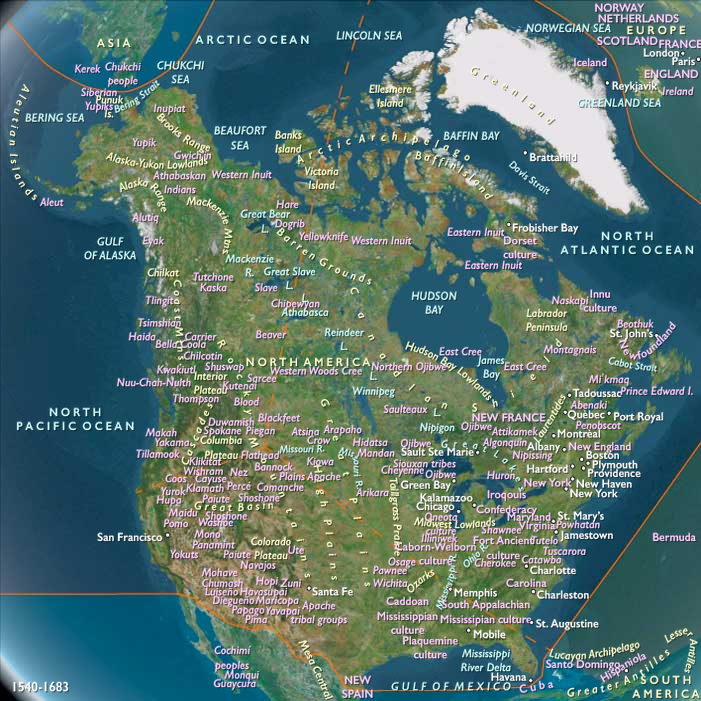
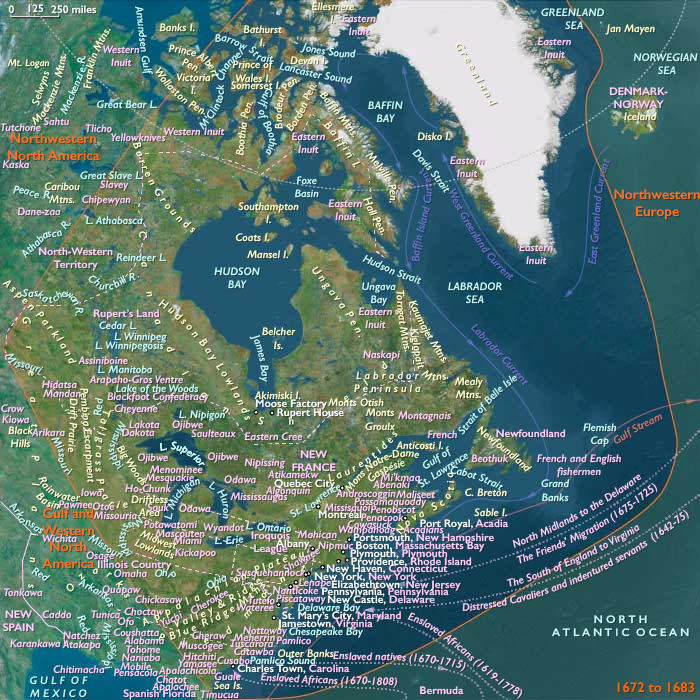
Between 1672 and 1683 CE, Northeastern North America witnessed a critical decade marked by sustained Haudenosaunee (Iroquois) dominance, significant French colonial exploration into the continental interior, and notable shifts in indigenous alliances and migrations. This period saw intensified European competition, expanding fur-trade networks, and continued indigenous adaptation and resistance amidst demographic and territorial pressures.
French Colonial Expansion and Exploration
Marquette and Jolliet’s Expedition (1673)
In 1673, French-Canadian explorer Louis Jolliet and Jesuit missionary Jacques Marquette undertook a landmark expedition down the Mississippi River, departing from Michilimackinac (the Straits of Mackinac). Traveling by canoe, they became among the first Europeans to document the geography, ecology, and diverse indigenous nations of the Mississippi basin. Their journey significantly enhanced France’s strategic knowledge, establishing claims to the region and foreshadowing future colonization and trade expansion.
La Salle’s Expansive Claims (1679–1682)
Between 1679 and 1682, the French explorer René-Robert Cavelier, Sieur de La Salle built upon Marquette and Jolliet’s earlier discoveries. Launching from the Great Lakes, he explored the Great Lakes region, Illinois Country, and descended the Mississippi to the Gulf of Mexico by 1682, formally claiming the vast watershed for France and naming it Louisiana, after Louis XIV. This dramatically increased French territorial ambitions and reshaped the strategic landscape in North America.
Haudenosaunee Dominance and Consolidation
Sustained Territorial Control
Throughout this era, the Haudenosaunee Confederacy—comprising the Mohawk, Oneida, Onondaga, Cayuga, and Seneca—continued to dominate vast territories stretching from New York to the Great Lakes, northward into Ontario, and southwest into the Ohio and Illinois Valleys. They consolidated control over strategic locations established in the previous decades, including the settlements Ganatsekwyagon (Rouge River) and Teiaiagon (Humber River) near present-day Toronto. These sites served as critical trade and diplomatic hubs, particularly along the strategic Toronto Carrying-Place Trail connecting Lakes Ontario and Huron.
Haudenosaunee Influence on Fur Trade
Haudenosaunee military and diplomatic prowess profoundly shaped the fur-trade landscape. By exerting pressure on neighboring indigenous groups and European colonists, they maintained dominant control over essential trade routes linking interior tribes to European markets, particularly through their crucial relationship with English traders in newly acquired New York (formerly New Netherland, seized by the English in 1664).
Indigenous Displacement, Migration, and Realignment
Shawnee Displacement and Migration
Following their displacement by Haudenosaunee forces around 1660, the Shawnee continued migrating westward and southward during this decade, settling in regions along the southern Appalachians, the Cumberland Plateau, and the lower Ohio and Mississippi Valleys. These movements fundamentally altered indigenous demographic and diplomatic dynamics throughout the central and southern interior.
Iroquoian-speaking Diaspora
Survivors of defeated Iroquoian-speaking nations, including the Huron (Wyandot), Neutral, and Erie, consolidated into new settlements around the western Great Lakes, often aligning with French trade and missionary networks. Their presence reshaped regional politics, economics, and cultural exchanges, laying foundations for later indigenous-French alliances.
Emergence of the Mississauga in Southern Ontario
By the late 1670s, the Algonquian-speaking Mississauga had begun expanding into territories previously dominated by the Haudenosaunee, including the areas around Toronto. This gradual westward movement set the stage for their eventual control of southern Ontario after the Haudenosaunee withdrawal in 1701, marking significant changes in the region’s indigenous dynamics.
European-Indigenous Relations and Conflicts
Growing French-Indigenous Alliances
French alliances strengthened significantly with Algonquian-speaking tribes such as the Ottawa, who by the late seventeenth century became the primary intermediaries in the western Great Lakes fur trade. This relationship secured French economic interests despite ongoing Haudenosaunee threats, stabilizing the French colonial economy and solidifying Ottawa influence.
English Colonial Expansion and Alliance Dynamics
English colonies in New England and New York expanded rapidly, intensifying indigenous territorial pressures. While remaining largely free from direct Haudenosaunee military threats due to their alliance through trade, the English increasingly came into conflict with other indigenous groups, laying the groundwork for major regional conflicts such as King Philip’s War (1675–1676).
King Philip’s War (1675–1676)
In 1675, a major conflict erupted in southern New England known as King Philip’s War. Waged primarily between English colonists and a coalition of indigenous nations led by Metacom (King Philip), a Wampanoag leader, this brutal war devastated the region, resulting in massive casualties on both sides, extensive destruction of indigenous settlements, and the weakening of indigenous power throughout southern New England.
Epidemic Disease and Indigenous Demographic Collapse
Persistent Disease Devastation
During this decade, smallpox, measles, influenza, and other diseases continued to devastate indigenous populations, exacerbating demographic decline and weakening indigenous political structures. Communities already destabilized by warfare became further vulnerable, accelerating European colonial expansion and exacerbating internal indigenous tensions.
Interior Indigenous Stability and Cultural Continuity
Cheyenne and Plains Indigenous Communities
The Cheyenne, occupying territories between the Mississippi River and Mille Lacs Lake (present-day Minnesota), maintained traditional subsistence patterns of bison hunting and wild rice gathering. They increasingly engaged in expanding regional trade networks, demonstrating resilience and strategic adaptation to changing circumstances.
Siouan-speaking Peoples: Territorial Stability and Westward Movements
The Dakota, Assiniboine, and Winnebago (Ho-Chunk) retained relative stability across the upper Midwest, isolated from major colonial encroachment yet strategically engaged in trade. Meanwhile, Siouan-speaking tribes such as the Osage, Omaha, Kansa, Iowa, and Quapaw continued their westward and southern migrations under growing pressures from Haudenosaunee expansion and colonial settlement.
Newfoundland’s Beothuk: Increasing Vulnerability
Intensifying English Encroachment
The indigenous Beothuk continued facing extreme pressure in Newfoundland due to expanding English settlements and resource competition. Increasing isolation and continued disease outbreaks significantly threatened their survival and cultural integrity during this period.
Indigenous Artistic and Cultural Resilience
Continuity of Traditions and Ceremonies
Despite widespread upheaval, indigenous communities maintained vibrant cultural practices, including ceremonial beadwork, pottery, ornate tobacco pipes, and shell gorgets. Ritual traditions—such as Haudenosaunee Longhouse ceremonies, Algonquin seasonal celebrations, and Plains tribal rituals—continued robustly, providing resilience and cultural continuity amidst turbulent changes.
Environmental Adaptations and Resource Management
Little Ice Age and Indigenous Adaptations
The continuing Little Ice Age required indigenous communities to adapt through diversified subsistence strategies, seasonal mobility, and expanded trade networks. These adaptations demonstrated remarkable ecological resilience, enabling communities to mitigate climatic challenges and resource uncertainties.
Legacy of the Era (1672–1683 CE)
The era 1672–1683 CE was pivotal in shaping Northeastern North America’s political, economic, and cultural landscape. French explorations by Marquette, Jolliet, and La Salle significantly expanded colonial claims and ambitions, transforming indigenous and European interactions. Haudenosaunee dominance persisted through strategic military and economic influence, notably in the fur trade, reshaping indigenous demographics through forced migrations of Shawnee, Wyandot, and other groups. The devastating King Philip’s War underscored growing indigenous-colonial tensions, accelerating indigenous territorial loss and reshaping power dynamics in southern New England. Despite profound pressures from epidemics, warfare, and displacement, indigenous resilience remained evident in cultural continuity, adaptive strategies, and strategic realignments, laying the foundations for enduring patterns of indigenous-colonial interactions and shaping future geopolitical developments across Northeastern North America.
People
- Jacques Marquette
- Louis Jolliet
- Louis XIV of France
- Metacomet (”King Philip”)
- René Robert Cavalier, Sieur de La Salle
Groups
- Iroquois (Haudenosaunee, also known as the League of Peace and Power, Five Nations, or Six Nations)
- Portuguese people
- Algonquin, or Algonkin, people (Amerind tribe)
- Basque people
- Abenaki people (Amerind tribe)
- Maliseet, or Wolastoqiyik, people (Amerind tribe)
- Mi'kmaq people (Amerind tribe)
- Ho-Chunk (Amerind tribe)
- Beothuk people
- Thule people
- Penobscot people (Amerind tribe)
- English people
- Mohawk people (Amerind tribe)
- Osage Nation (Amerind tribe)
- Wyandot, or Wendat, or Huron people (Amerind tribe)
- England, (Tudor) Kingdom of
- Yankton Sioux Tribe
- Crow people, aka Absaroka or Apsáalooke (Amerind tribe)
- Cheyenne people (Amerind tribe)
- Arapaho people (Amerind tribe)
- Gros Ventre or “Atsina” people (Amerind tribe)
- Assiniboine people (Amerind tribe)
- Cree (Amerind tribe)
- Tuscarora (Amerind tribe)
- Kickapoo people (Amerind tribe)
- Potawatomi (Amerind tribe)
- Menominee (Amerind tribe)
- Iowa (Amerind tribe)
- Ponca (Amerind tribe)
- Nanticoke people (Amerind tribe)
- Powhatan (Amerind tribe)
- Yuchi (Amerind tribe)
- Kiowa people (Amerind tribe)
- Tsuu T'ina; also Sarcee, Sarsi, Tsu T'ina, Tsuut'ina (Amerind tribe)
- Plains Apache, or Kiowa Apache; also Kiowa-Apache, Naʼisha, Naisha (Amerind tribe)
- Mohegan people (Amerind tribe)
- Massachusett people (Amerind tribe)
- Santee (Amerind tribe)
- Dakota, aka Santee Sioux (Amerind tribe)
- Cherokee, or Tsalagi (Amerind tribe)
- Sauk, or Sac, people (Amerind tribe)
- Meskwaki, or Fox tribe (Amerind tribe)
- Lenape or Lenni-Lenape (later named Delaware Indians by Europeans)
- Ojibwa, or Ojibwe, aka or Chippewa (Amerind tribe)
- Odawa, or Ottawa, people (Amerind tribe)
- Seneca (Amerind tribe)
- Cayuga people(Amerind tribe)
- Onondaga people (Amerind tribe)
- Oneida people (Amerind tribe)
- Erie; also Erielhonan, Eriez, Nation du Chat (Amerind tribe)
- Neutral Nation, or Attawandaron
- Lakota, aka Teton Sioux (Amerind tribe)
- Mahican (Amerind tribe)
- Innu (Montagnais, Naskapi) (Amerind tribe)
- Iroquoians, St. Lawrence
- Susquehannock (Amerind tribe)
- Narragansett people (Amerind tribe)
- Pequots (Amerind tribe)
- Petun (Amerind tribe)
- Wampanoag (Amerind tribe)
- Catawba people (Amerind tribe)
- Quapaw, or Arkansas (Amerind tribe)
- Omaha (Amerind tribe)
- Pawnee (Amerind tribe)
- Kaw, or Kanza, people (Amerind tribe)
- Caddo (Amerind tribe)
- Mandan (Amerind tribe)
- Hidatsa people (Amerind tribe)
- Shoshone, Shoshoni, or Snakes (Amerind tribe)
- Spain, Habsburg Kingdom of
- Spaniards (Latins)
- New France (French Colony)
- Jesuits, or Order of the Society of Jesus
- Spain, Habsburg Kingdom of
- Florida (Spanish Colony)
- Netherlands, United Provinces of the (Dutch Republic)
- France, (Bourbon) Kingdom of
- London Company, The (also called the Virginia Company of London)
- Plymouth Company, The (also called the Virginia Company of Plymouth)
- Virginia (English Colony)
- New Netherland (Dutch Colony)
- Plymouth Council for New England
- Dutch West India Company
- Massachusetts Bay Colony (sometimes called the Massachusetts Bay Company, for its founding institution)
- (Connecticut) River Colony (English)
- New England Confederation (United Colonies of New England)
- Rhode Island (English Colony)
- England, (Stewart, Restored) Kingdom of
- New York, Province of (English Colony)
- Illinois Country
- Louisiana (New France)
Topics
- Middle Subatlantic Period
- Little Ice Age (LIA)
- Colonization of the Americas, Spanish
- North American Fur Trade
- Colonization of Asia, Dutch
- Colonization of the Americas, English
- Beaver Wars, or French and Iroquois Wars
- King Philip's War
Commodoties
- Fish and game
- Weapons
- Hides and feathers
- Gem materials
- Domestic animals
- Grains and produce
- Textiles
- Ceramics
- Strategic metals
- Salt
- Fuels, lubricants and sealants
- Manufactured goods
- Tobacco
Subjects
- Commerce
- Public health
- Decorative arts
- Conflict
- Exploration
- Faith
- Government
- Custom and Law
- Technology
- Catastrophe
- Human Migration
Regions
Subregions
Years: 1672 - 1683
People
- Jacques Marquette
- Louis Jolliet
- Louis XIV of France
- Metacomet (”King Philip”)
- René Robert Cavalier, Sieur de La Salle
Groups
- Iroquois (Haudenosaunee, also known as the League of Peace and Power, Five Nations, or Six Nations)
- Portuguese people
- Algonquin, or Algonkin, people (Amerind tribe)
- Basque people
- Abenaki people (Amerind tribe)
- Maliseet, or Wolastoqiyik, people (Amerind tribe)
- Mi'kmaq people (Amerind tribe)
- Ho-Chunk (Amerind tribe)
- Beothuk people
- Thule people
- Penobscot people (Amerind tribe)
- English people
- Mohawk people (Amerind tribe)
- Osage Nation (Amerind tribe)
- Wyandot, or Wendat, or Huron people (Amerind tribe)
- England, (Tudor) Kingdom of
- Yankton Sioux Tribe
- Crow people, aka Absaroka or Apsáalooke (Amerind tribe)
- Cheyenne people (Amerind tribe)
- Arapaho people (Amerind tribe)
- Gros Ventre or “Atsina” people (Amerind tribe)
- Assiniboine people (Amerind tribe)
- Cree (Amerind tribe)
- Tuscarora (Amerind tribe)
- Kickapoo people (Amerind tribe)
- Potawatomi (Amerind tribe)
- Menominee (Amerind tribe)
- Iowa (Amerind tribe)
- Ponca (Amerind tribe)
- Nanticoke people (Amerind tribe)
- Powhatan (Amerind tribe)
- Yuchi (Amerind tribe)
- Kiowa people (Amerind tribe)
- Tsuu T'ina; also Sarcee, Sarsi, Tsu T'ina, Tsuut'ina (Amerind tribe)
- Plains Apache, or Kiowa Apache; also Kiowa-Apache, Naʼisha, Naisha (Amerind tribe)
- Mohegan people (Amerind tribe)
- Massachusett people (Amerind tribe)
- Santee (Amerind tribe)
- Dakota, aka Santee Sioux (Amerind tribe)
- Cherokee, or Tsalagi (Amerind tribe)
- Sauk, or Sac, people (Amerind tribe)
- Meskwaki, or Fox tribe (Amerind tribe)
- Lenape or Lenni-Lenape (later named Delaware Indians by Europeans)
- Ojibwa, or Ojibwe, aka or Chippewa (Amerind tribe)
- Odawa, or Ottawa, people (Amerind tribe)
- Seneca (Amerind tribe)
- Cayuga people(Amerind tribe)
- Onondaga people (Amerind tribe)
- Oneida people (Amerind tribe)
- Erie; also Erielhonan, Eriez, Nation du Chat (Amerind tribe)
- Neutral Nation, or Attawandaron
- Lakota, aka Teton Sioux (Amerind tribe)
- Mahican (Amerind tribe)
- Innu (Montagnais, Naskapi) (Amerind tribe)
- Iroquoians, St. Lawrence
- Susquehannock (Amerind tribe)
- Narragansett people (Amerind tribe)
- Pequots (Amerind tribe)
- Petun (Amerind tribe)
- Wampanoag (Amerind tribe)
- Catawba people (Amerind tribe)
- Quapaw, or Arkansas (Amerind tribe)
- Omaha (Amerind tribe)
- Pawnee (Amerind tribe)
- Kaw, or Kanza, people (Amerind tribe)
- Caddo (Amerind tribe)
- Mandan (Amerind tribe)
- Hidatsa people (Amerind tribe)
- Shoshone, Shoshoni, or Snakes (Amerind tribe)
- Spain, Habsburg Kingdom of
- Spaniards (Latins)
- New France (French Colony)
- Jesuits, or Order of the Society of Jesus
- Spain, Habsburg Kingdom of
- Florida (Spanish Colony)
- Netherlands, United Provinces of the (Dutch Republic)
- France, (Bourbon) Kingdom of
- London Company, The (also called the Virginia Company of London)
- Plymouth Company, The (also called the Virginia Company of Plymouth)
- Virginia (English Colony)
- New Netherland (Dutch Colony)
- Plymouth Council for New England
- Dutch West India Company
- Massachusetts Bay Colony (sometimes called the Massachusetts Bay Company, for its founding institution)
- (Connecticut) River Colony (English)
- New England Confederation (United Colonies of New England)
- Rhode Island (English Colony)
- England, (Stewart, Restored) Kingdom of
- New York, Province of (English Colony)
- Illinois Country
- Louisiana (New France)
Topics
- Middle Subatlantic Period
- Little Ice Age (LIA)
- Colonization of the Americas, Spanish
- North American Fur Trade
- Colonization of Asia, Dutch
- Colonization of the Americas, English
- Beaver Wars, or French and Iroquois Wars
- King Philip's War
Commodoties
- Fish and game
- Weapons
- Hides and feathers
- Gem materials
- Domestic animals
- Grains and produce
- Textiles
- Ceramics
- Strategic metals
- Salt
- Fuels, lubricants and sealants
- Manufactured goods
- Tobacco
Subjects
- Commerce
- Public health
- Decorative arts
- Conflict
- Exploration
- Faith
- Government
- Custom and Law
- Technology
- Catastrophe
- Human Migration
Regions
Subregions