
Northeastern North America (1624 to 1635 …
Years: 1624 - 1635
Northeastern North America
(1624 to 1635 CE): Consolidation of Colonization, Epidemics, and Intensifying Rivalries
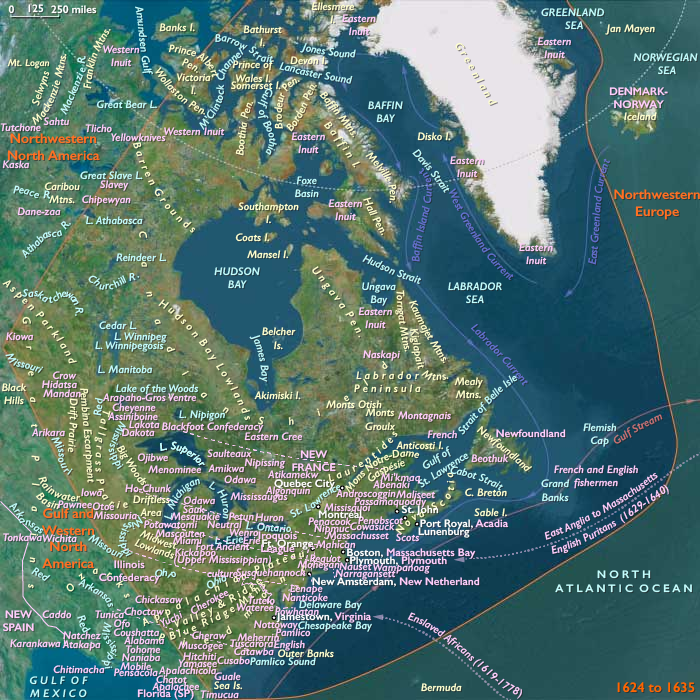
Between 1624 and 1635 CE, Northeastern North America experienced increased European settlement and consolidation, extensive epidemics devastating indigenous populations, strategic indigenous realignments, and escalating colonial rivalries. The period witnessed significant expansions in English and Dutch colonization, notably in Plymouth, Massachusetts Bay, and New Netherland. Indigenous communities faced demographic catastrophe from diseases such as smallpox, reshaping regional power dynamics and altering patterns of settlement and alliance.
Expansion and Consolidation of European Colonies
French Expansion in New France
French colonization intensified under the leadership of Samuel de Champlain, who strengthened alliances with the Huron (Wendat), Montagnais, and Algonquin peoples around Quebec City. These diplomatic ties further solidified French dominance in the lucrative fur trade networks of the St. Lawrence region.
English Settlements in New England
The English colonies, particularly the Plymouth Colony (1620) and the Massachusetts Bay Colony (1630), expanded significantly, increasing pressures on local indigenous communities. Myles Standish, a military leader who arrived on the Mayflower in 1620, became a central figure in Plymouth. A red-haired veteran soldier, Standish quickly learned local indigenous languages, led military expeditions against hostile tribes, and helped maintain security for the fledgling colony.
While Longfellow’s poem The Courtship of Miles Standish romantically depicted him asking John Alden to propose marriage on his behalf to Priscilla Mullins, historical evidence does not support this story.
Dutch Colonization and the Patroon System in New Netherland
The Dutch West India Company, established by the States-General in 1620, dramatically expanded its colonization activities in the 1630s. Seeking to attract investment and settlers, the Company introduced the Charter of Freedoms and Exemptions (1630) to encourage agricultural colonization of New Netherland.
Under this charter, any investor who established a colony of at least fifty adult settlers within four years would become a patroon, receiving extensive privileges, including the authority to govern locally, administer justice, control fishing and hunting rights, and establish towns and magistrates. Each patroonship could extend 16 miles along one side of a navigable river or 8 miles on both sides. Patroons were obligated to legally purchase land from indigenous groups rather than taking it by force.
Though fur trading remained a Company monopoly, patroons could trade elsewhere from Newfoundland to Florida, provided traders first stopped at Manhattan to engage in potential trade there. Colonists under patroon contracts could not legally leave without the patroon’s consent. Additionally, the West India Company pledged to defend colonists and supply patroonships with enslaved Africans as labor.
Devastating Epidemics: Smallpox and Demographic Catastrophe
Smallpox Epidemic of 1630
While Europeans brought smallpox to North America early in colonization, by 1630 it became a widespread and catastrophic epidemic among indigenous peoples. European settlers—mostly immune due to prolonged exposure in Europe—carried smallpox unknowingly. Twenty passengers on the Mayflower, including their physician, Dr. Samuel Fuller, had been infected, demonstrating the disease’s transatlantic journey.
In 1630, New England colonists witnessed the horrific toll taken on indigenous communities. A colonist described the scale of devastation vividly, noting indigenous populations "fell down so generally of this disease as they were in the end not able to help one another, nor to make a fire, nor to fetch a little water to drink, nor any to bury the dead."
Epidemic as Religious Justification
Some Puritans interpreted the smallpox epidemic as divine intervention favoring their settlement. Increase Mather, a future clergyman and president of Harvard College, would later state that the epidemic was God’s resolution to indigenous-Puritan land disputes. This view profoundly shaped Puritan justifications for further land appropriation.
Continuing Effects of the 1616–1619 Epidemic
Earlier demographic disasters—such as the 1616–1619 epidemic, likely leptospirosis—continued to reverberate, leaving large coastal areas depopulated and open to rapid European colonization, notably enabling the quick settlement of Massachusetts Bay.
Indigenous Alliances and Territorial Rivalries
Haudenosaunee Confederacy: Increased Assertiveness
The powerful Haudenosaunee Confederacy (Five Nations) intensified raids against French-allied tribes—especially the Huron and Algonquin—seeking dominance over regional fur trade networks. Persistent warfare deepened longstanding animosity between the Confederacy, French colonists, and their indigenous allies.
French-Allied Indigenous Confederacies
The Huron, Algonquin, and Montagnais intensified defensive alliances with the French against Haudenosaunee aggression. Access to French firearms and trade goods significantly increased their military and economic capabilities, intensifying regional conflict dynamics.
Interior Indigenous Communities: Adaptation and Stability
Great Lakes Algonquian Stability
The Potawatomi, Ojibway, Cree, Cheyenne, and Arapaho maintained traditional subsistence economies, cautiously engaging with emerging trade opportunities. The Kickapoo Menominee, Sauk, and Fox tribes increasingly positioned themselves as strategic trade partners in regional European-indigenous networks.
Miami and Illinois Strategic Positioning
The Miami and Illinois consolidated agriculturally productive settlements along Ohio Valley waterways, anticipating greater involvement in European fur trade networks and regional alliances.
Siouan-speaking Peoples: Stability and Migration
Eastern Siouan Stability
The Dakota, Assiniboine, and Winnebago (Ho-Chunk) continued stable settlements in Wisconsin and Upper Michigan, insulated from significant direct European pressures. Eastern Siouan groups (Omaha, Iowa, Kansa, Osage, Quapaw) gradually moved westward under growing pressure from European settlements and eastern indigenous competition.
Mandan, Hidatsa, and Crow Consolidation
Further west, the Mandan and Hidatsa expanded prosperous agricultural settlements along the Missouri River, becoming influential trade intermediaries between Plains tribes and eastern groups. The Crow, migrating westward, displaced the Shoshone and consolidated alliances with the Kiowa and Kiowa Apache.
Plains Indigenous Communities: Territorial and Cultural Stability
Pawnee Continuity
The Pawnee remained in stable villages along central Plains river valleys, preserving their political and ceremonial cohesion amidst regional upheavals.
Gros Ventre and Tsuu T’ina Isolation
Northern Plains communities, notably the Gros Ventre around Lake Manitoba and the Tsuu T’ina (Sarcee) in northern Saskatchewan, maintained traditional hunting lifestyles, protected by geographic isolation from severe European disruption.
Newfoundland’s Beothuk: Increasing Pressures
Intensified Vulnerability
Newfoundland’s Beothuk faced severe pressures from expanded English coastal settlements at St. John's and neighboring areas. Increasing territorial encroachment, resource competition, and disease risks endangered their long-term survival.
Indigenous Artistic and Cultural Resilience
Continued Vibrancy of Cultural Practices
Indigenous artistic traditions—including ceremonial pottery, intricate beadwork, shell gorgets, and tobacco pipes—persisted robustly, reinforcing cultural identity amid ongoing disruptions.
Strength in Ritual Continuity
Haudenosaunee Longhouse rituals, Mi’kmaq seasonal celebrations, and Pawnee religious practices provided strong cultural continuity, maintaining social cohesion during times of rapid geopolitical and demographic change.
Environmental Context and Adaptations
Little Ice Age Challenges
Persistent climatic variability associated with the Little Ice Age challenged indigenous subsistence strategies. Communities effectively adapted through diversified agriculture, seasonal mobility, and ecological knowledge.
Legacy of the Era (1624–1635 CE)
The period 1624–1635 CE saw intensified European colonization, the introduction of Dutch patroonships, severe demographic crises due to smallpox and earlier epidemics, and escalating indigenous-European and intertribal rivalries. Indigenous communities strategically navigated shifting geopolitical conditions, leveraging diplomacy, alliance-building, and cultural resilience. Epidemic devastation dramatically reshaped regional demographics, facilitating rapid European expansion and laying critical foundations for subsequent indigenous-colonial interactions in Northeastern North America.
People
Groups
- Iroquois (Haudenosaunee, also known as the League of Peace and Power, Five Nations, or Six Nations)
- Portuguese people
- Algonquin, or Algonkin, people (Amerind tribe)
- Basque people
- Abenaki people (Amerind tribe)
- Maliseet, or Wolastoqiyik, people (Amerind tribe)
- Mi'kmaq people (Amerind tribe)
- Ho-Chunk (Amerind tribe)
- Beothuk people
- Thule people
- Penobscot people (Amerind tribe)
- English people
- Mohawk people (Amerind tribe)
- Osage Nation (Amerind tribe)
- Wyandot, or Wendat, or Huron people (Amerind tribe)
- England, (Tudor) Kingdom of
- Yankton Sioux Tribe
- Tuscarora (Amerind tribe)
- Kickapoo people (Amerind tribe)
- Potawatomi (Amerind tribe)
- Menominee (Amerind tribe)
- Iowa (Amerind tribe)
- Ponca (Amerind tribe)
- Nanticoke people (Amerind tribe)
- Powhatan (Amerind tribe)
- Yuchi (Amerind tribe)
- Kiowa people (Amerind tribe)
- Tsuu T'ina; also Sarcee, Sarsi, Tsu T'ina, Tsuut'ina (Amerind tribe)
- Plains Apache, or Kiowa Apache; also Kiowa-Apache, Naʼisha, Naisha (Amerind tribe)
- Mohegan people (Amerind tribe)
- Massachusett people (Amerind tribe)
- Dakota, aka Santee Sioux (Amerind tribe)
- Cherokee, or Tsalagi (Amerind tribe)
- Sauk, or Sac, people (Amerind tribe)
- Meskwaki, or Fox tribe (Amerind tribe)
- Lenape or Lenni-Lenape (later named Delaware Indians by Europeans)
- Ojibwa, or Ojibwe, aka or Chippewa (Amerind tribe)
- Seneca (Amerind tribe)
- Cayuga people(Amerind tribe)
- Onondaga people (Amerind tribe)
- Oneida people (Amerind tribe)
- Lakota, aka Teton Sioux (Amerind tribe)
- Mahican (Amerind tribe)
- Innu (Montagnais, Naskapi) (Amerind tribe)
- Iroquoians, St. Lawrence
- Susquehannock (Amerind tribe)
- Narragansett people (Amerind tribe)
- Pequots (Amerind tribe)
- Wampanoag (Amerind tribe)
- Catawba people (Amerind tribe)
- Quapaw, or Arkansas (Amerind tribe)
- Omaha (Amerind tribe)
- Pawnee (Amerind tribe)
- Kaw, or Kanza, people (Amerind tribe)
- Caddo (Amerind tribe)
- Mandan (Amerind tribe)
- Hidatsa people (Amerind tribe)
- Shoshone, Shoshoni, or Snakes (Amerind tribe)
- Crow people, aka Absaroka or Apsáalooke (Amerind tribe)
- Cheyenne people (Amerind tribe)
- Arapaho people (Amerind tribe)
- Gros Ventre or “Atsina” people (Amerind tribe)
- Assiniboine people (Amerind tribe)
- Cree (Amerind tribe)
- Spain, Habsburg Kingdom of
- Spaniards (Latins)
- New France (French Colony)
- Spain, Habsburg Kingdom of
- Florida (Spanish Colony)
- Netherlands, United Provinces of the (Dutch Republic)
- France, (Bourbon) Kingdom of
- England, (Stuart) Kingdom of
- Plymouth Company, The (also called the Virginia Company of Plymouth)
- London Company, The (also called the Virginia Company of London)
- Virginia (English Colony)
- New Netherland (Dutch Colony)
- Plymouth Council for New England
- Dutch West India Company
- Massachusetts Bay Colony (sometimes called the Massachusetts Bay Company, for its founding institution)
Topics
- Little Ice Age (LIA)
- Colonization of the Americas, Spanish
- Colonization of Asia, Dutch
- North American Fur Trade
- Little Ice Age, Warm Phase II
- Colonization of the Americas, English
- Beaver Wars, or French and Iroquois Wars
Commodoties
- Fish and game
- Weapons
- Hides and feathers
- Gem materials
- Domestic animals
- Grains and produce
- Textiles
- Ceramics
- Strategic metals
- Salt
- Fuels, lubricants and sealants
- Manufactured goods
- Tobacco
Subjects
- Commerce
- Public health
- Decorative arts
- Conflict
- Exploration
- Faith
- Government
- Custom and Law
- Technology
- Catastrophe
- Human Migration
Regions
Subregions
Years: 1624 - 1635
People
Groups
- Iroquois (Haudenosaunee, also known as the League of Peace and Power, Five Nations, or Six Nations)
- Portuguese people
- Algonquin, or Algonkin, people (Amerind tribe)
- Basque people
- Abenaki people (Amerind tribe)
- Maliseet, or Wolastoqiyik, people (Amerind tribe)
- Mi'kmaq people (Amerind tribe)
- Ho-Chunk (Amerind tribe)
- Beothuk people
- Thule people
- Penobscot people (Amerind tribe)
- English people
- Mohawk people (Amerind tribe)
- Osage Nation (Amerind tribe)
- Wyandot, or Wendat, or Huron people (Amerind tribe)
- England, (Tudor) Kingdom of
- Yankton Sioux Tribe
- Tuscarora (Amerind tribe)
- Kickapoo people (Amerind tribe)
- Potawatomi (Amerind tribe)
- Menominee (Amerind tribe)
- Iowa (Amerind tribe)
- Ponca (Amerind tribe)
- Nanticoke people (Amerind tribe)
- Powhatan (Amerind tribe)
- Yuchi (Amerind tribe)
- Kiowa people (Amerind tribe)
- Tsuu T'ina; also Sarcee, Sarsi, Tsu T'ina, Tsuut'ina (Amerind tribe)
- Plains Apache, or Kiowa Apache; also Kiowa-Apache, Naʼisha, Naisha (Amerind tribe)
- Mohegan people (Amerind tribe)
- Massachusett people (Amerind tribe)
- Dakota, aka Santee Sioux (Amerind tribe)
- Cherokee, or Tsalagi (Amerind tribe)
- Sauk, or Sac, people (Amerind tribe)
- Meskwaki, or Fox tribe (Amerind tribe)
- Lenape or Lenni-Lenape (later named Delaware Indians by Europeans)
- Ojibwa, or Ojibwe, aka or Chippewa (Amerind tribe)
- Seneca (Amerind tribe)
- Cayuga people(Amerind tribe)
- Onondaga people (Amerind tribe)
- Oneida people (Amerind tribe)
- Lakota, aka Teton Sioux (Amerind tribe)
- Mahican (Amerind tribe)
- Innu (Montagnais, Naskapi) (Amerind tribe)
- Iroquoians, St. Lawrence
- Susquehannock (Amerind tribe)
- Narragansett people (Amerind tribe)
- Pequots (Amerind tribe)
- Wampanoag (Amerind tribe)
- Catawba people (Amerind tribe)
- Quapaw, or Arkansas (Amerind tribe)
- Omaha (Amerind tribe)
- Pawnee (Amerind tribe)
- Kaw, or Kanza, people (Amerind tribe)
- Caddo (Amerind tribe)
- Mandan (Amerind tribe)
- Hidatsa people (Amerind tribe)
- Shoshone, Shoshoni, or Snakes (Amerind tribe)
- Crow people, aka Absaroka or Apsáalooke (Amerind tribe)
- Cheyenne people (Amerind tribe)
- Arapaho people (Amerind tribe)
- Gros Ventre or “Atsina” people (Amerind tribe)
- Assiniboine people (Amerind tribe)
- Cree (Amerind tribe)
- Spain, Habsburg Kingdom of
- Spaniards (Latins)
- New France (French Colony)
- Spain, Habsburg Kingdom of
- Florida (Spanish Colony)
- Netherlands, United Provinces of the (Dutch Republic)
- France, (Bourbon) Kingdom of
- England, (Stuart) Kingdom of
- Plymouth Company, The (also called the Virginia Company of Plymouth)
- London Company, The (also called the Virginia Company of London)
- Virginia (English Colony)
- New Netherland (Dutch Colony)
- Plymouth Council for New England
- Dutch West India Company
- Massachusetts Bay Colony (sometimes called the Massachusetts Bay Company, for its founding institution)
Topics
- Little Ice Age (LIA)
- Colonization of the Americas, Spanish
- Colonization of Asia, Dutch
- North American Fur Trade
- Little Ice Age, Warm Phase II
- Colonization of the Americas, English
- Beaver Wars, or French and Iroquois Wars
Commodoties
- Fish and game
- Weapons
- Hides and feathers
- Gem materials
- Domestic animals
- Grains and produce
- Textiles
- Ceramics
- Strategic metals
- Salt
- Fuels, lubricants and sealants
- Manufactured goods
- Tobacco
Subjects
- Commerce
- Public health
- Decorative arts
- Conflict
- Exploration
- Faith
- Government
- Custom and Law
- Technology
- Catastrophe
- Human Migration
Regions
Subregions