
Northeastern North America (1552 to 1563 …
Years: 1552 - 1563
Northeastern North America
(1552 to 1563 CE): Intensifying European Fisheries, Early Fur Trade, and Indigenous Realignments
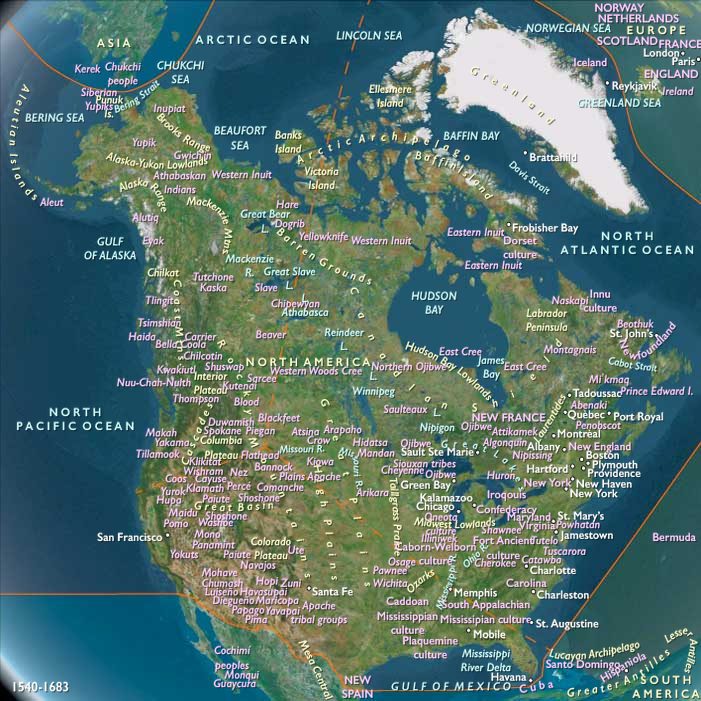
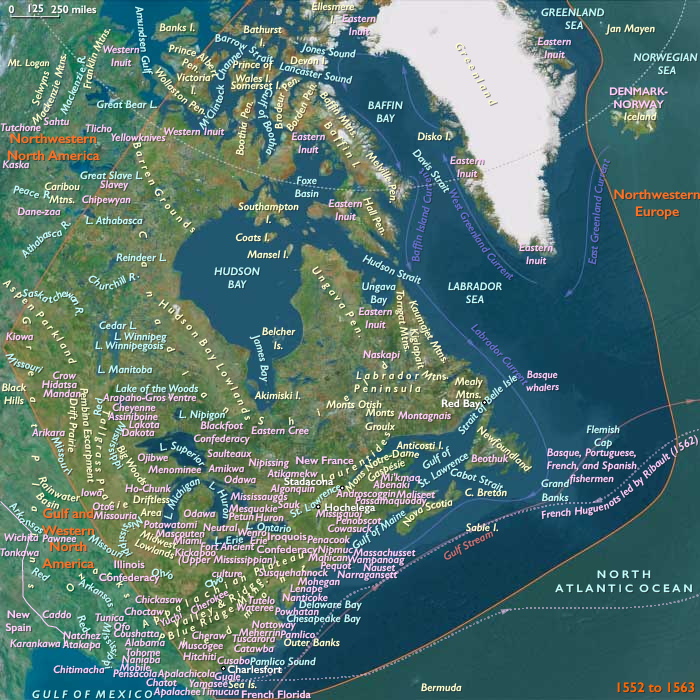
Between 1552 and 1563 CE, Northeastern North America experienced increasingly intensive European maritime activity, with extensive seasonal cod fisheries established by Iberian, French, and British fishermen along Newfoundland’s Grand Banks. Concurrently, early fur-trading relationships between French fishermen and coastal indigenous peoples emerged, while Basque whalers continued seasonal whaling in the Strait of Belle Isle. Indigenous groups—including the Mi'kmaq, Montagnais, St. Lawrence Iroquoians, and interior nations such as the Haudenosaunee Confederacy and Algonquian tribes—adjusted to the growing European presence, maintaining cultural resilience despite demographic pressures from European diseases.
European Maritime Presence: Cod Fisheries and Seasonal Settlements
Extensive Seasonal Fisheries on the Grand Banks
The rich cod fisheries of Newfoundland’s Grand Banks attracted large numbers of European fishermen from Iberia, France, and Britain, becoming a significant seasonal economic center. Despite this intense seasonal presence, no permanent European settlements yet existed north of Spanish forts at St. Augustine (Florida) and St. Elena (Parris Island, South Carolina).
Distinct Preservation Practices
European cod fishermen utilized differing fish preservation techniques. British fishermen, lacking abundant salt supplies, typically sun-dried their catch onshore, creating temporary seasonal encampments along the Maritime coastlands. Continental Europeans (primarily French, Iberian, and Basque fishermen), by contrast, preserved cod through salting, immediately transporting their salted catches directly back to Europe, reducing their shore presence.
Early French Fur Trade with Indigenous Groups
French cod fishermen operating in the Gulf of Saint Lawrence gradually expanded their commercial activities beyond fishing. They initiated an informal yet increasingly structured fur trade, exchanging European manufactured goods—metal items, textiles, beads—with local indigenous peoples, notably the Mi'kmaq and the Montagnais, laying early foundations for future permanent French trading networks.
Basque Whaling Activities: Seasonal Whaling Stations
Regular Right Whale Hunting
Basque whalers continued to pursue migrating right whales, regularly hunting in the strategic Strait of Belle Isle between Newfoundland and Labrador. Seasonal whaling stations at sites like Red Bay provided infrastructure for whale processing, primarily whale oil production, reinforcing Basque maritime dominance.
Limited Basque-Indigenous Interaction
Unlike French fishermen engaged in extensive trade with indigenous groups, Basque whalers maintained comparatively limited interaction with local native nations. Their interactions remained mostly transactional, emphasizing whaling over extensive trade relationships, though some commercial exchanges inevitably occurred.
Indigenous Coastal Societies: Mi'kmaq and Montagnais Adaptations
Mi'kmaq Economic Integration
The Mi'kmaq continued their seasonal subsistence strategies—hunting inland during winter, fishing along the coast in summer—while integrating European trade items into their economy. Their early exchanges with French fishermen in the St. Lawrence Gulf involved furs, food supplies, and local expertise, fostering stable and increasingly vital trade relationships.
Montagnais-French Relations
Similarly, the Montagnais of the Lower St. Lawrence region began actively trading furs with French fishermen. These exchanges enhanced their economic standing and set precedents for sustained future alliances with French colonists, particularly regarding the fur trade.
St. Lawrence Iroquoians: Stable Societies Amid Early Trade
Village Stability and Early Contact
St. Lawrence Iroquoian villages, initially encountered by Jacques Cartier earlier in the century at Stadacona and Hochelaga, maintained robust agricultural and social stability. Though trade with Basque whalers remained modest, their ongoing interactions with French cod fishermen offered a limited but steady integration of European trade goods, subtly influencing local economies.
Haudenosaunee Confederacy: Continued Regional Dominance
Territorial Management and Strategic Isolation
The Haudenosaunee Confederacy (Five Nations) continued its strategic reservation of the Central Appalachians and Upper Ohio Valley—including eastern Kentucky—as exclusive hunting territories. This policy, reinforced by demographic pressures from European-introduced diseases, effectively kept large areas sparsely inhabited, protecting Haudenosaunee territorial claims and maintaining their regional dominance.
Algonquian Nations of the Interior and Great Lakes
Persistent Societies and Cultural Stability
Algonquian-speaking interior tribes, including the Potawatomi in Michigan and the Ojibway, Cree, Cheyenne, and Arapaho north of Lake Superior, maintained stable agricultural and hunting economies. Further south, the Kickapoo, Menominee, Sauk, and Fox nations continued their established ways of life, largely isolated from significant European influences during this period.
Demographic Impacts of European Diseases
Ongoing Population Decline
European-introduced diseases—particularly smallpox, influenza, measles, and typhus—persisted, severely impacting indigenous populations. These epidemics continued reshaping demographics and settlement patterns throughout Eastern North America, causing significant migrations and territorial realignments as indigenous groups sought safer, less-affected areas.
Empty Lands and Haudenosaunee Control
Epidemic disease intensified the depopulation of the Central Appalachians and Upper Ohio Valley, supporting Haudenosaunee strategies of territorial reservation. The resulting isolation reinforced Haudenosaunee dominance and created enduring patterns of sparse indigenous occupation in regions such as eastern Kentucky.
Plains-Bound and Siouan-speaking Peoples: Westward Adjustments
Pawnee, Mandan, Hidatsa, and Crow-Hidatsa
Ancestors of the Pawnee, Mandan, and Hidatsa continued westward migrations onto the Plains, establishing semi-sedentary agricultural villages along the Missouri and Platte river valleys. The Crow, separated from their Hidatsa kin, moved further west, actively displacing the Shoshone and securing new territories through alliances with the Kiowa and Kiowa Apache.
Eastern Siouan Nations
Eastern Siouan-speaking peoples (Dakota, Assiniboine, Winnebago) remained in Wisconsin and Upper Michigan, still relatively unaffected by European activities. Further east, other Siouan groups—the future Omaha, Iowa, Kansa, Osage, and Quapaw—continued occupying the western Appalachian fringes, gradually preparing for future movements toward the Plains.
Gros Ventre and Tsuu T'ina: Northern Stability
Traditional Life and Limited European Interaction
The Gros Ventre around Lake Manitoba and the Tsuu T'ina (Sarcee) of northern Saskatchewan retained their traditional hunting economies. Their geographic distance and isolation from coastal activities limited European influence and delayed significant demographic impacts.
Indigenous Artistic and Cultural Resilience
Continued Craftsmanship and Ritual
Despite demographic pressures, indigenous communities maintained strong artistic traditions—elaborate beadwork, shell gorgets, ceremonial pottery, tobacco pipes—and vibrant ceremonial lives, including Haudenosaunee Longhouse ceremonies and seasonal Mi'kmaq celebrations, underscoring deep cultural resilience.
Environmental Context and Indigenous Adaptations
Little Ice Age Pressures
The ongoing environmental challenges associated with the Little Ice Age continued affecting indigenous agricultural productivity and resource availability. Indigenous groups successfully adapted through flexible subsistence strategies, diversified agricultural practices, and seasonal mobility, demonstrating significant resilience amid ecological and demographic stress.
Legacy of the Era (1552–1563 CE)
The era from 1552 to 1563 CE marked a critical transitional phase in Northeastern North America, characterized by increasingly structured European coastal fisheries, early indigenous-European trade networks, and ongoing demographic transformations due to disease. Indigenous communities maintained considerable cultural, economic, and territorial adaptability amid growing external pressures, laying a robust foundation for the more sustained and complex intercultural engagements that would shape subsequent decades.
Groups
- Mound Builders
- Caddoan Mississippian culture
- Mississippian culture
- Algonquin, or Algonkin, people (Amerind tribe)
- Iroquois (Haudenosaunee, also known as the League of Peace and Power, Five Nations, or Six Nations)
- Basque people
- Abenaki people (Amerind tribe)
- Maliseet, or Wolastoqiyik, people (Amerind tribe)
- Penobscot people (Amerind tribe)
- Thule people
- Mi'kmaq people (Amerind tribe)
- Ho-Chunk (Amerind tribe)
- Beothuk people
- Wyandot, or Wendat, or Huron people (Amerind tribe)
- Osage Nation (Amerind tribe)
- Mohawk people (Amerind tribe)
- Pequots (Amerind tribe)
- Wampanoag (Amerind tribe)
- Catawba people (Amerind tribe)
- Quapaw, or Arkansas (Amerind tribe)
- Omaha (Amerind tribe)
- Pawnee (Amerind tribe)
- Kaw, or Kanza, people (Amerind tribe)
- Caddo (Amerind tribe)
- Mandan (Amerind tribe)
- Hidatsa people (Amerind tribe)
- Shoshone, Shoshoni, or Snakes (Amerind tribe)
- Crow people, aka Absaroka or Apsáalooke (Amerind tribe)
- Cheyenne people (Amerind tribe)
- Arapaho people (Amerind tribe)
- Gros Ventre or “Atsina” people (Amerind tribe)
- Assiniboine people (Amerind tribe)
- Cree (Amerind tribe)
- Tuscarora (Amerind tribe)
- Kickapoo people (Amerind tribe)
- Potawatomi (Amerind tribe)
- Menominee (Amerind tribe)
- Iowa (Amerind tribe)
- Ponca (Amerind tribe)
- Nanticoke people (Amerind tribe)
- Powhatan (Amerind tribe)
- Yuchi (Amerind tribe)
- Tsuu T'ina; also Sarcee, Sarsi, Tsu T'ina, Tsuut'ina (Amerind tribe)
- Plains Apache, or Kiowa Apache; also Kiowa-Apache, Naʼisha, Naisha (Amerind tribe)
- Mohegan people (Amerind tribe)
- Massachusett people (Amerind tribe)
- Dakota, aka Santee Sioux (Amerind tribe)
- Yankton Sioux Tribe
- Kiowa people (Amerind tribe)
- Cherokee, or Tsalagi (Amerind tribe)
- Sauk, or Sac, people (Amerind tribe)
- Meskwaki, or Fox tribe (Amerind tribe)
- Lenape or Lenni-Lenape (later named Delaware Indians by Europeans)
- Ojibwa, or Ojibwe, aka or Chippewa (Amerind tribe)
- Seneca (Amerind tribe)
- Cayuga people(Amerind tribe)
- Onondaga people (Amerind tribe)
- Oneida people (Amerind tribe)
- Lakota, aka Teton Sioux (Amerind tribe)
- Mahican (Amerind tribe)
- Innu (Montagnais, Naskapi) (Amerind tribe)
- Iroquoians, St. Lawrence
- Susquehannock (Amerind tribe)
- Narragansett people (Amerind tribe)
Topics
- Little Ice Age (LIA)
- Colonization of the Americas, French
- Colonization of the Americas, English
- Beaver Wars, or French and Iroquois Wars
- Colonization of the Americas, Dutch
- Pequot War
- King Philip's War
Commodoties
- Fish and game
- Gem materials
- Colorants
- Domestic animals
- Grains and produce
- Ceramics
- Strategic metals
- Tobacco
Subjects
- Commerce
- Environment
- Decorative arts
- Conflict
- Exploration
- Faith
- Government
- Custom and Law
- Technology
- Human Migration
Regions
Subregions
Years: 1552 - 1563
Groups
- Mound Builders
- Caddoan Mississippian culture
- Mississippian culture
- Algonquin, or Algonkin, people (Amerind tribe)
- Iroquois (Haudenosaunee, also known as the League of Peace and Power, Five Nations, or Six Nations)
- Basque people
- Abenaki people (Amerind tribe)
- Maliseet, or Wolastoqiyik, people (Amerind tribe)
- Penobscot people (Amerind tribe)
- Thule people
- Mi'kmaq people (Amerind tribe)
- Ho-Chunk (Amerind tribe)
- Beothuk people
- Wyandot, or Wendat, or Huron people (Amerind tribe)
- Osage Nation (Amerind tribe)
- Mohawk people (Amerind tribe)
- Pequots (Amerind tribe)
- Wampanoag (Amerind tribe)
- Catawba people (Amerind tribe)
- Quapaw, or Arkansas (Amerind tribe)
- Omaha (Amerind tribe)
- Pawnee (Amerind tribe)
- Kaw, or Kanza, people (Amerind tribe)
- Caddo (Amerind tribe)
- Mandan (Amerind tribe)
- Hidatsa people (Amerind tribe)
- Shoshone, Shoshoni, or Snakes (Amerind tribe)
- Crow people, aka Absaroka or Apsáalooke (Amerind tribe)
- Cheyenne people (Amerind tribe)
- Arapaho people (Amerind tribe)
- Gros Ventre or “Atsina” people (Amerind tribe)
- Assiniboine people (Amerind tribe)
- Cree (Amerind tribe)
- Tuscarora (Amerind tribe)
- Kickapoo people (Amerind tribe)
- Potawatomi (Amerind tribe)
- Menominee (Amerind tribe)
- Iowa (Amerind tribe)
- Ponca (Amerind tribe)
- Nanticoke people (Amerind tribe)
- Powhatan (Amerind tribe)
- Yuchi (Amerind tribe)
- Tsuu T'ina; also Sarcee, Sarsi, Tsu T'ina, Tsuut'ina (Amerind tribe)
- Plains Apache, or Kiowa Apache; also Kiowa-Apache, Naʼisha, Naisha (Amerind tribe)
- Mohegan people (Amerind tribe)
- Massachusett people (Amerind tribe)
- Dakota, aka Santee Sioux (Amerind tribe)
- Yankton Sioux Tribe
- Kiowa people (Amerind tribe)
- Cherokee, or Tsalagi (Amerind tribe)
- Sauk, or Sac, people (Amerind tribe)
- Meskwaki, or Fox tribe (Amerind tribe)
- Lenape or Lenni-Lenape (later named Delaware Indians by Europeans)
- Ojibwa, or Ojibwe, aka or Chippewa (Amerind tribe)
- Seneca (Amerind tribe)
- Cayuga people(Amerind tribe)
- Onondaga people (Amerind tribe)
- Oneida people (Amerind tribe)
- Lakota, aka Teton Sioux (Amerind tribe)
- Mahican (Amerind tribe)
- Innu (Montagnais, Naskapi) (Amerind tribe)
- Iroquoians, St. Lawrence
- Susquehannock (Amerind tribe)
- Narragansett people (Amerind tribe)
Topics
- Little Ice Age (LIA)
- Colonization of the Americas, French
- Colonization of the Americas, English
- Beaver Wars, or French and Iroquois Wars
- Colonization of the Americas, Dutch
- Pequot War
- King Philip's War
Commodoties
- Fish and game
- Gem materials
- Colorants
- Domestic animals
- Grains and produce
- Ceramics
- Strategic metals
- Tobacco
Subjects
- Commerce
- Environment
- Decorative arts
- Conflict
- Exploration
- Faith
- Government
- Custom and Law
- Technology
- Human Migration
Regions
Subregions