
Northeast Europe (820 – 963 CE): Baltic …
Years: 820 - 963
Northeast Europe (820 – 963 CE): Baltic Fur Routes, Viking Kaupang, and Forest–Sea Frontiers
Geographic and Environmental Context
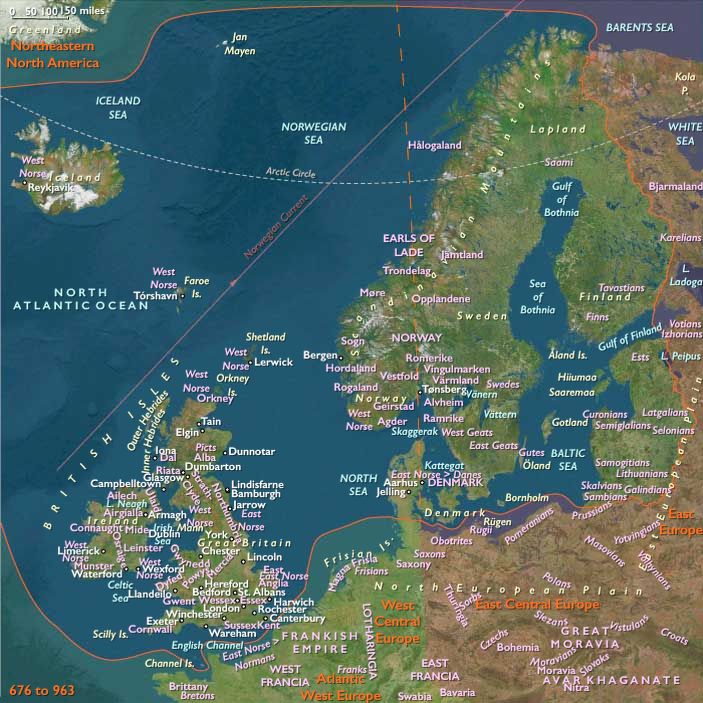
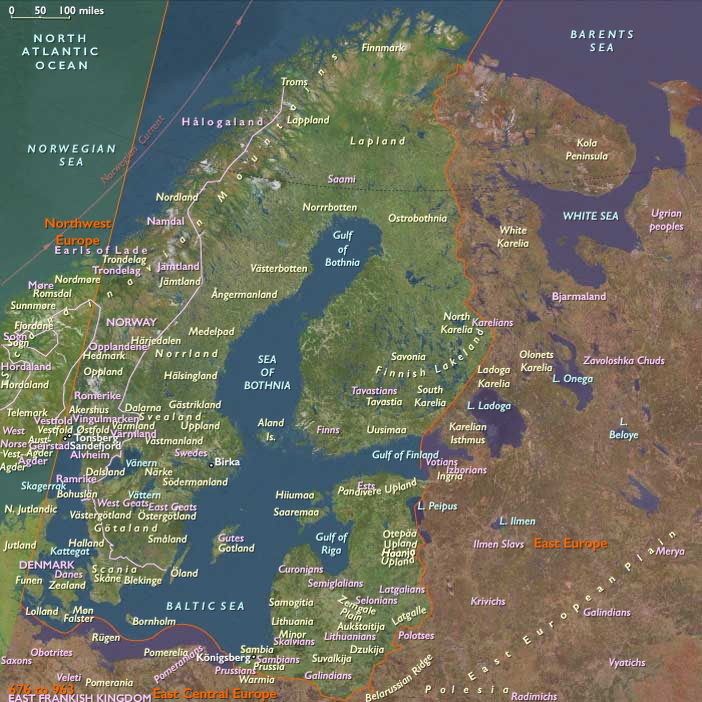
Northeast Europe includes Sweden, Finland, Lithuania, Latvia, Estonia, eastern Denmark, and eastern Norway(including Copenhagen and Oslo).
-
A cool, forested macro-region bounded by the Baltic Sea, Gulf of Finland, and Gulf of Bothnia, with archipelagos (Åland, Stockholm skerries, Estonian isles) providing natural stepping-stones.
-
Southern lowlands (Lithuania–Latvia) graded into mixed forest-steppe; northern Finland held taiga, lakes, and bogs; the Oslofjord–Viken and Zealand/Skåne littorals offered protected sailing corridors.
Climate and Environmental Shifts
-
Cool-temperate conditions prevailed; toward the mid-10th century the Medieval Warm Period began (c. 950), modestly lengthening growing seasons in the south and improving navigation windows on the Baltic.
-
Seasonal sea ice still formed in the Gulfs; storm frequency set sailing calendars and dictated winter over-ice travel and sled logistics.
Societies and Political Developments
-
Sweden & Gotland: Ranked chiefdoms centered on Mälaren sites such as Birka (c. 750–975), a premier Viking-Age kaupang (market town) linked to the Rus’ and the Islamic silver routes. Royal power among the Svear and Götar remained negotiated through assemblies (ting), cult centers (e.g., Uppsala), and maritime retinues.
-
Eastern Denmark (Zealand/Skåne): Danes controlled narrows between Baltic and Kattegat; rulers from Horik to Gorm the Old (d. 958) leveraged tolls, raids, and alliances. Proto-urban nodes (kaupangar) on Zealand balanced farming hinterlands with seaborne trade.
-
Eastern Norway (Viken/Oslofjord): Local chieftains in the Oslo region oriented to Baltic and North Sea routes; consolidation under Harald Fairhair (traditionally 9th c.) affected the west, but Viken retained strong cross-Baltic ties.
-
Finland & Åland: Finnic-speaking communities (Southwest Finland, Åland) practiced swidden agriculture and coastal fishing; warrior-trader elites connected to Swedish/Gotlandic networks and the Volga–Ladoga corridor.
-
Estonia, Latvia, Lithuania: Baltic and Finnic tribes—Estonians, Livonians, Curonians, Semigallians, Latgalians, Lithuanians—fortified hilltop settlements, fielded sea-raiding fleets (notably Curonians), and mediated river access into the east.
-
Christian missions: Ansgar’s embassies to Birka (829, 852) planted a tenuous Christian presence amid resilient Norse and Baltic paganisms.
Economy and Trade
-
Exports: furs (squirrel, sable, marten), wax, honey, iron (bog-iron bars), tar, amber, falcons, and slaves moved via Baltic routes to Byzantium and the Islamic world.
-
Imports: Samanid dirhams, glass beads, silks, and fine metalwork; dirham hoards on Gotland, in Uppland, Åland, Estonia, and Latvia attest to the Volga–Bulghar and Dnieper–Rus’ connections.
-
Market nodes: Birka, Kaupang-like sites on Zealand/Skåne, and coastal kaupangar in Estonia and Curonia concentrated exchange and craft production (beads, combs, rivets, ornaments).
-
Agrarian base: rye, barley, oats, flax, and livestock supported surplus production around lakes and river valleys; in Finland and the eastern Baltic, mixed farming interlaced with hunting, fishing, and trapping.
Subsistence and Technology
-
Mixed farming with plow teams in the south; swidden (slash-and-burn) in forest zones; extensive lake/river fisheries and seal hunting along Bothnian and Gulf coasts.
-
Ironworking from bog ore; smithies turned out axes, spearheads, knives, and rivets for boatbuilding.
-
Ship types: long, low-freeboard warships (langskip) and broader cargo knarr for bulk trade; clinker-built hulls, riveted planks, and wool sails underpinned Baltic mobility.
-
Fortifications: timber-earth ringforts and hillforts guarded inlets and river mouths; runestones and burial mounds marked elite landscapes.
Movement and Interaction Corridors
-
Baltic sea-roads: Gotlandic and Swedish fleets crossed to Estonia and Livonia, then upriver via Dvina, Neva, and Volkhov to Ladoga/Novgorod and the Rus’ routes.
-
Kattegat–Öresund: Danish toll points linked Baltic to the North Sea.
-
Gulfs of Finland & Bothnia: seasonal sailing stitched Finland to Uppland and Estonia; winter ice routes moved sledges and furs.
-
River portages: canoe and boat hauls bridged watersheds, enabling silver to flow back to Baltic markets.
Belief and Symbolism
-
Norse paganism (Odin, Thor, Freyr) structured sacrificial rites at groves and halls; Uppsala’s cult complex anchored Svear ideology.
-
Baltic paganisms honored deities such as Perkūnas (thunder) and sacred groves/stones; Finnic cosmologies revered Ukko (sky) and water/forest spirits.
-
Ansgar’s missions introduced Christian symbols to Birka, but conversions remained limited; amulets, Thor’s hammers, and mixed grave goods reflect religious pluralism.
Adaptation and Resilience
-
Dual economies—farm + fur + fisheries—buffered climate and market shocks.
-
Route redundancy: when Dnieper corridors were insecure, merchants shifted to the Volga–Bulghar–Caspian pathway; when Baltic storms closed sea-lanes, over-ice and river routes sustained movement.
-
Kinship and legal assemblies (ting) mediated feud and trade disputes, stabilizing exchange.
-
Maritime craft specialization (sailcloth, tar, hulls) and communal boat labor lowered transaction costs for long-distance trade.
Long-Term Significance
By 963 CE, Northeast Europe had matured into a fur-silver entrepôt of the medieval world:
-
Birka and Gotland sat at the hinge between Baltic markets and Rus’–Volga silver;
-
Zealand/Skåne and Viken polities controlled straits and fjords;
-
Finnic and Baltic hillfort societies balanced coastal raiding with river brokerage.
These institutions and sea-roads prepared the ground for late-10th/11th-century transformations—Harald Bluetooth’s royal consolidation in Denmark, Gorm’s legacy, Goryeo to the east shaping trade demand, and the continued integration of the Baltic into Eurasian monetary circuits—carried forward in the next age.

Northeast Europe (with civilization) ©2024-25 Electric Prism, Inc. All rights reserved.
People
Groups
- Prussians, Old, or Baltic (Western Balts)
- Finns
- Este culture
- Sami people
- Karelians
- Tavastians
- Semigallians (Eastern Balts)
- Latgalians (Eastern Balts)
- Selonians (Eastern Balts)
- Yotvingians, or Sudovians (Western Balts)
- Galindians, Western (Western Balts)
- Skalvians, or Scalovians (Western Balts)
- Sambians (Western Balts)
- Latvians, or Letts (Eastern Balts)
- Lithuanians (Eastern Balts)
- Aukstaitians, or Highland Lithuanians (Eastern Balts)
- Galindians, Eastern (Eastern Balts)
- Estonians
- Samogitians, or Lowland Lithuanians (Eastern Balts)
- Curonians (Western Balts)
- Estonia, independent
- Varangians
- Rus' Khaganate
- Danes (Scandinavians)
- Swedes (North Germanic tribe)
- Norse
- Götaland, (Scandinavian) Kingdom of
- Svealand, (Scandinavian) Kingdom of
- Goryeo
Topics
Commodoties
- Fish and game
- Weapons
- Hides and feathers
- Gem materials
- Domestic animals
- Oils, gums, resins, and waxes
- Grains and produce
- Ceramics
- Strategic metals
- Slaves
- Sweeteners
- Lumber
- Fuels, lubricants and sealants
- Money
- Naval stores
Subjects
- Commerce
- Language
- Watercraft
- Decorative arts
- Exploration
- Faith
- Government
- Custom and Law
- Technology
- Metallurgy
Regions
Subregions
Related Events
Showing 10 events out of 54673 total
Years: 820 - 963
Northeast Europe (with civilization) ©2024-25 Electric Prism, Inc. All rights reserved.
People
Groups
- Prussians, Old, or Baltic (Western Balts)
- Finns
- Este culture
- Sami people
- Karelians
- Tavastians
- Semigallians (Eastern Balts)
- Latgalians (Eastern Balts)
- Selonians (Eastern Balts)
- Yotvingians, or Sudovians (Western Balts)
- Galindians, Western (Western Balts)
- Skalvians, or Scalovians (Western Balts)
- Sambians (Western Balts)
- Latvians, or Letts (Eastern Balts)
- Lithuanians (Eastern Balts)
- Aukstaitians, or Highland Lithuanians (Eastern Balts)
- Galindians, Eastern (Eastern Balts)
- Estonians
- Samogitians, or Lowland Lithuanians (Eastern Balts)
- Curonians (Western Balts)
- Estonia, independent
- Varangians
- Rus' Khaganate
- Danes (Scandinavians)
- Swedes (North Germanic tribe)
- Norse
- Götaland, (Scandinavian) Kingdom of
- Svealand, (Scandinavian) Kingdom of
- Goryeo
Topics
Commodoties
- Fish and game
- Weapons
- Hides and feathers
- Gem materials
- Domestic animals
- Oils, gums, resins, and waxes
- Grains and produce
- Ceramics
- Strategic metals
- Slaves
- Sweeteners
- Lumber
- Fuels, lubricants and sealants
- Money
- Naval stores
Subjects
- Commerce
- Language
- Watercraft
- Decorative arts
- Exploration
- Faith
- Government
- Custom and Law
- Technology
- Metallurgy
Regions
Subregions