
Northeast Europe (7,821 – 6,094 BCE) …
Years: 7821BCE - 6094BCE
Northeast Europe (7,821 – 6,094 BCE) Early Holocene — Boreal Forest Foragers and Earliest Pottery
Geographic and Environmental Context
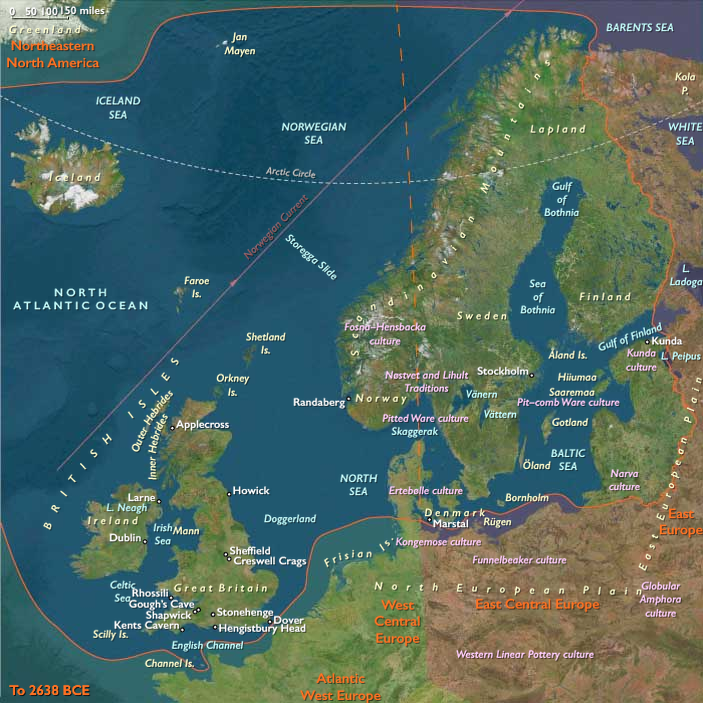
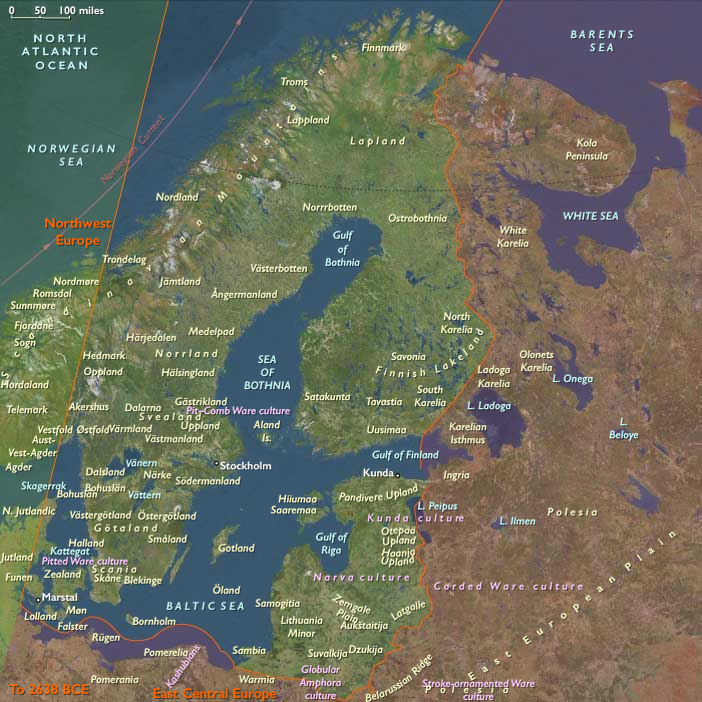
Northeast Europe includes Sweden, Finland, the Baltic States (Estonia, Latvia, Lithuania), eastern Denmark (including Copenhagen, Zealand, Bornholm), eastern Norway (including Oslo), and the Russian enclave of Kalingrad.
-
Anchors: Karelia–Lake Ladoga, Gulf of Finland–Estonia, Baltic forest lakes, Uppland–Lake Mälaren, Nemunas–Daugava corridors.
-
Forests of birch–pine expanded north; hazel spread in south.
Climate & Environmental Shifts
-
Holocene thermal optimum: warmer, wetter; lakes and rivers stabilized; sea level rise transformed Baltic into the Ancylus Lake.
Subsistence & Settlement
-
Semi-sedentary lake/river villages with pit-houses; broad-spectrum diets (elk, boar, seal, salmon, nuts).
-
Earliest pottery traditions: Narva–Kunda ware in Estonia–Latvia–Lithuania (fiber-tempered, simple decoration).
Technology & Material Culture
-
Ground-stone adzes; nets, weirs; dugout canoes.
-
Pottery for fish/meat boiling and storage.
Movement & Interaction Corridors
-
Lake–river canoe circuits: Ladoga–Volga headwaters; Nemunas–Daugava–Baltic coastlines.
-
Cross-Baltic crossings from Estonia to southern Finland appear.
Cultural & Symbolic Expressions
-
Rock art of elk, boats, fishing scenes (Karelia, Alta, Finland).
-
Cemeteries with ochre burials, antler tools, pottery.
Topics
Commodoties
Subjects
Regions
Subregions
Related Events
Showing 10 events out of 186 total
Years: 7821BCE - 6094BCE
Topics
Commodoties
Subjects
Regions
Subregions