
Northeast Europe (1792–1803 CE): Political Turmoil, Defensive …
Years: 1792 - 1803
Northeast Europe (1792–1803 CE): Political Turmoil, Defensive Realignments, and Socioeconomic Challenges
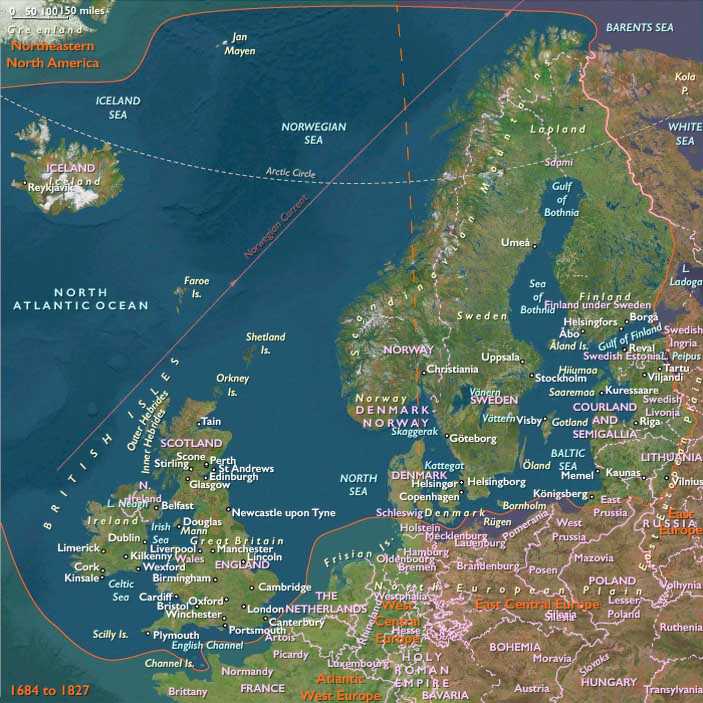
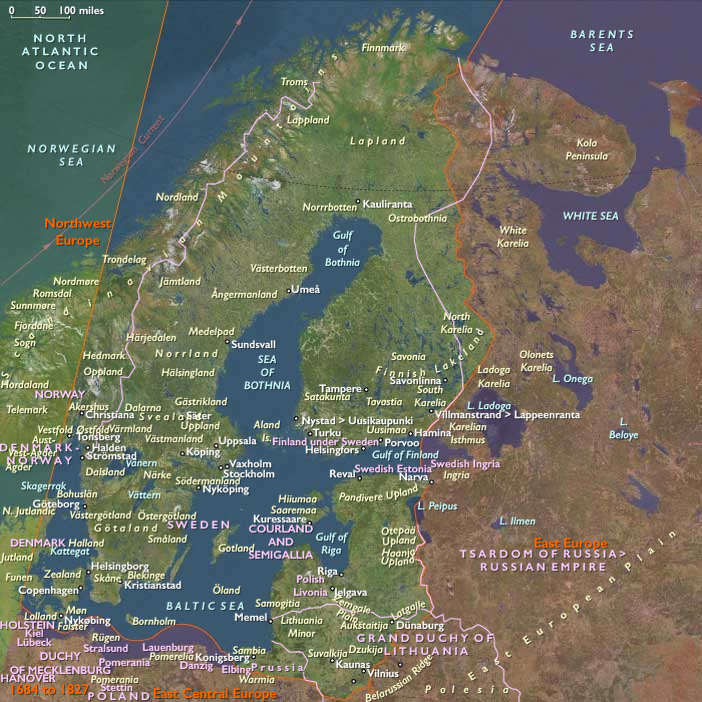
Between 1792 and 1803 CE, Northeast Europe faced significant political upheaval, shifting diplomatic alliances, and intensified socioeconomic pressures resulting from broader European instability caused by the French Revolutionary Wars. Sweden experienced internal turmoil following the assassination of King Gustav III, with Finland enduring particular economic strain under Sweden’s mercantilist policies. Denmark–Norway maintained careful neutrality amidst growing European conflict, while Prussia navigated internal reforms and diplomatic caution. The Baltic territories—Estonia, Latvia, and Lithuania—experienced cautious stability and incremental economic advancement, despite rising regional tensions.
Sweden: Assassination and Internal Instability
The assassination of King Gustav III in 1792 plunged Sweden into political uncertainty. His young successor, Gustav IV Adolf (r. 1792–1809), assumed full control in 1796, following a regency period marked by noble intrigue and governance inefficiencies. Internally, the Swedish nobility regained significant influence, reversing many earlier absolutist reforms, exacerbating governance challenges, and increasing social tensions.
Sweden’s frequent involvement in costly wars resulted in heavy taxation and governmental attempts to augment state revenues through strict economic controls, rooted in mercantilist policies. This economic strategy not only constrained Sweden’s domestic growth but had particularly severe implications for Finland, its eastern province.
Finnish Economic Exploitation and Social Strains under Swedish Rule
Finland, under Swedish governance, endured notable economic exploitation and socioeconomic stress during this period. Sweden’s mercantilist policies systematically directed Finnish economic output—particularly the profitable trade in naval stores such as timber, tar, pitch, and resin—primarily toward the benefit of Sweden itself. Consequently, Finland's economic development was severely hindered, perpetuating dependence and limiting the emergence of a robust indigenous middle class.
Finnish society remained predominantly agrarian, with the peasantry forming its backbone. However, peasants faced heavy taxation and compulsory labor obligations imposed by the Swedish state, despite the absence of formal serfdom. These burdens, coupled with warfare-induced economic hardships, intensified social pressures throughout rural Finland.
Moreover, Sweden’s military engagements facilitated significant land grants to Swedish aristocrats and military officers within Finland, further entrenching the dominance of the Swedish-speaking minority over Finnish political, economic, and social life. While provincial assemblies allowed Finnish peasants to retain a small measure of local political representation, real political and economic power remained concentrated among the Swedish-speaking nobility and elite.
Despite such socioeconomic challenges, agricultural productivity in Finland saw incremental improvement, notably due to the earlier introduction and expanded cultivation of potatoes from the 1730s onward, which provided a stable food supply and helped alleviate some of the hardships associated with warfare and economic exploitation. The agricultural frontier gradually extended northward, settling new stretches of inland wilderness.
Danish–Norwegian Neutrality and Economic Stability
Denmark–Norway, effectively governed since 1784 by Crown Prince Frederick (later Frederick VI) due to King Christian VII’s mental illness, steadfastly adhered to neutrality amidst Europe’s escalating conflicts. This neutrality significantly benefited maritime trade, particularly in Copenhagen, leading to sustained economic prosperity. Internal stability and economic resilience were reinforced by improved agricultural methods, infrastructure investments, and efficient governance, although Denmark–Norway faced growing pressures concerning maritime neutrality.
Prussian Diplomatic Caution and Internal Consolidation
Prussia, under Frederick William II (r. 1786–1797) and subsequently Frederick William III (r. 1797–1840), navigated cautiously, seeking diplomatic neutrality amid Europe’s Revolutionary conflicts. Internally, Prussia continued to prioritize administrative efficiency, economic consolidation, and military readiness, notably around strategically significant Königsberg (Kaliningrad). Prussia’s cautious diplomacy avoided immediate conflict, although external diplomatic pressures gradually intensified.
Stability and Incremental Development in the Baltic Territories
The Baltic territories—Estonia, Latvia, and Lithuania—experienced relative internal stability and modest economic growth, continuing under Baltic-German nobility governance. Major urban centers, especially Riga and Reval (Tallinn), maintained gradual economic development through sustained commerce and prudent administration, despite broader regional uncertainties.
Economic Prosperity and Urban Stability
Throughout Northeast Europe, major urban centers such as Stockholm, Copenhagen, Königsberg, Riga, and Reval sustained relative economic prosperity. Maritime commerce flourished under stable governance and effective merchant networks, enabling these cities to maintain economic resilience despite regional tensions and geopolitical uncertainty.
Cultural Continuity Amidst Political Instability
Despite political upheavals, cultural and intellectual institutions maintained continuity. Sweden’s established cultural institutions, notably the Swedish Academy, continued fostering scholarly and cultural activities. Danish–Norwegian institutions similarly thrived, particularly within Copenhagen’s academic circles. Prussia continued supporting educational and cultural advancement, contributing to sustained intellectual engagement and regional prestige.
Diplomatic Realignments and Pragmatic Neutrality
Diplomatic interactions remained cautiously pragmatic. Sweden’s diplomatic isolation deepened amid internal instability, costly warfare, and strained finances. Denmark–Norway preserved neutrality, though increasingly challenged by maritime disputes. Prussia’s careful neutrality and internal consolidation mitigated immediate conflicts but faced growing external pressures amid shifting European alliances.
Legacy of the Era
The era from 1792 to 1803 CE profoundly influenced Northeast Europe through intensified socioeconomic strains, particularly evident in Finland’s economic exploitation under Swedish mercantilist policies. While agricultural innovations alleviated some hardships, Finnish society faced ongoing burdens due to heavy taxation, compulsory labor, and persistent Swedish dominance. Denmark–Norway’s careful neutrality fostered economic resilience, whereas Prussia maintained cautious diplomatic strategies. Collectively, these developments significantly shaped the region’s geopolitical alignments, internal stability, and socioeconomic trajectories, laying critical groundwork for future historical transformations.
People
- Christian VII
- Frederick VI of Denmark and Norway
- Frederick William II of Prussia
- Frederick William III of Prussia
- Frederick the Great
- Gustav III of Sweden
- Gustav IV Adolf
Groups
- Polytheism (“paganism”)
- Latvians, or Letts (Eastern Balts)
- Lithuanians (Eastern Balts)
- Estonians
- Christians, Roman Catholic
- Finland under Swedish rule
- Crown of the Kingdom of Poland
- Lutheranism
- Sweden, (second) Kingdom of
- Denmark-Norway, Kingdom of
- Courland and Semigallia, Duchy of
- Polish-Lithuanian Commonwealth (Commonwealth of the Two Nations)
- Finland, (Swedish) Grand Duchy of
- Prussia, Kingdom of
- Pomerania, Swedish
- Russian Empire
- Estonia, Governorate of
- Baltic governorates
- Livonia, Governorate of
- Courland Governorate
- Vilna Governorate
Subjects
Regions
Subregions
Years: 1792 - 1803
People
- Christian VII
- Frederick VI of Denmark and Norway
- Frederick William II of Prussia
- Frederick William III of Prussia
- Frederick the Great
- Gustav III of Sweden
- Gustav IV Adolf
Groups
- Polytheism (“paganism”)
- Latvians, or Letts (Eastern Balts)
- Lithuanians (Eastern Balts)
- Estonians
- Christians, Roman Catholic
- Finland under Swedish rule
- Crown of the Kingdom of Poland
- Lutheranism
- Sweden, (second) Kingdom of
- Denmark-Norway, Kingdom of
- Courland and Semigallia, Duchy of
- Polish-Lithuanian Commonwealth (Commonwealth of the Two Nations)
- Finland, (Swedish) Grand Duchy of
- Prussia, Kingdom of
- Pomerania, Swedish
- Russian Empire
- Estonia, Governorate of
- Baltic governorates
- Livonia, Governorate of
- Courland Governorate
- Vilna Governorate
Subjects
Regions
Subregions