
Northeast Europe (1768–1779 CE): Political Realignment, Enlightened …
Years: 1768 - 1779
Northeast Europe (1768–1779 CE): Political Realignment, Enlightened Reform, and Economic Expansion
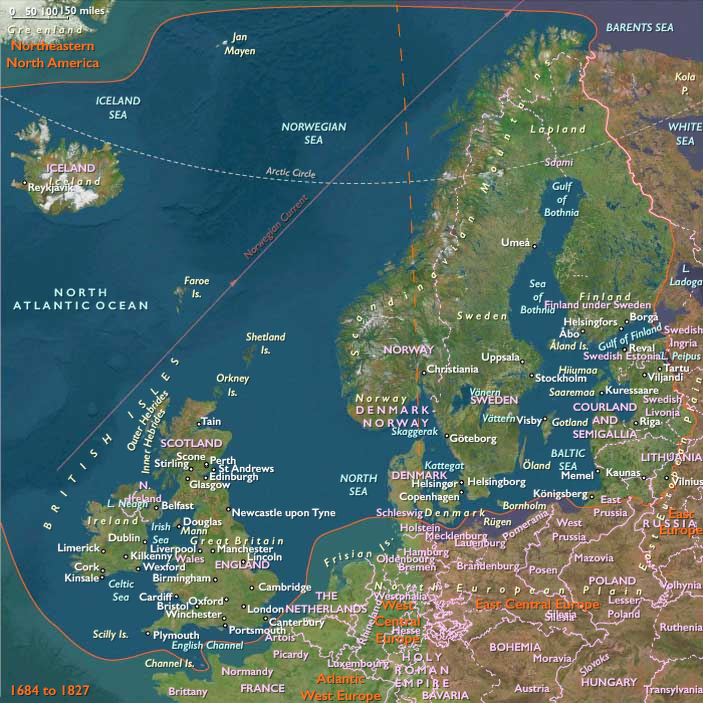
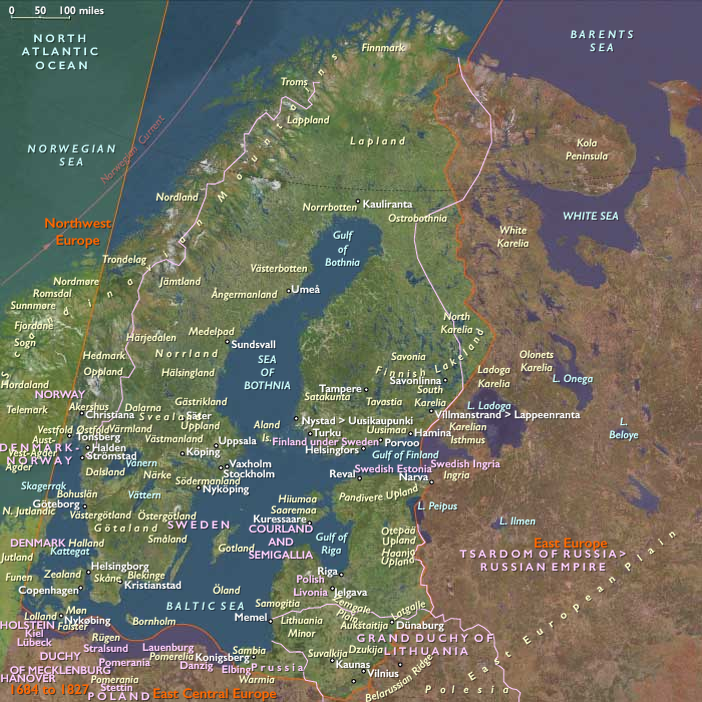
Between 1768 and 1779 CE, Northeast Europe entered a period marked by political realignments, substantial economic growth, internal administrative reforms, and sustained cultural flourishing influenced by Enlightenment ideals. During this era, Sweden transitioned from its parliamentary-based Age of Liberty toward renewed royal authority, Denmark–Norway implemented enlightened reforms under new leadership, Prussia solidified its strength under Frederick the Great, and the Baltic territories—including Estonia, Latvia, and Lithuania—experienced steady stabilization and growth.
Sweden: From Parliamentary Factionalism to Gustavian Absolutism
Sweden, concluding its parliamentary-led Age of Liberty, experienced significant internal political shifts during this period. The previously dominant Hat and Cap parties had increasingly shown limitations, both domestically and in foreign affairs. This political instability culminated in the royal coup of 1772, led by King Gustav III (r. 1771–1792), who decisively ended parliamentary dominance and restored royal authority through the promulgation of a new constitution known as the Instrument of Government (1772). Gustav’s absolutist reforms were influenced by Enlightenment ideals, promoting efficiency, economic reform, and cultural patronage, significantly reshaping Swedish political structures and revitalizing national unity.
Denmark–Norway: Enlightened Reforms under Johann Friedrich Struensee
Under the mentally unstable Christian VII (r. 1766–1808), Denmark–Norway underwent profound internal transformations. From 1770–1772, the German physician and minister Johann Friedrich Struensee effectively ruled as de facto regent. Struensee introduced sweeping reforms influenced by Enlightenment principles, including the abolition of censorship, rationalization of the government bureaucracy, judicial modernization, economic liberalization, and improved social welfare measures. Although his reforms proved controversial, and he was ultimately overthrown and executed in 1772, many of his initiatives had lasting impacts, contributing to greater administrative efficiency and socioeconomic modernization.
Prussian Consolidation and Enlightenment Governance
In Prussia, King Frederick II (Frederick the Great) (r. 1740–1786) continued enlightened administrative, economic, and military reforms, firmly establishing Prussia’s strength and stability. Frederick expanded economic and agricultural productivity, improved administrative efficiency, and reinforced military readiness. His enlightened reforms in areas such as education, justice, agriculture, and governance significantly strengthened the Prussian territories, including the strategically important exclave of Königsberg (Kaliningrad), thus reinforcing Prussia’s dominant regional position.
Economic Prosperity and Urban Development
Economic prosperity characterized the major urban centers of Northeast Europe, including Stockholm, Copenhagen, Königsberg, Riga, and Reval (Tallinn). Stable governance, improved infrastructure, and increased investment in maritime commerce facilitated robust growth. Merchant networks thrived, especially in Danish and Swedish Baltic trade, and urban economic integration with broader European markets intensified.
Finland: Internal Stability and Agricultural Productivity
Finland, still part of the Swedish kingdom, enjoyed sustained internal stability and continued improvements in agriculture and commerce. The application of scientific agriculture, drawing partly on earlier innovations such as those introduced by Eva Ekeblad, improved food security and economic well-being, despite lingering external geopolitical pressures.
Stability and Development in the Baltic Territories
The Baltic territories—Estonia, Latvia, and Lithuania—maintained internal stability and gradual economic expansion. Baltic-German nobility continued to dominate regional governance, ensuring continuity and stability. Urban centers, notably Riga and Reval, prospered through strengthened commerce, cultural patronage, and local educational advancements influenced by broader Enlightenment trends.
Cultural and Intellectual Advancements
Cultural and educational institutions across Northeast Europe thrived during this era. Sweden’s King Gustav III notably became a generous patron of the arts, founding institutions like the Royal Swedish Opera (Kungliga Operan) in 1773. Danish-Norwegian universities and academies continued to promote Enlightenment thought, while in Prussia, intellectual and educational reforms further enhanced academic prestige. Throughout the region, Enlightenment ideas significantly influenced social reforms, governance, education, and cultural life.
Diplomatic Stability and Pragmatic Realignments
Diplomatic relations across Northeast Europe during this period were characterized by cautious realignment and pragmatic neutrality. Sweden and Denmark–Norway, navigating their political transformations, maintained peaceful external policies, avoiding major military entanglements. Prussia continued its diplomatic prudence under Frederick II, avoiding destabilizing regional conflicts while consolidating its European diplomatic standing.
Legacy of the Era
The period from 1768 to 1779 CE proved transformative for Northeast Europe, witnessing substantial political realignments, enlightened governance, cultural patronage, and sustained economic expansion. Sweden’s shift toward Gustavian absolutism reshaped political dynamics, while Denmark–Norway’s brief yet impactful Struensee reforms modernized administrative structures. Prussia’s continued internal strengthening firmly positioned it as a resilient European power. Collectively, these developments significantly influenced the region’s socioeconomic trajectory, diplomatic relationships, and cultural evolution into subsequent historical periods.
People
- Christian VII
- Eva Ekeblad
- Frederick the Great
- Gustav III of Sweden
- Johann Friedrich Struensee
- Peter the Great
Groups
- Polytheism (“paganism”)
- Latvians, or Letts (Eastern Balts)
- Estonians
- Christians, Roman Catholic
- Finland under Swedish rule
- Crown of the Kingdom of Poland
- Lutheranism
- Sweden, (second) Kingdom of
- Denmark-Norway, Kingdom of
- Forest Finns
- Courland and Semigallia, Duchy of
- Polish-Lithuanian Commonwealth (Commonwealth of the Two Nations)
- Finland, (Swedish) Grand Duchy of
- Pomerania, Swedish
- Prussia, Kingdom of
- Livonia, Governorate of
- Estonia, Governorate of
- Russian Empire
- Baltic governorates
Topics
Subjects
Regions
Subregions
Years: 1768 - 1779
People
- Christian VII
- Eva Ekeblad
- Frederick the Great
- Gustav III of Sweden
- Johann Friedrich Struensee
- Peter the Great
Groups
- Polytheism (“paganism”)
- Latvians, or Letts (Eastern Balts)
- Estonians
- Christians, Roman Catholic
- Finland under Swedish rule
- Crown of the Kingdom of Poland
- Lutheranism
- Sweden, (second) Kingdom of
- Denmark-Norway, Kingdom of
- Forest Finns
- Courland and Semigallia, Duchy of
- Polish-Lithuanian Commonwealth (Commonwealth of the Two Nations)
- Finland, (Swedish) Grand Duchy of
- Pomerania, Swedish
- Prussia, Kingdom of
- Livonia, Governorate of
- Estonia, Governorate of
- Russian Empire
- Baltic governorates
Topics
Subjects
Regions
Subregions