
Northeast Europe (1612–1623 CE): Military Confrontations, Territorial …
Years: 1612 - 1623
Northeast Europe (1612–1623 CE): Military Confrontations, Territorial Realignments, and Cultural Flourishing
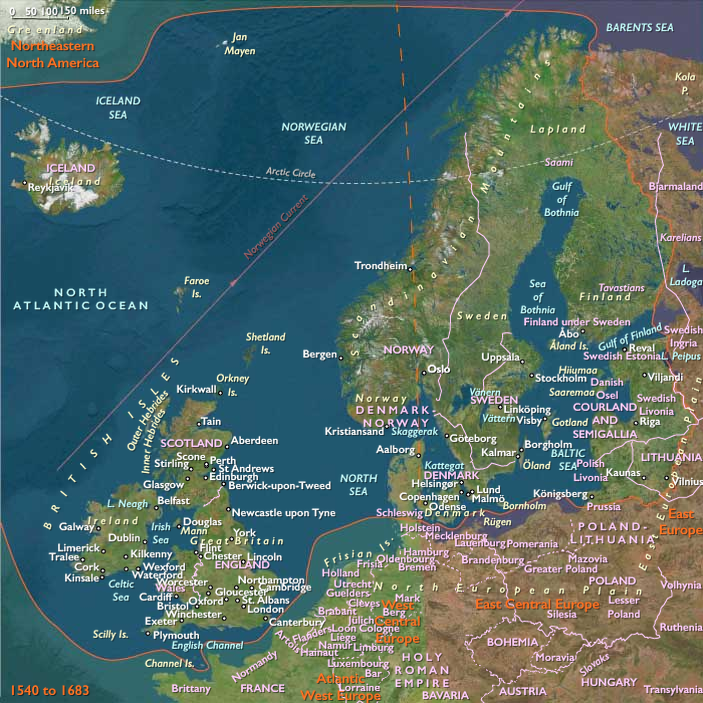
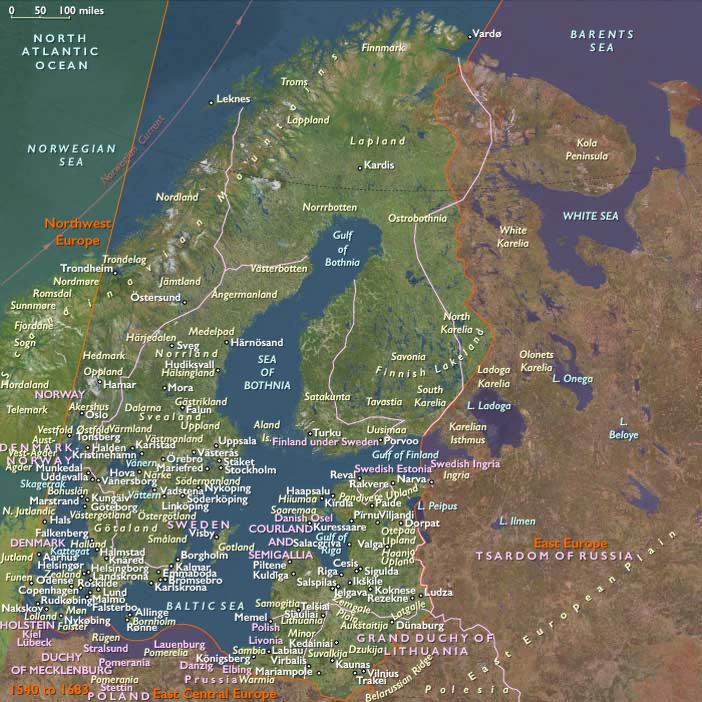
Between 1612 and 1623 CE, Northeast Europe experienced intensified military confrontations, strategic territorial realignments, and continued cultural and intellectual vibrancy. This period, marked by significant regional conflicts such as the Kalmar War, reshaped political boundaries and further defined the roles of major powers like Sweden, Denmark–Norway, Poland–Lithuania, and Muscovy.
The Kalmar War and Swedish-Danish Rivalry
The Kalmar War (1611–1613) between Sweden under King Gustavus Adolphus and Denmark–Norway under King Christian IV significantly heightened regional tensions. Though brief, the conflict centered on control of Baltic trade routes and territorial dominance. The resulting Treaty of Knäred (1613) forced Sweden into substantial monetary concessions, temporarily enhancing Danish–Norwegian influence but leaving underlying rivalries unresolved.
Swedish Reforms and Expansion under Gustavus Adolphus
Following the Kalmar War, King Gustavus Adolphus (r. 1611–1632) undertook major military and administrative reforms, significantly strengthening Sweden’s capabilities. He modernized the army, enhanced central governance, and promoted aggressive territorial expansion in Livonia and Ingria, fortifying strategic cities like Reval (Tallinn) and Narva. These reforms laid foundations for Sweden’s rise as a major European power.
Polish–Lithuanian Commonwealth’s Continued Influence
Under King Sigismund III Vasa, the Polish–Lithuanian Commonwealth solidified its administrative presence in Livonia and maintained diplomatic influence throughout the region. Persistent tensions with Sweden, particularly regarding Sigismund’s claims to the Swedish throne, sustained political rivalries, influencing diplomatic negotiations and military strategies.
Muscovy’s Stabilization and Reforms
Muscovy, emerging from the tumultuous "Time of Troubles" with the establishment of the Romanov dynasty under Tsar Michael I (r. 1613–1645), stabilized internally through administrative reforms and diplomatic realignments. Though cautious, Muscovy gradually reasserted influence, preparing strategically for renewed territorial and diplomatic engagements in the Baltic region.
Economic Stability and Political Neutrality in Prussia
The secularized Duchy of Prussia, under Duke Albert Frederick, maintained political neutrality, economic stability, and robust governance. Königsberg continued as a key economic hub, sustaining regional prosperity despite surrounding geopolitical tensions and conflicts.
Continued Economic Prosperity in Major Urban Centers
Urban centers such as Reval (Tallinn), Riga, Königsberg, and Visby maintained robust economic growth, driven by maritime commerce, strong merchant networks, and stable urban governance. These cities remained economic anchors, buffering the region against disruptions caused by military conflicts and political rivalries.
Cultural and Intellectual Flourishing
Protestantism, especially Lutheranism, further stimulated cultural and educational growth, expanding universities, scholarly institutions, and literacy rates across Northeast Europe. Religious education fostered intellectual innovation and cultural production, significantly shaping societal structures and identities.
Advancements in Science and Scholarship
Scientific and intellectual activities continued to thrive, inspired by earlier scholars like Tycho Brahe. Northeast Europe advanced as a key center of astronomical research and scientific inquiry, contributing significantly to early modern Europe's intellectual heritage.
Diplomatic Realignments and Strategic Alliances
Diplomatic negotiations intensified significantly during this period, characterized by shifting alliances, territorial claims, and cautious strategic maneuvering. The complex diplomatic interplay among Sweden, Denmark–Norway, Poland–Lithuania, Muscovy, and Prussia reflected persistent regional uncertainty and efforts toward stability.
Legacy of the Era
The era from 1612 to 1623 CE profoundly impacted Northeast Europe through significant military confrontations, territorial realignments, and continued cultural and intellectual vibrancy. These developments significantly shaped the region’s political landscape, economic resilience, and cultural identities, laying critical groundwork for subsequent historical trajectories.
People
- Albert Frederick, Duke of Prussia
- Christian IV
- Gustav II Adolf Vasa
- Michael of Russia
- Sigismund III Vasa
- Tycho Brahe
Groups
- Polytheism (“paganism”)
- Latvians, or Letts (Eastern Balts)
- Estonians
- Christians, Roman Catholic
- Finland under Swedish rule
- Hanseatic League
- Crown of the Kingdom of Poland
- Lutheranism
- Sweden, (second) Kingdom of
- Prussia, Duchy of
- Denmark-Norway, Kingdom of
- Forest Finns
- Russia, Tsardom of
- Estonia, Duchy of (Swedish Estonia)
- Courland and Semigallia, Duchy of
- Livonia, Duchy of (Polish Estonia and Latvia)
- Polish-Lithuanian Commonwealth (Commonwealth of the Two Nations)
- Finland, (Swedish) Grand Duchy of
- Ingria, Swedish
Topics
Subjects
Regions
Subregions
Related Events
Showing 10 events out of 33331 total
Years: 1612 - 1623
People
- Albert Frederick, Duke of Prussia
- Christian IV
- Gustav II Adolf Vasa
- Michael of Russia
- Sigismund III Vasa
- Tycho Brahe
Groups
- Polytheism (“paganism”)
- Latvians, or Letts (Eastern Balts)
- Estonians
- Christians, Roman Catholic
- Finland under Swedish rule
- Hanseatic League
- Crown of the Kingdom of Poland
- Lutheranism
- Sweden, (second) Kingdom of
- Prussia, Duchy of
- Denmark-Norway, Kingdom of
- Forest Finns
- Russia, Tsardom of
- Estonia, Duchy of (Swedish Estonia)
- Courland and Semigallia, Duchy of
- Livonia, Duchy of (Polish Estonia and Latvia)
- Polish-Lithuanian Commonwealth (Commonwealth of the Two Nations)
- Finland, (Swedish) Grand Duchy of
- Ingria, Swedish
Topics
Subjects
Regions
Subregions