
Northeast Europe (1600–1611 CE): Renewed Rivalries, Expansion …
Years: 1600 - 1611
Northeast Europe (1600–1611 CE): Renewed Rivalries, Expansion Efforts, and Cultural Innovation
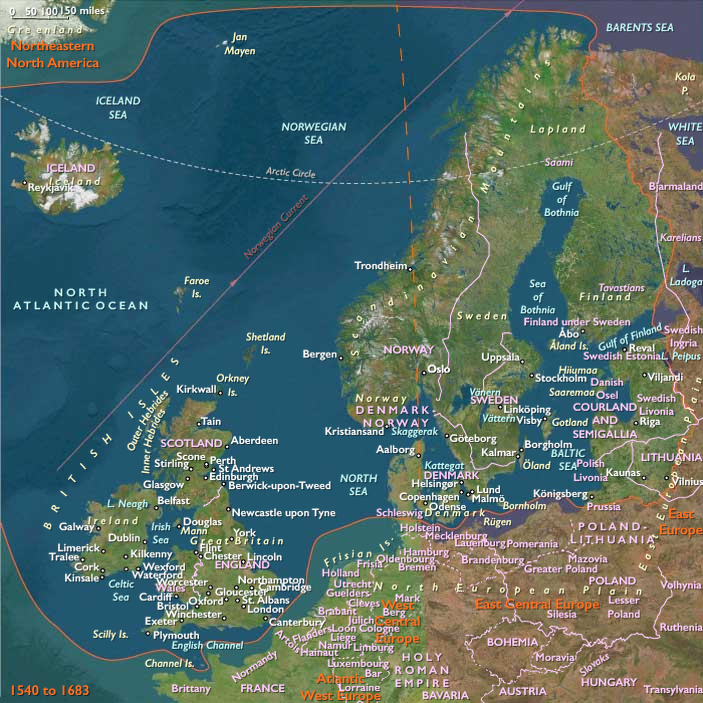
Between 1600 and 1611 CE, Northeast Europe experienced renewed geopolitical tensions, significant territorial ambitions, and cultural advancements following the brief stabilization after the Livonian War. This era witnessed intensified rivalry between Sweden, Denmark–Norway, the Polish–Lithuanian Commonwealth, and Muscovy, coupled with notable intellectual and economic growth.
Swedish Territorial Ambitions and Internal Consolidation
Under Charles IX (r. 1604–1611), Sweden aggressively pursued territorial expansion in the Baltic region, strengthening control in Livonia and Estonia. Sweden fortified key cities such as Reval (Tallinn), Narva, and Riga, improving military preparedness and administrative efficiency. Efforts continued to promote settlements by communities including the Forest Finns, aiding territorial security and economic development in frontier regions.
Danish–Norwegian Assertiveness under Christian IV
King Christian IV actively expanded Denmark–Norway’s maritime and commercial presence in the Baltic. He initiated significant urban developments, reinforced naval strength, and promoted trade, intensifying the kingdom’s competition with Sweden. His assertive foreign policy sought to balance Swedish territorial expansion and uphold Danish interests, heightening regional tensions.
Polish–Lithuanian Commonwealth’s Geopolitical Influence
Under Sigismund III Vasa, the Polish–Lithuanian Commonwealth continued consolidating its influence in Livonian territories, securing southern Livonia and strengthening regional administration. Sigismund’s dual claims to the Swedish crown heightened diplomatic and military tensions, complicating interactions between the Commonwealth and Sweden.
Muscovite Recovery and Strategic Reorientation
After the death of Feodor I in 1598, Muscovy entered the tumultuous "Time of Troubles" marked by dynastic crises, internal rebellions, and foreign interventions. Despite significant internal disruptions, Muscovy began reorienting strategically, preparing for future territorial assertions in Livonia and the broader Baltic region, maintaining regional uncertainty.
Duchy of Prussia’s Neutrality and Stability
Under Duke Albert Frederick, the secularized Duchy of Prussia maintained its careful diplomatic neutrality, administrative stability, and economic prosperity. Königsberg and other urban centers continued thriving economically, serving as stable hubs within the turbulent regional landscape.
Economic Prosperity in Major Urban Centers
Key cities including Reval (Tallinn), Riga, Königsberg, and Visby continued to experience significant economic prosperity. Enhanced maritime commerce, active merchant networks, and effective urban governance supported regional economic resilience and growth despite surrounding geopolitical pressures.
Cultural and Educational Advancements
Protestantism, particularly Lutheranism, drove continued educational and cultural innovations. Universities, schools, and scholarly institutions flourished, significantly enhancing literacy, intellectual activities, and cultural production. Lutheran ecclesiastical influence shaped societal structures and regional identities, though religious tensions between Catholic and Protestant communities persisted.
Scientific and Intellectual Progress
Northeast Europe continued benefiting from intellectual advancements, prominently through astronomical studies inspired by Tycho Brahe. His scientific legacy furthered scholarly activities across the region, consolidating its reputation as a center of intellectual and scientific innovation.
Diplomatic Complexities and Strategic Alliances
Diplomatic interactions intensified significantly during this period, with intricate alliances, territorial claims, and strategic negotiations among regional powers. The geopolitical complexity involving Sweden, Denmark–Norway, Poland–Lithuania, Muscovy, and Prussia necessitated careful diplomatic management, influencing lasting territorial and political alignments.
Legacy of the Era
The era from 1600 to 1611 CE significantly influenced Northeast Europe’s historical trajectory through intensified geopolitical rivalries, territorial expansions, and substantial cultural and intellectual developments. These events laid vital groundwork for future political stability, territorial boundaries, and cultural identities, shaping the region profoundly into the seventeenth century.
People
- Albert Frederick, Duke of Prussia
- Charles IX Vasa
- Christian IV
- Feodor I of Russia
- John III Vasa
- Sigismund III Vasa
- Tycho Brahe
Groups
- Polytheism (“paganism”)
- Latvians, or Letts (Eastern Balts)
- Estonians
- Christians, Roman Catholic
- Finland under Swedish rule
- Hanseatic League
- Crown of the Kingdom of Poland
- Lutheranism
- Sweden, (second) Kingdom of
- Prussia, Duchy of
- Denmark-Norway, Kingdom of
- Forest Finns
- Russia, Tsardom of
- Livonia, Duchy of (Polish Estonia and Latvia)
- Estonia, Duchy of (Swedish Estonia)
- Courland and Semigallia, Duchy of
- Polish-Lithuanian Commonwealth (Commonwealth of the Two Nations)
- Finland, (Swedish) Grand Duchy of
Topics
Subjects
Regions
Subregions

Related Events
Showing 10 events out of 34015 total
Years: 1600 - 1611
People
- Albert Frederick, Duke of Prussia
- Charles IX Vasa
- Christian IV
- Feodor I of Russia
- John III Vasa
- Sigismund III Vasa
- Tycho Brahe
Groups
- Polytheism (“paganism”)
- Latvians, or Letts (Eastern Balts)
- Estonians
- Christians, Roman Catholic
- Finland under Swedish rule
- Hanseatic League
- Crown of the Kingdom of Poland
- Lutheranism
- Sweden, (second) Kingdom of
- Prussia, Duchy of
- Denmark-Norway, Kingdom of
- Forest Finns
- Russia, Tsardom of
- Livonia, Duchy of (Polish Estonia and Latvia)
- Estonia, Duchy of (Swedish Estonia)
- Courland and Semigallia, Duchy of
- Polish-Lithuanian Commonwealth (Commonwealth of the Two Nations)
- Finland, (Swedish) Grand Duchy of
Topics
Subjects
Regions
Subregions