
Northeast Europe (1564–1575 CE): Escalation of the …
Years: 1564 - 1575
Northeast Europe (1564–1575 CE): Escalation of the Livonian War, Strategic Rivalries, and Regional Reconfigurations
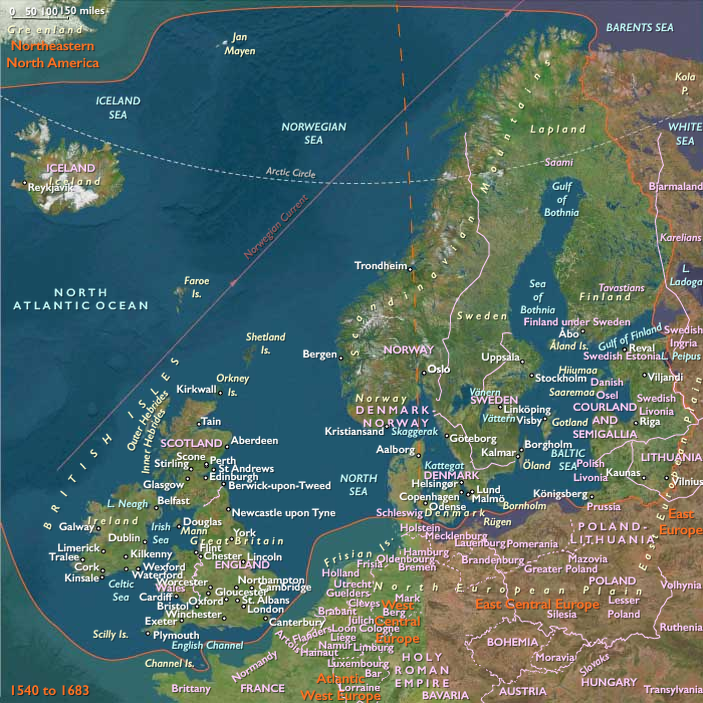
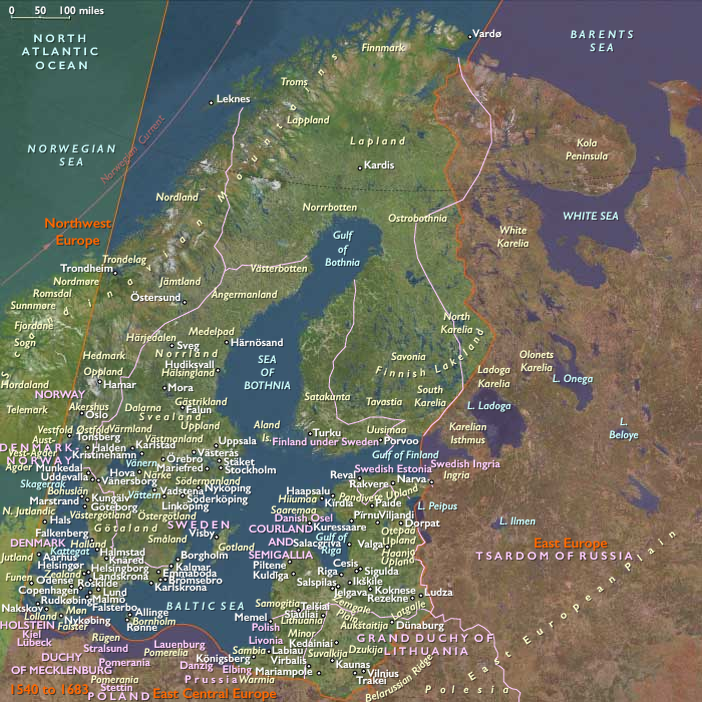
Between 1564 and 1575 CE, Northeast Europe experienced heightened geopolitical turmoil primarily driven by the ongoing Livonian War. This era was marked by aggressive territorial expansion by the Grand Duchy of Muscovy, growing intervention by Sweden, Denmark–Norway, and the Polish–Lithuanian Commonwealth, and significant religious, economic, and demographic transformations across the region.
Intensified Conflict in the Livonian War
The prolonged Livonian War (1558–1583) intensified significantly during this period. Ivan IV (the Terrible) of Muscovy escalated his military campaigns in Livonia, aiming for strategic Baltic access and regional dominance. Muscovite forces devastated much of Livonia, severely destabilizing the already weakened Livonian Confederation.
Polish–Lithuanian Commonwealth's Expansion
In response, the Polish–Lithuanian Commonwealth under Sigismund II Augustus became increasingly assertive. The Union of Lublin in 1569 formally unified Poland and Lithuania into a single Commonwealth, enhancing their geopolitical strength. Poland–Lithuania intervened decisively in Livonian affairs, securing key southern territories and actively contesting Muscovite aggression, thereby reinforcing its regional dominance.
Swedish Territorial Gains and Colonization Efforts
Sweden, under Eric XIV (until 1568) and subsequently John III, expanded territorial control in Estonia and northern Livonia. Sweden fortified critical Baltic cities, notably Reval (Tallinn) and Narva, enhancing defensive capabilities and securing crucial commercial routes. Concurrently, Swedish colonization policies promoted settlements of Forest Finns, traditional practitioners of slash-and-burn agriculture, into sparsely populated provinces of Eastern Finland and subsequently into Swedish territories such as Gästrikland, Ångermanland, and Hälsingland. This colonization aimed to secure frontier lands against eastern threats and alleviate population pressures within Finland.
Denmark–Norway’s Baltic Ambitions
Under King Frederick II, Denmark–Norway pursued strategic territorial and economic interests in the contested Baltic region. Engaging in diplomatic and military interventions, Frederick sought to secure maritime trade routes and bolster Danish influence in Courland and Livonian territories. Denmark's active participation intensified rivalries, especially with Sweden.
Duchy of Prussia’s Stability
The secularized Duchy of Prussia, now under Duke Albert Frederick (from 1568), navigated regional instability by maintaining cautious diplomatic neutrality and strong internal governance. Economically vibrant urban centers like Königsberg ensured regional stability and economic prosperity despite the broader geopolitical turmoil.
Economic Resilience in Urban Centers
Despite military conflicts, major urban centers such as Reval (Tallinn), Riga, Königsberg, and Visby on Gotland maintained economic resilience through continued maritime trade, commercial networks, and stable urban governance. This economic strength significantly mitigated disruptions from ongoing warfare.
Religious and Cultural Transformations
Protestantism, particularly Lutheranism, further reshaped the religious and cultural landscape, fostering educational innovation and vernacular literacy. Nonetheless, religious tensions between Protestant and Catholic communities increased, complicating regional alliances and political dynamics.
Scientific Advancements and Astronomical Observations
This period also saw significant scientific advancements, notably by the Danish astronomer Tycho Brahe. Brahe’s meticulous astronomical observations, the most accurate prior to the invention of the telescope, provided a comprehensive study of the solar system and precise measurements of more than seven hundred seventy-seven fixed stars, paving the way for future discoveries and scientific progress in Northeast Europe.
Strategic Diplomatic Maneuvers
Diplomatic activities intensified significantly as regional powers navigated complex alliances, territorial disputes, and religious divisions driven by the ongoing Livonian crisis. Temporary truces, shifting alliances, and strategic negotiations characterized diplomatic efforts to stabilize and manage escalating conflict.
Legacy of the Era
The era from 1564 to 1575 CE significantly reshaped Northeast Europe's geopolitical and cultural landscapes. Intensified warfare, territorial realignments, demographic shifts from colonization efforts, and scientific advancements established lasting regional alignments, territorial boundaries, and cultural identities, fundamentally influencing Northeast Europe's subsequent historical trajectory.
People
- Albert Frederick, Duke of Prussia
- Eric XIV of Sweden
- Frederick II of Denmark-Norway
- Ivan IV
- John III Vasa
- Sigismund II Augustus Jagiello
- Tycho Brahe
Groups
- Polytheism (“paganism”)
- Latvians, or Letts (Eastern Balts)
- Estonians
- Christians, Roman Catholic
- Finland under Swedish rule
- Hanseatic League
- Poland of the Jagiellonians, Kingdom of
- Crown of the Kingdom of Poland
- Lithuania, Grand Duchy of
- Lutheranism
- Sweden, (second) Kingdom of
- Prussia, Duchy of
- Denmark-Norway, Kingdom of
- Forest Finns
- Russia, Tsardom of
- Livonia, Duchy of (Polish Estonia and Latvia)
- Estonia, Duchy of (Swedish Estonia)
- Courland and Semigallia, Duchy of
- Polish-Lithuanian Commonwealth (Commonwealth of the Two Nations)
- Livonia, Kingdom of
Topics
Subjects
Regions
Subregions
Years: 1564 - 1575
People
- Albert Frederick, Duke of Prussia
- Eric XIV of Sweden
- Frederick II of Denmark-Norway
- Ivan IV
- John III Vasa
- Sigismund II Augustus Jagiello
- Tycho Brahe
Groups
- Polytheism (“paganism”)
- Latvians, or Letts (Eastern Balts)
- Estonians
- Christians, Roman Catholic
- Finland under Swedish rule
- Hanseatic League
- Poland of the Jagiellonians, Kingdom of
- Crown of the Kingdom of Poland
- Lithuania, Grand Duchy of
- Lutheranism
- Sweden, (second) Kingdom of
- Prussia, Duchy of
- Denmark-Norway, Kingdom of
- Forest Finns
- Russia, Tsardom of
- Livonia, Duchy of (Polish Estonia and Latvia)
- Estonia, Duchy of (Swedish Estonia)
- Courland and Semigallia, Duchy of
- Polish-Lithuanian Commonwealth (Commonwealth of the Two Nations)
- Livonia, Kingdom of
Topics
Subjects
Regions
Subregions